Dream On, Carol
Carol Cohen McEldowney was an an activist (new left, women’s and gay liberation, more) and writer who moved to the Boston area in 1970. Her papers are stored in the UMass Boston’s University Archives and Special Collections and were the inspiration and source material for this body of work.
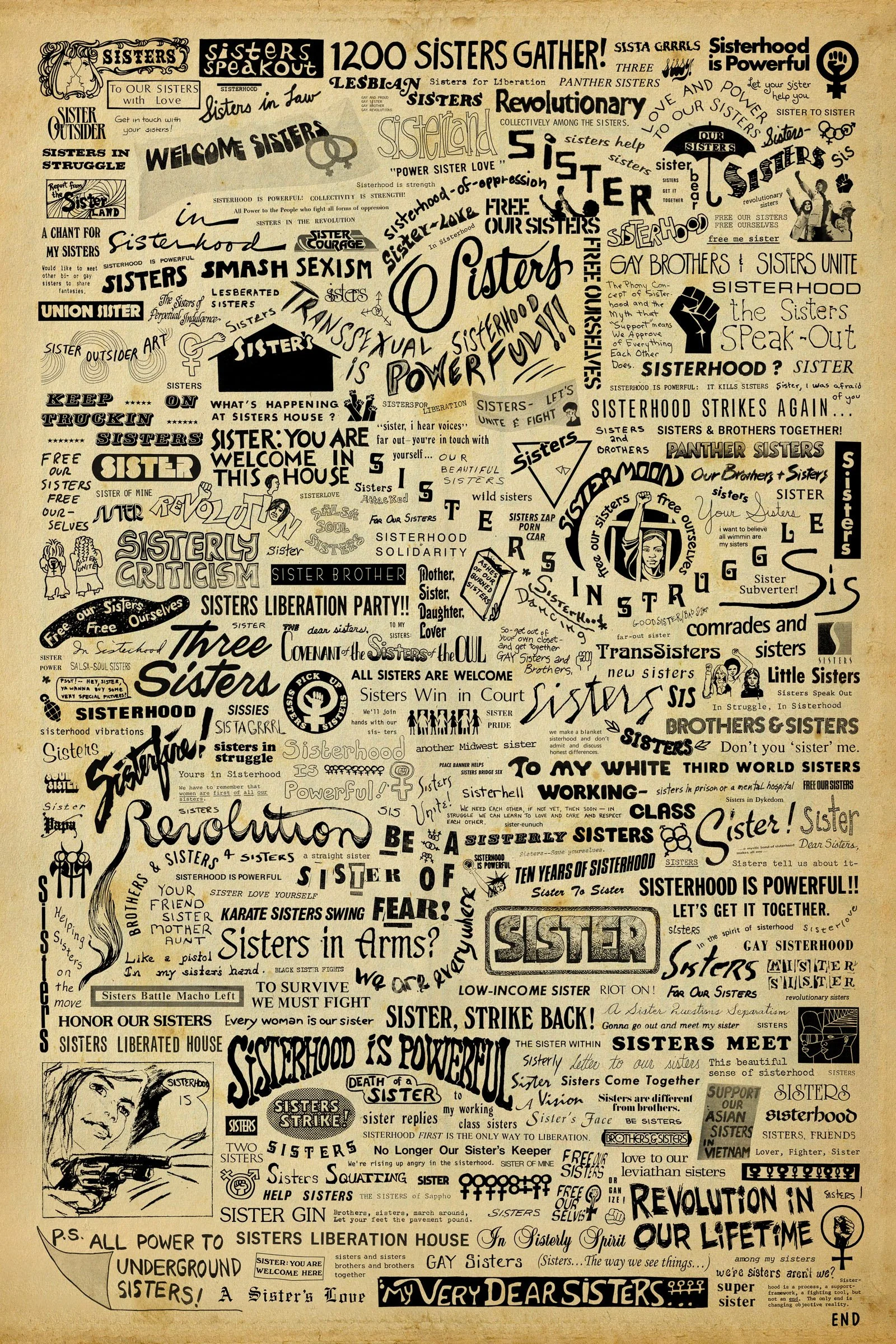
1. Sisters, 2025
Collage of text and images from underground newspapers (1960s-90s), various lesbian and transgender publications, archives, and other sources encountered while researching for this project, inkjet on paper, 17 x 26 inches, edition 1/10.
Archives used: UMass Boston Archives and Special Collections, Schlesinger Library Special Collections at the Harvard Radcliffe Institute, Queer History Boston, Boston Public Library Special Collections and Digital Commonwealth, Lesbian Herstory Archives, Digital Transgender Archive, Amherst College Digital Collections, Houston LGBT History, Northeastern Digital Archives and Special Collections, and more.
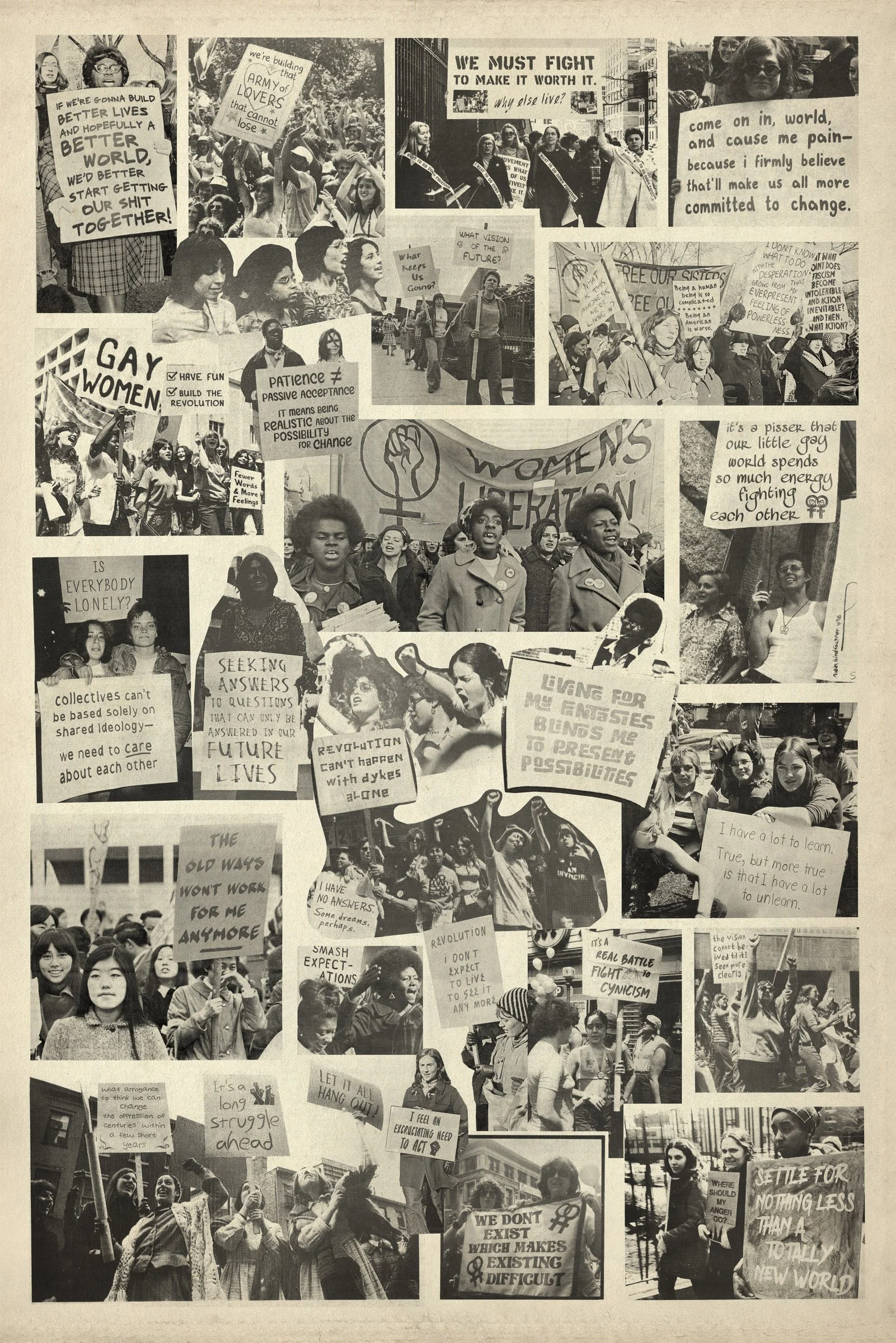
2. Settle for Nothing Less than a Totally New World, 2025
Collage of protest images from early 70s underground newspapers ( lesbian, feminist, black liberation, gay liberation, new left, and student papers) with text from Carol McEldowney’s journals and poetry, inkjet on paper, 19 x 28.5 inches, edition 1/10.
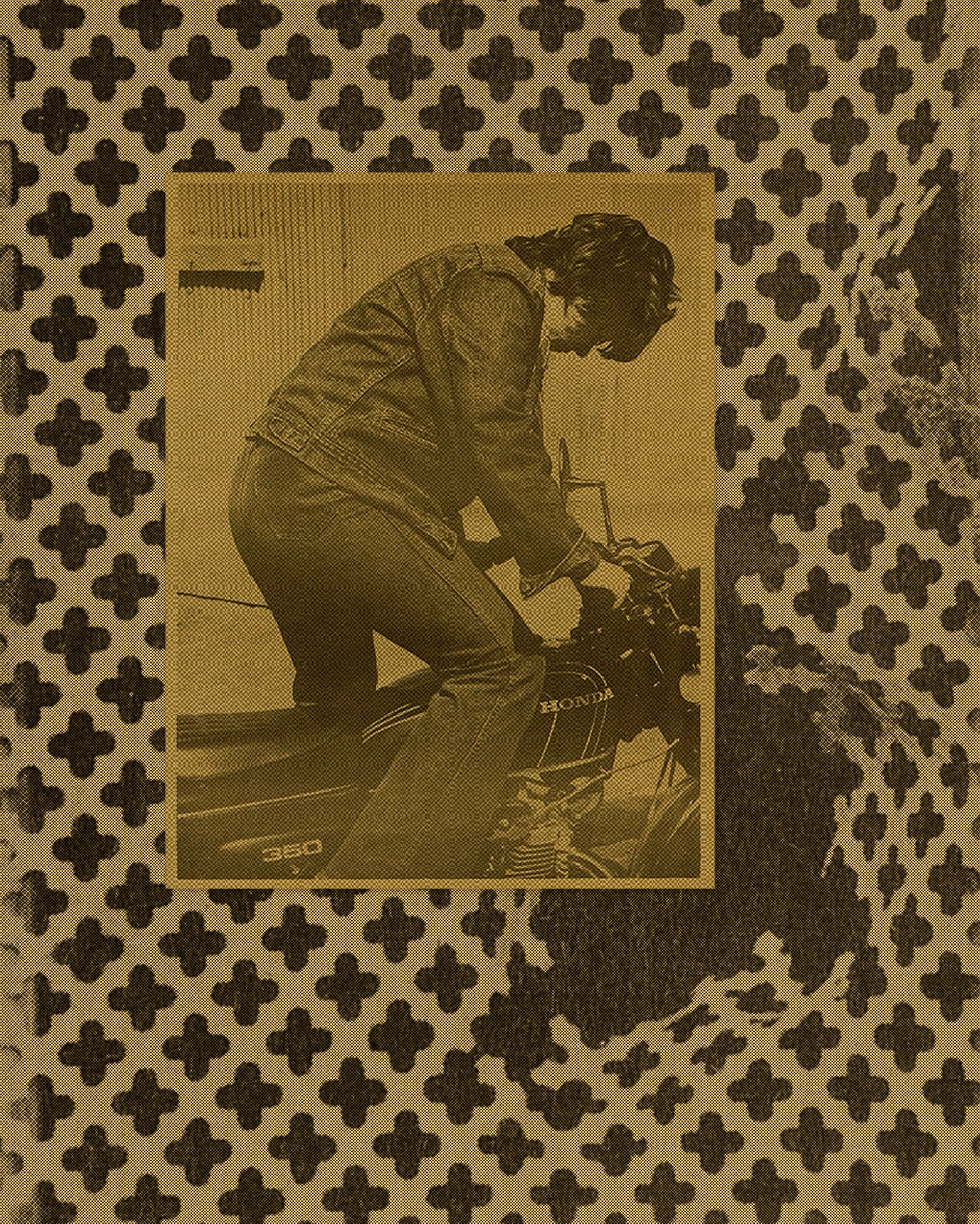
3. Tough and Free, 2025
Collage of images from Underground Newspapers and photograph of Carol from UMass Boston University Archives and Special Collections, inkjet on paper, 19 x 23.5 inches, edition 1/10.
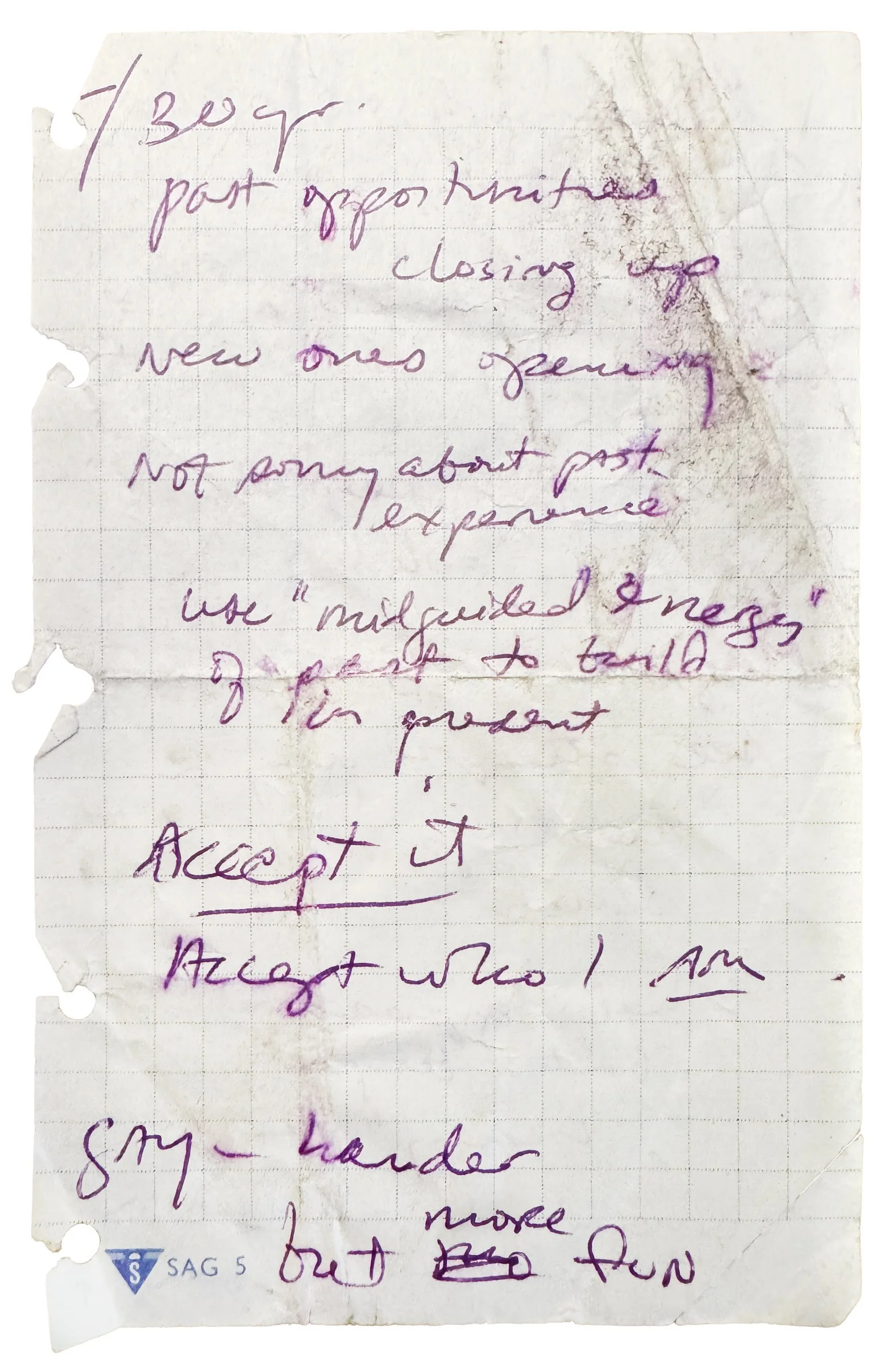
4. Accept it, 2025
Found note from Carol McEldowney in the UMass Boston's University Archives and Special Collections, inkjet on paper, 18 x 28.5 inches, unique.
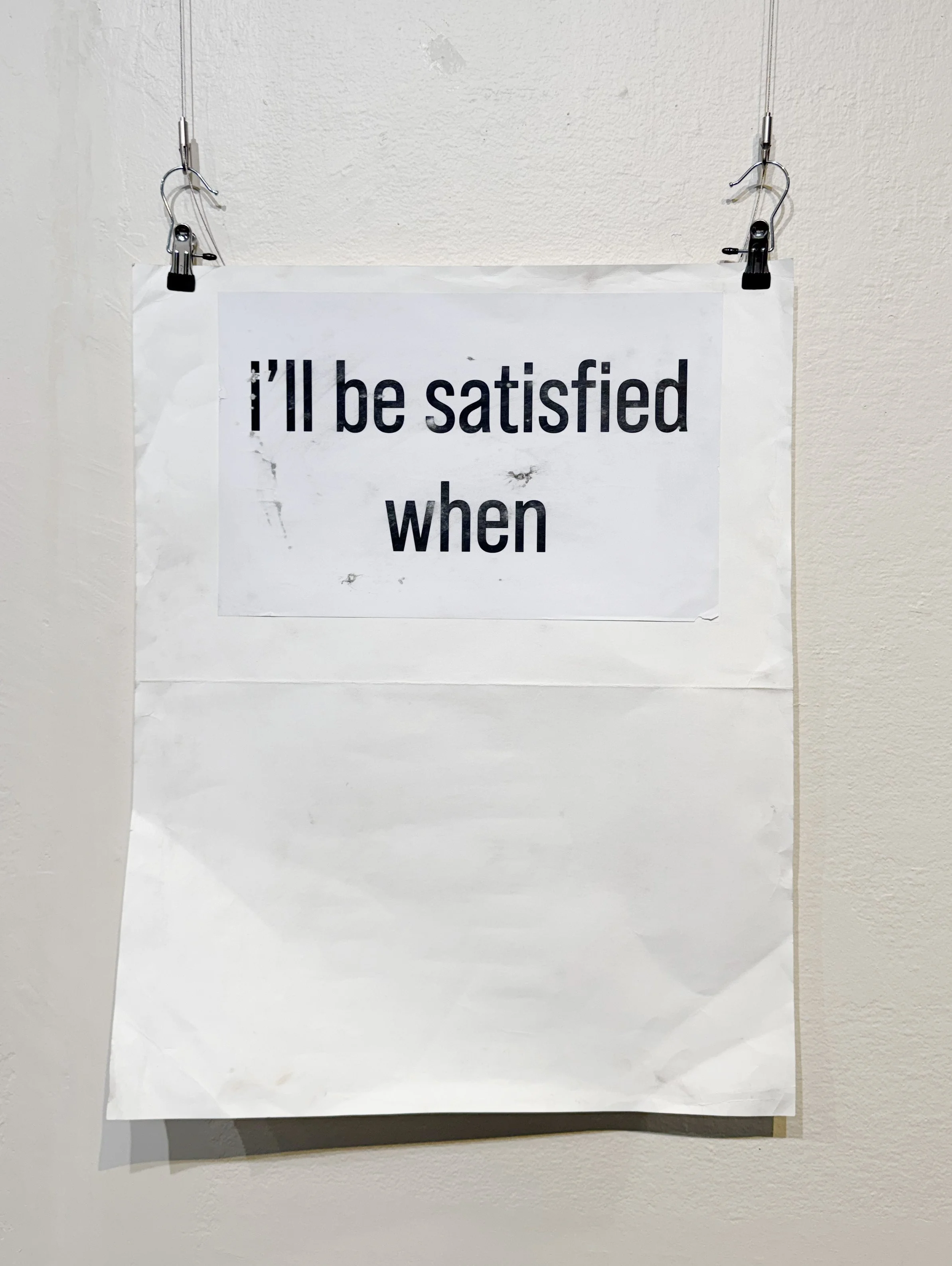
5. i’ll be satisfied when, 2026
Replicated poster from the 2002 NYC Dyke March, mixed media on paper, 22 x 28 inches, unique.
-
Dream On, Carol is an imagined archive and work of parafiction: constructed by me but ultimately containing many truths about Carol’s life and other queer and feminist people of her time. Carol’s life becomes a portal to understanding activists of the past, what has or hasn’t changed in more than 50 years, and what we can use from them as fuel to fight for a better future.

Carol's personal photo albums
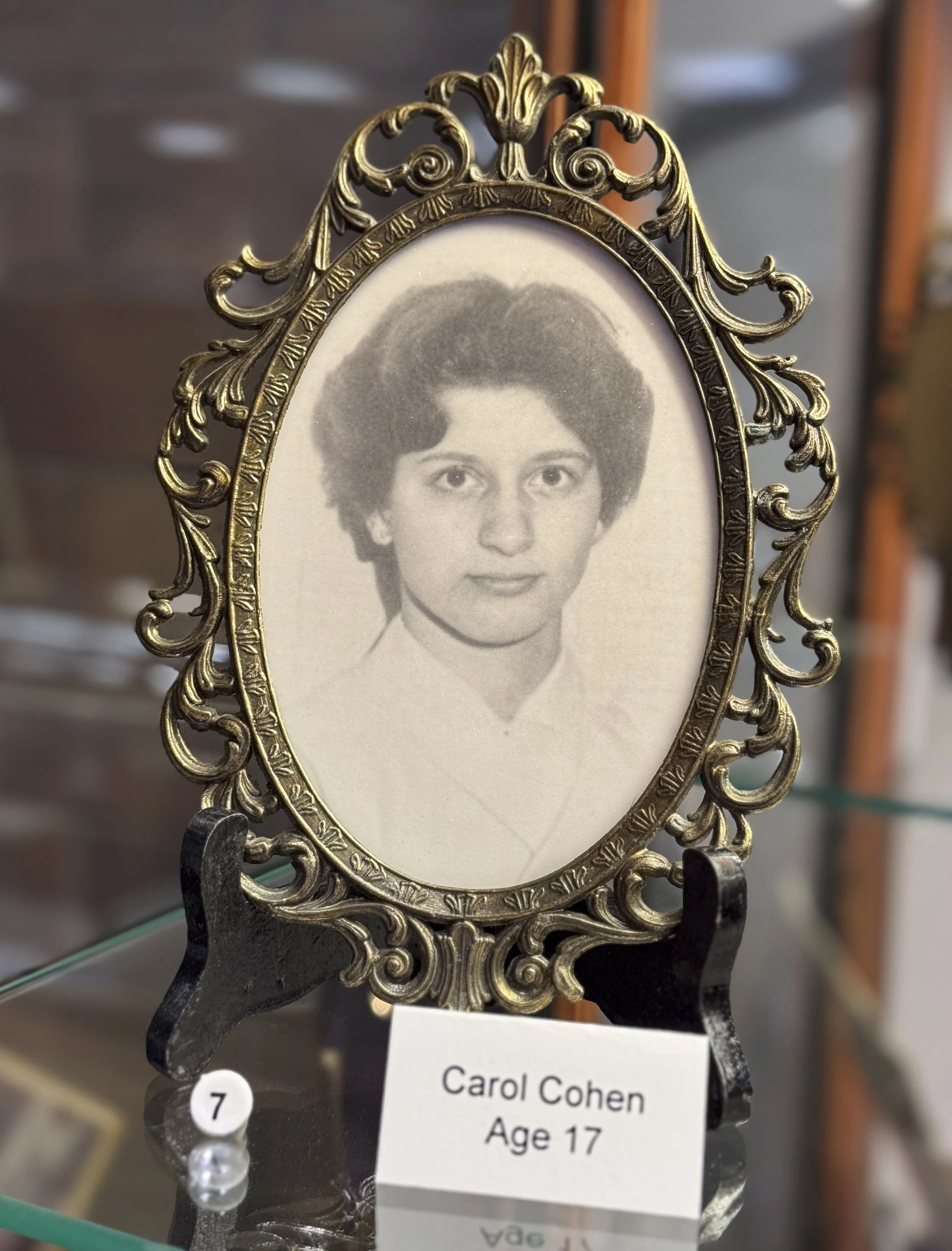
7. Carol, Age 17, Great Neck High School South, 1960
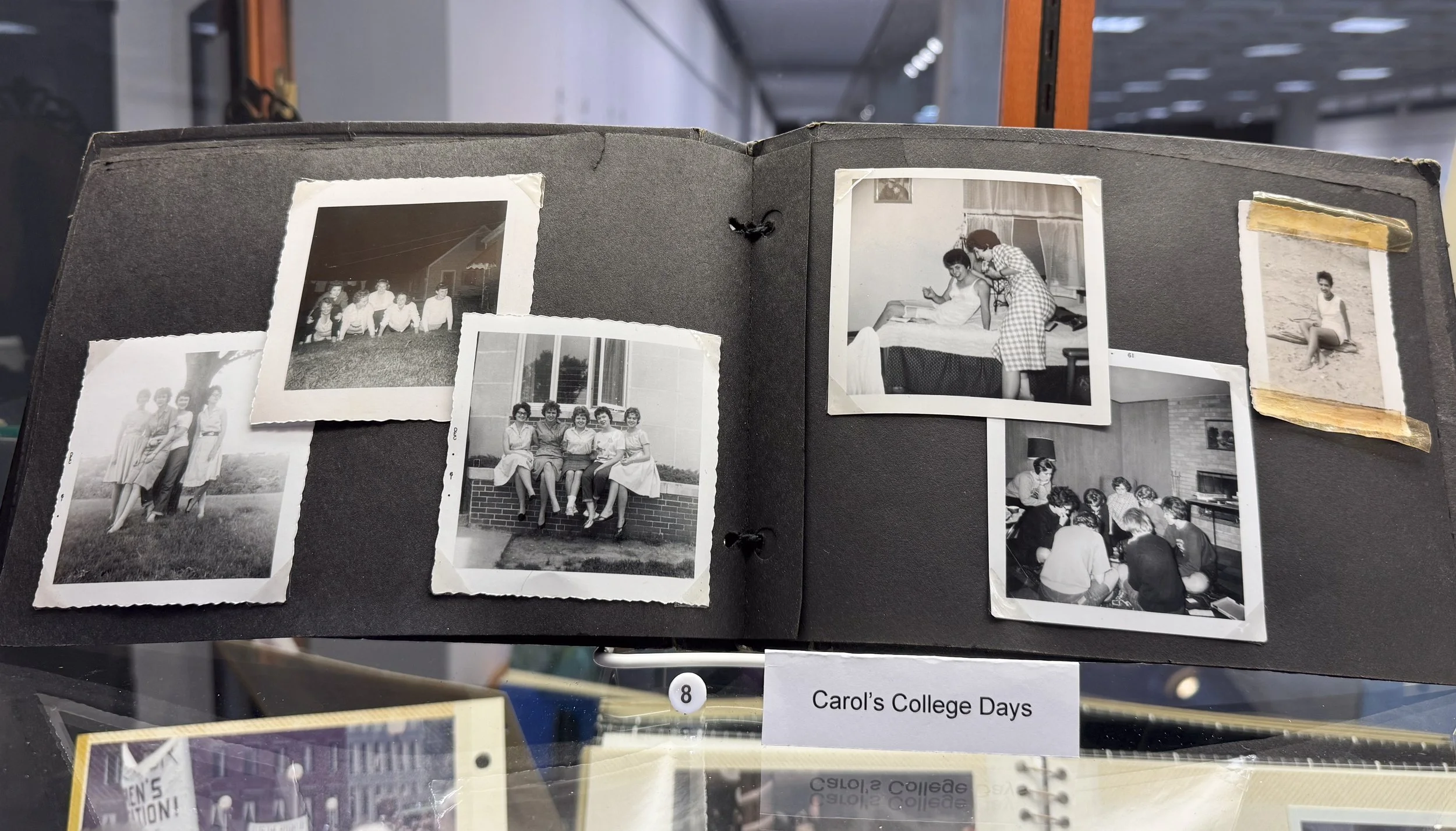
8. Carol's College Days, University of Michigan, Ann Arbor
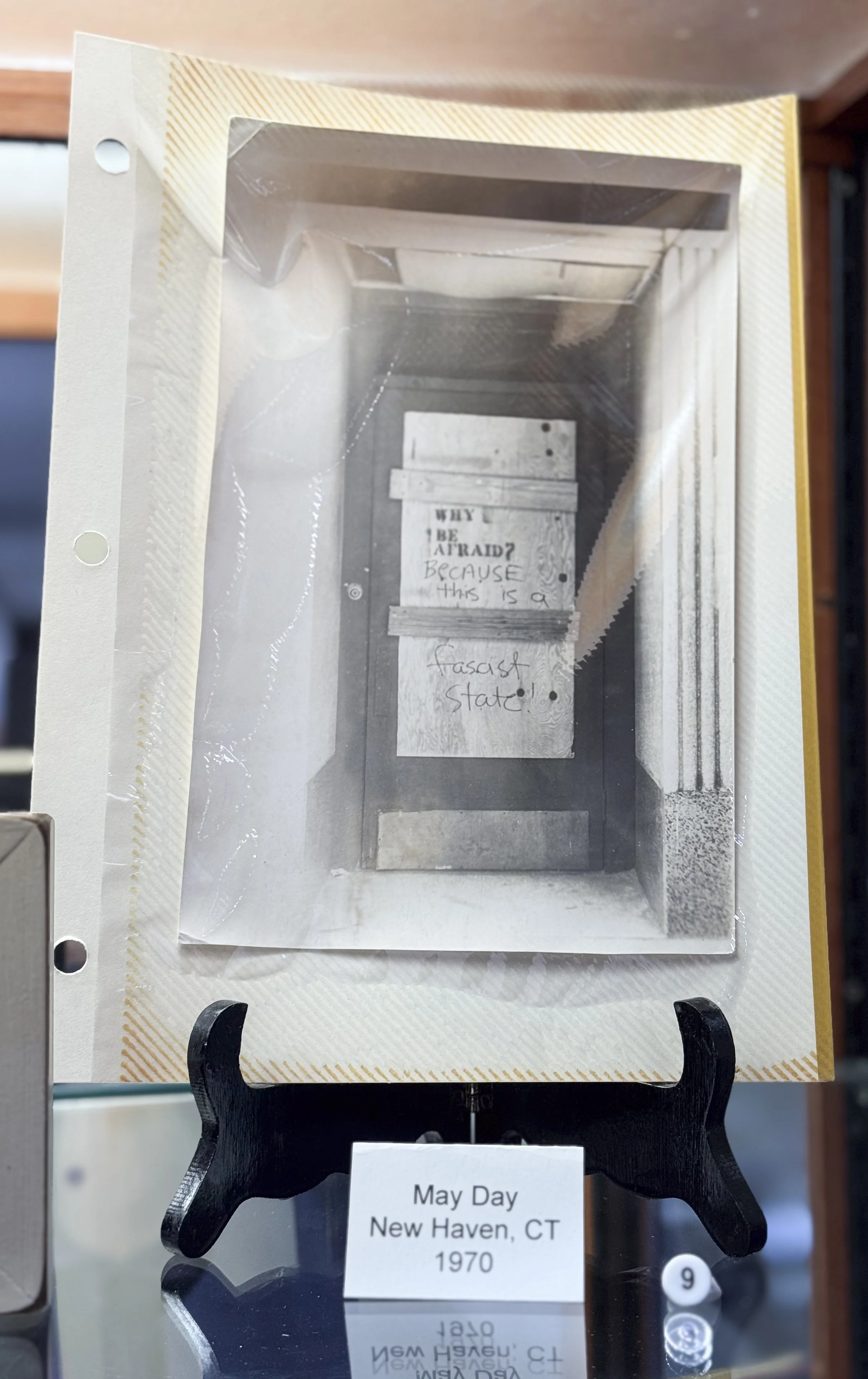
9. "May 1st, 1970 was an historic day in the city of New Haven, Connecticut. Following the 1969 arrest of nine Black Panther members, including leader Bobby Seale, for the murder of Alex Rackley, a large protest rally was planned for May 1st, May Day, 1970 at Yale and on the New Haven Green." newhavenmuseum.org
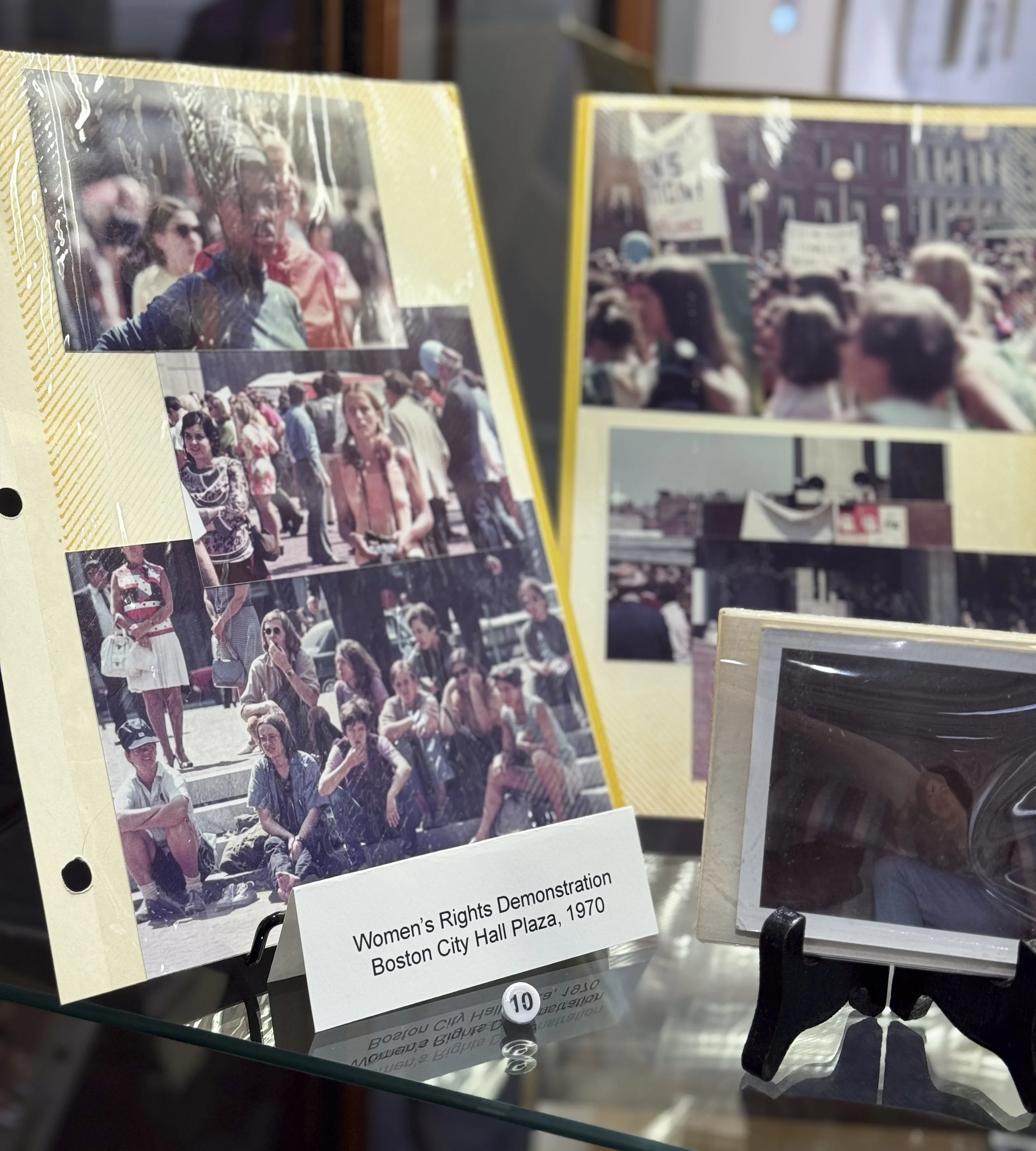
10. Women's Rights Demonstration, Boston City Hall Plaza, 1970
![11. Friends and Lovers
Carol's relationships with other women were often not clearly defined as purely friendly or purely romantic, and she had a variety of intimate relationships with them. "I freak out when I feel that [a lover] is too dependent o](https://images.squarespace-cdn.com/content/v1/5e6814ac9d646c098e1ab4df/33818414-55f8-4831-81c2-d22cacc0ca13/11_IMG_4431.jpg)
11. Friends and Lovers Carol's relationships with other women were often not clearly defined as purely friendly or purely romantic, and she had a variety of intimate relationships with them. "I freak out when I feel that [a lover] is too dependent on me (or me on her) which is the most gut level of my understanding that monogamy can't work. So I have to believe in some sort of community" (p.49 COJ).
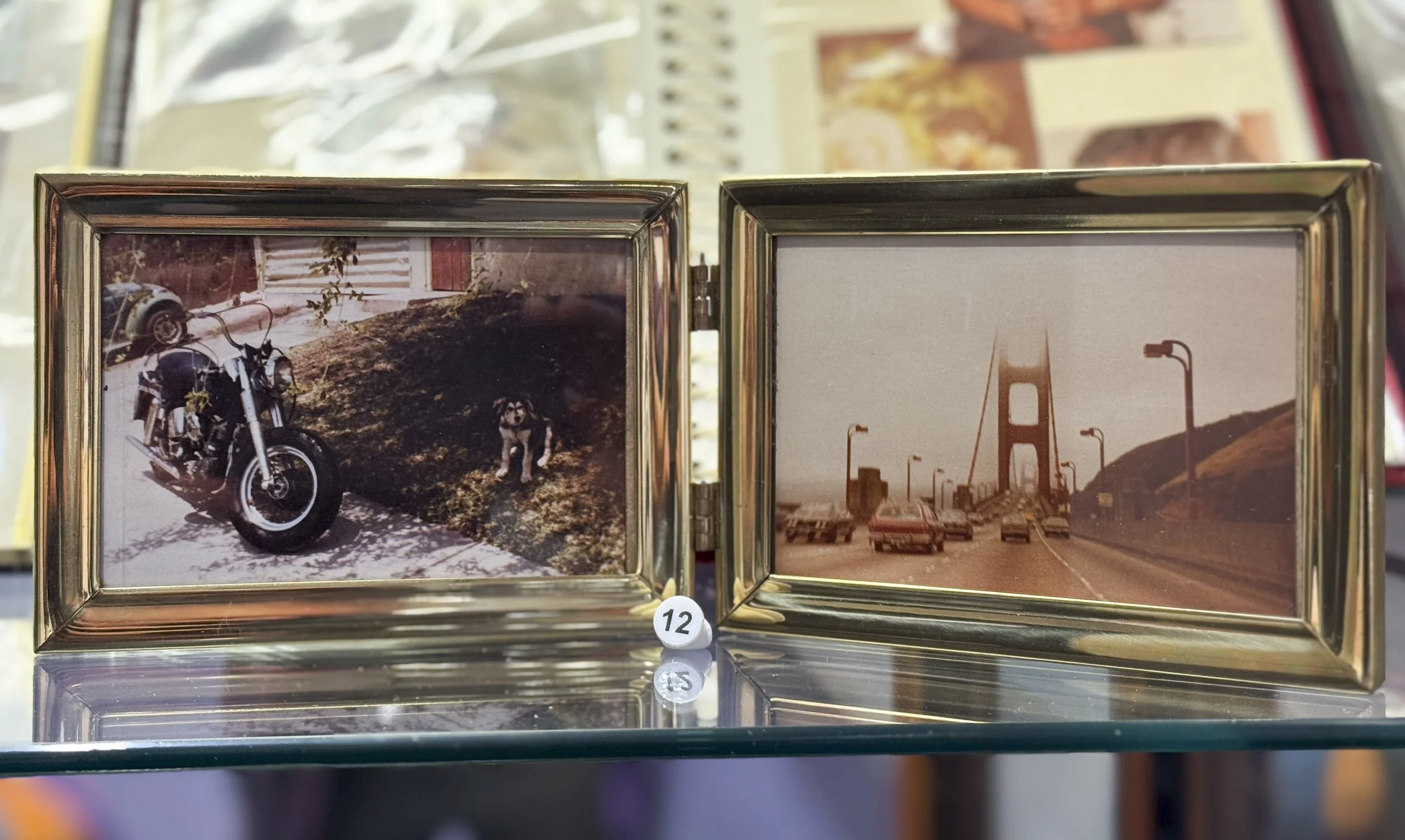
12. One of Carol's bikes; the view on a ride over the Golden Gate Bridge, San Francisco, CA
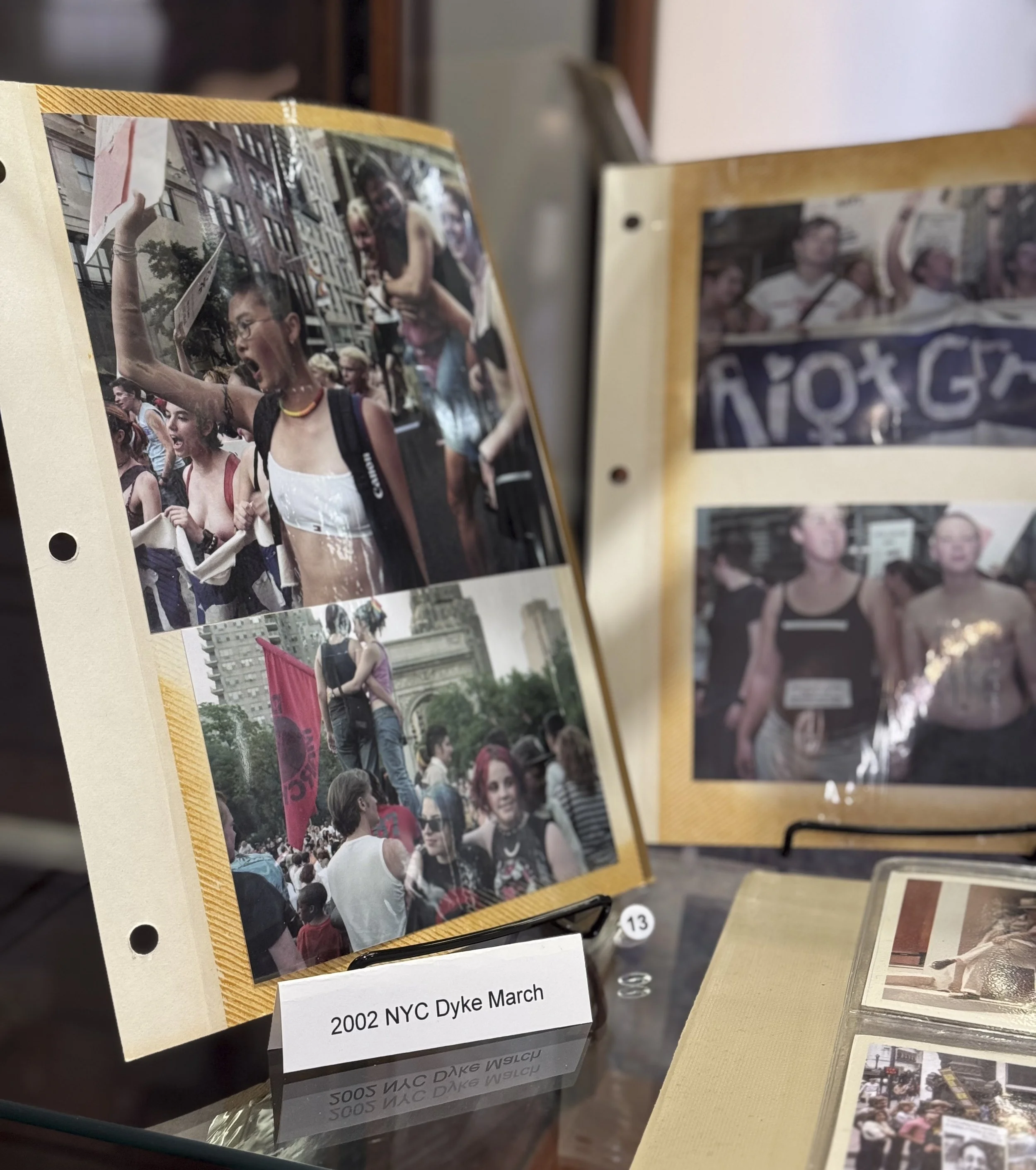
13. 2002 NYC Dyke March (see #41 for related info)
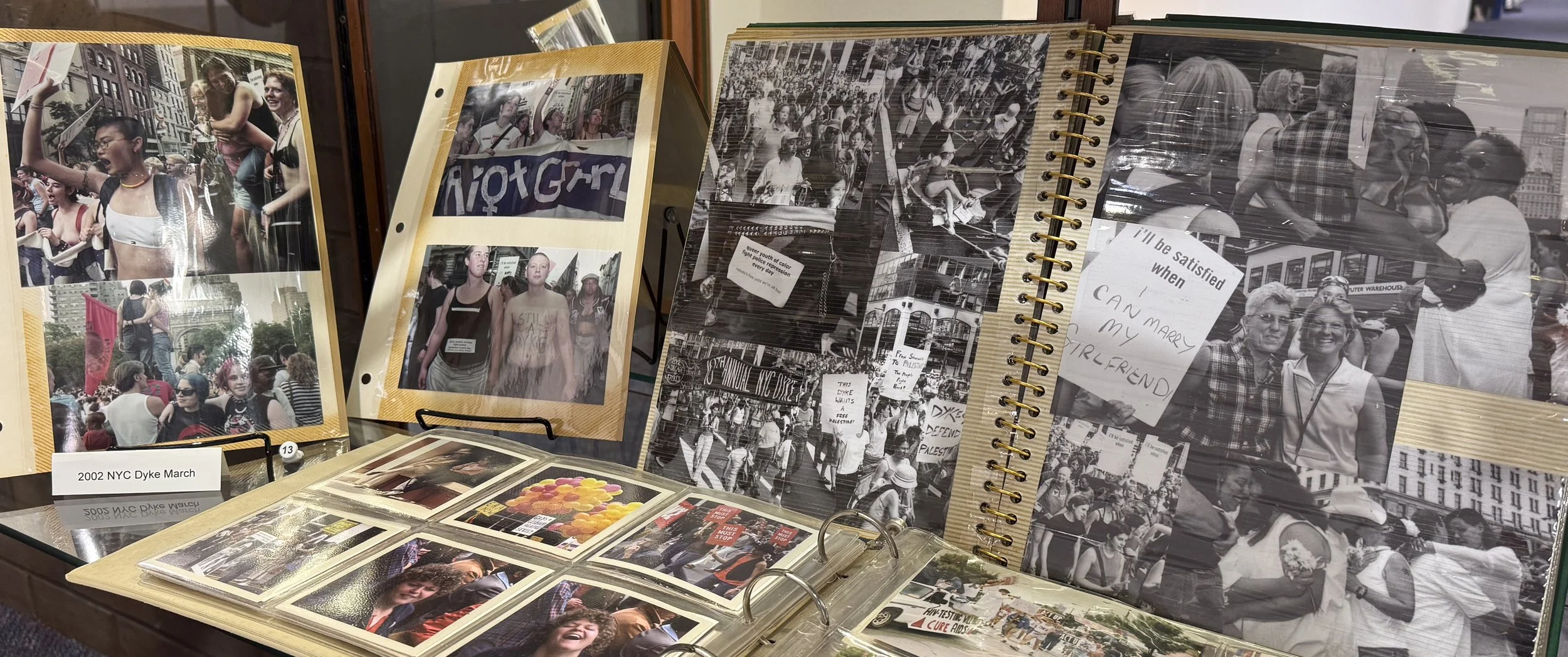
More images of the 2002 NYC Dyke March
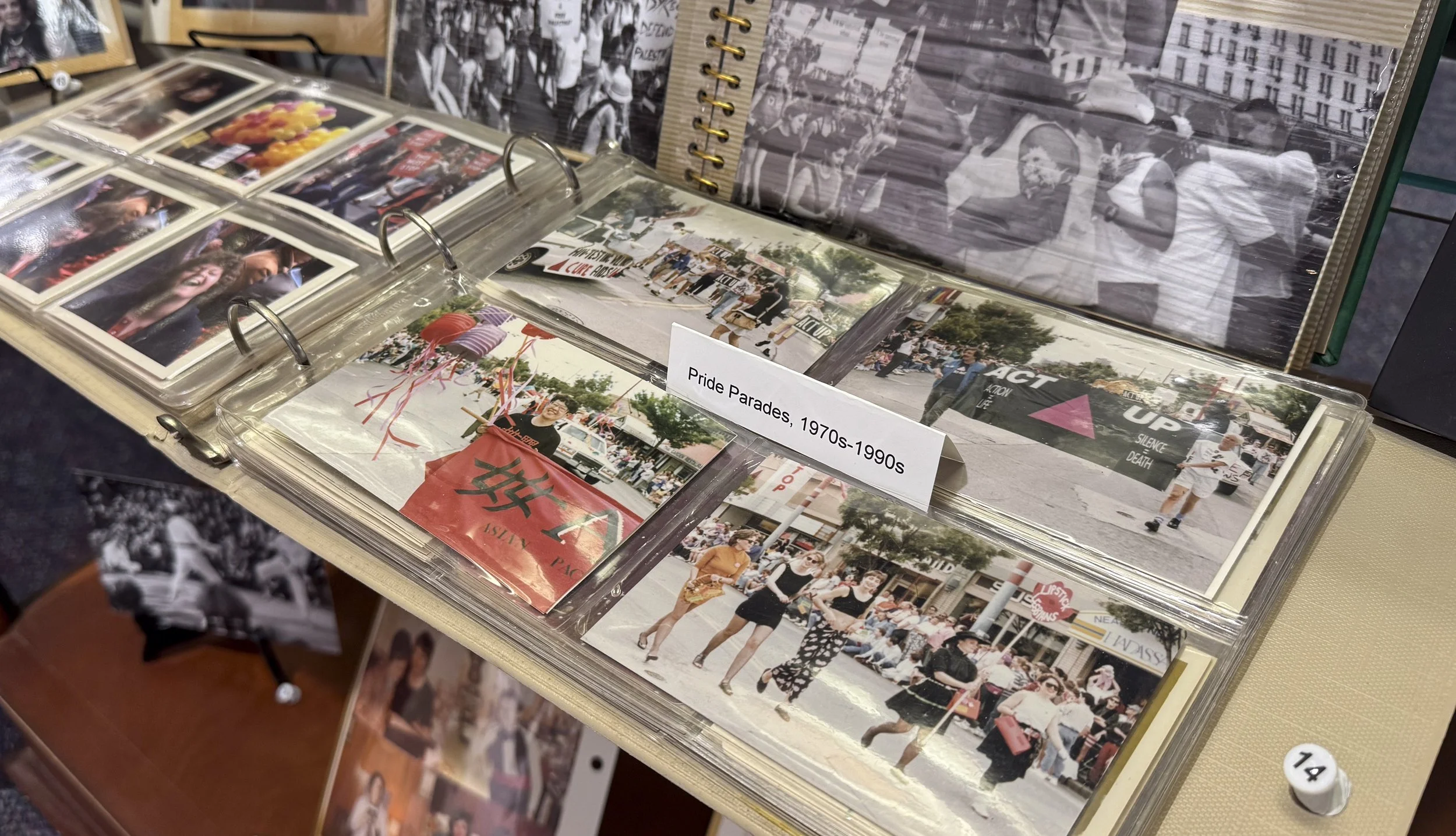
14. Carol began photographing protests (queer, feminist, anti-war, more) and pride parades more regularly in the late 1970s and continued on through the 2000s, creating a vast collection of images that span the country.
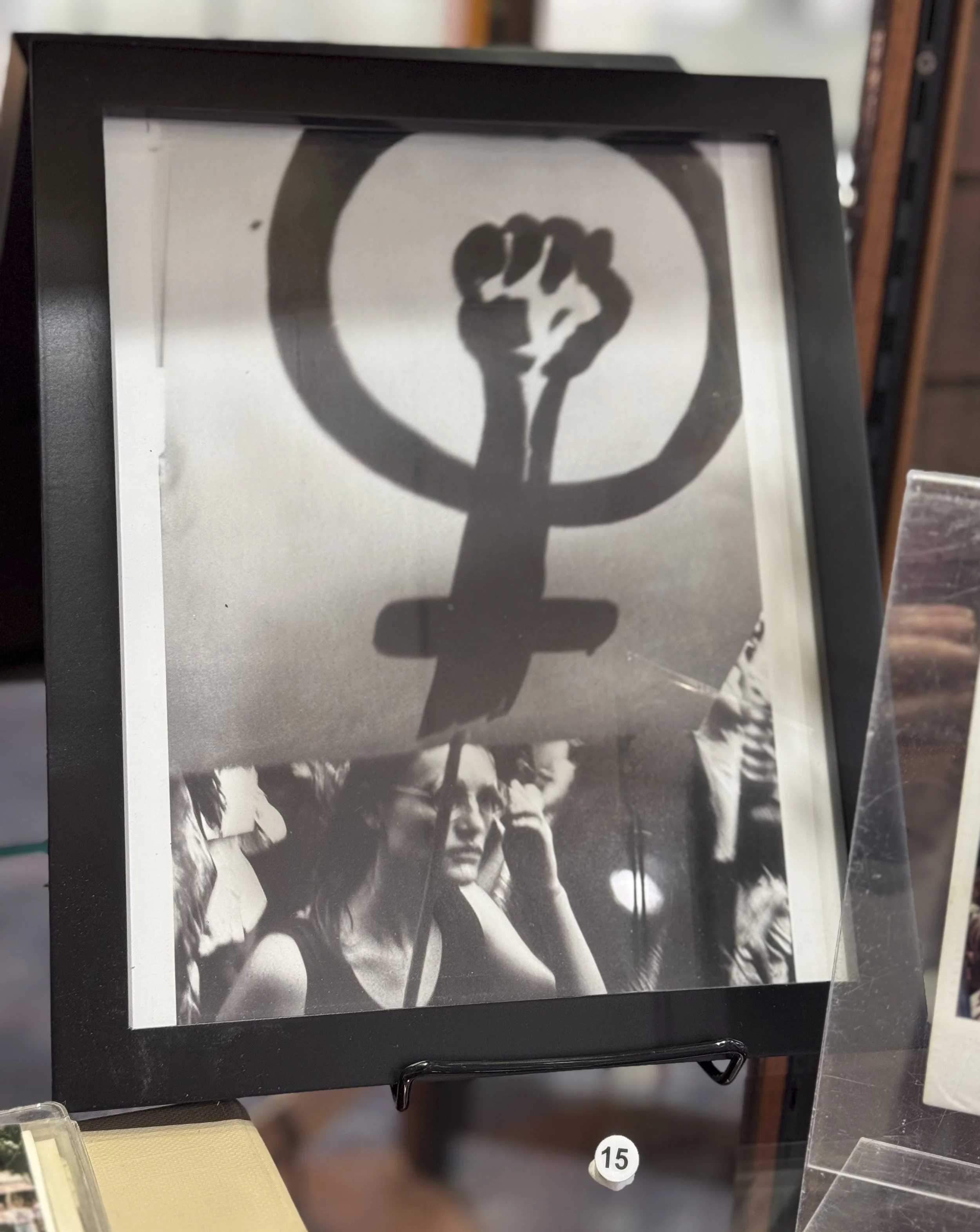
15. Photograph from unidentified 1970s women's liberation protest
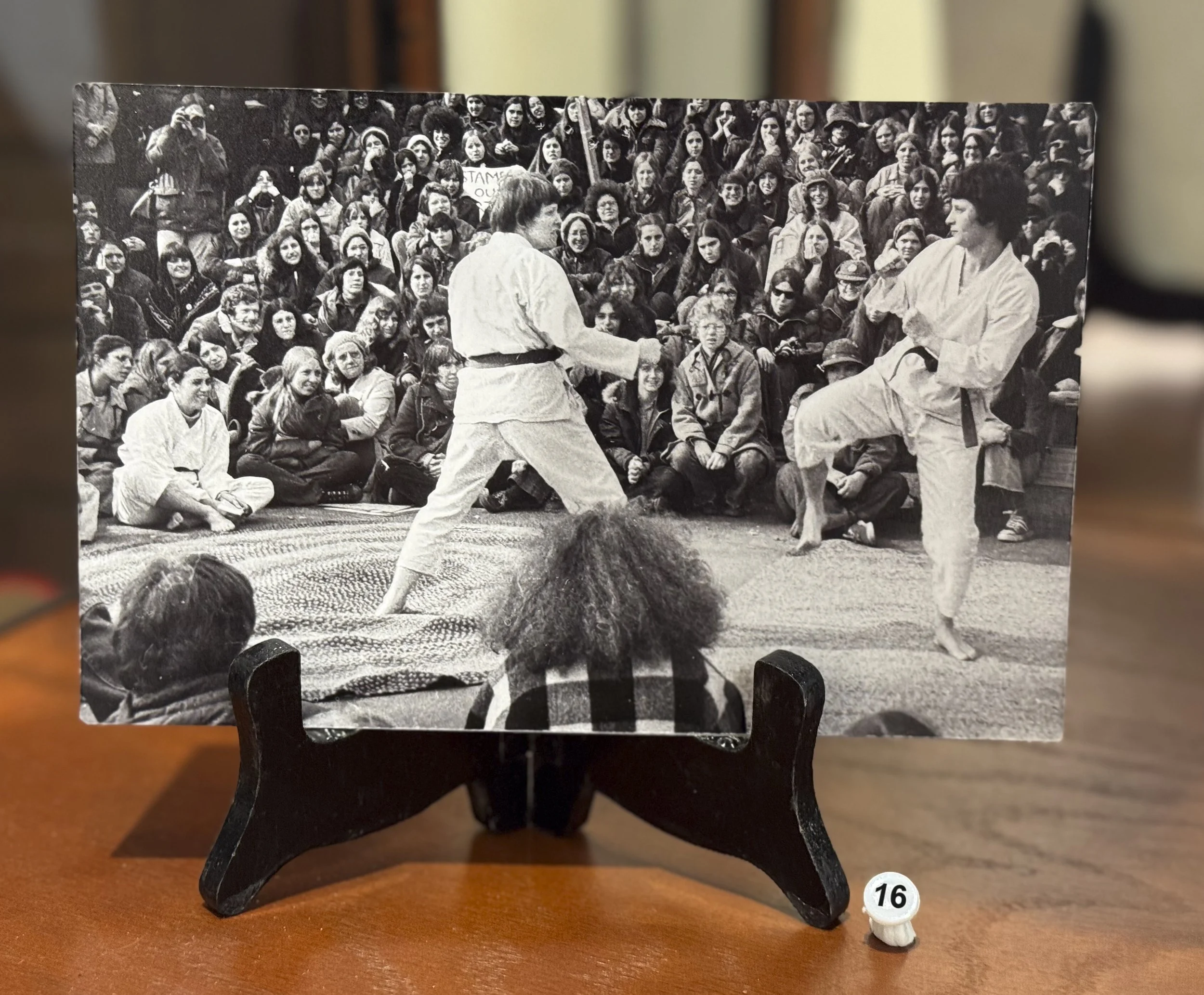
16. Photograph from 1973 International Women's Day Taekwondo demonstration (Carol is on the right). For more information on this event, see #32 below.
![17. More Friends and Lovers
"I feel that sexual energy towards other women who are my friends. That doesn't mean I'm going to race out and sleep with them, but I am going to be open to it. [...] It fucks my head that on the one hand I have friends (t](https://images.squarespace-cdn.com/content/v1/5e6814ac9d646c098e1ab4df/5ab75176-122b-4fc7-949c-e646f6ae9a79/17_IMG_4445.jpg)
17. More Friends and Lovers "I feel that sexual energy towards other women who are my friends. That doesn't mean I'm going to race out and sleep with them, but I am going to be open to it. [...] It fucks my head that on the one hand I have friends (that sometimes become lovers) but that lovers don't often become friends" (56 COJ).
6. The People Are The Sea, 2026
Video made from vintage footage of the 888 Memorial Drive Takeover, 2:12 minutes, sources from the Boston Public Library’s WHDH-TV Collection on Digital Commonwealth.
“Women's lib.” WHDH-TV (Television station : Boston, Mass.), March 1971, Boston Public Library Special Collections, Can numbers: 1924, 2016, 2019 (shelf locator)
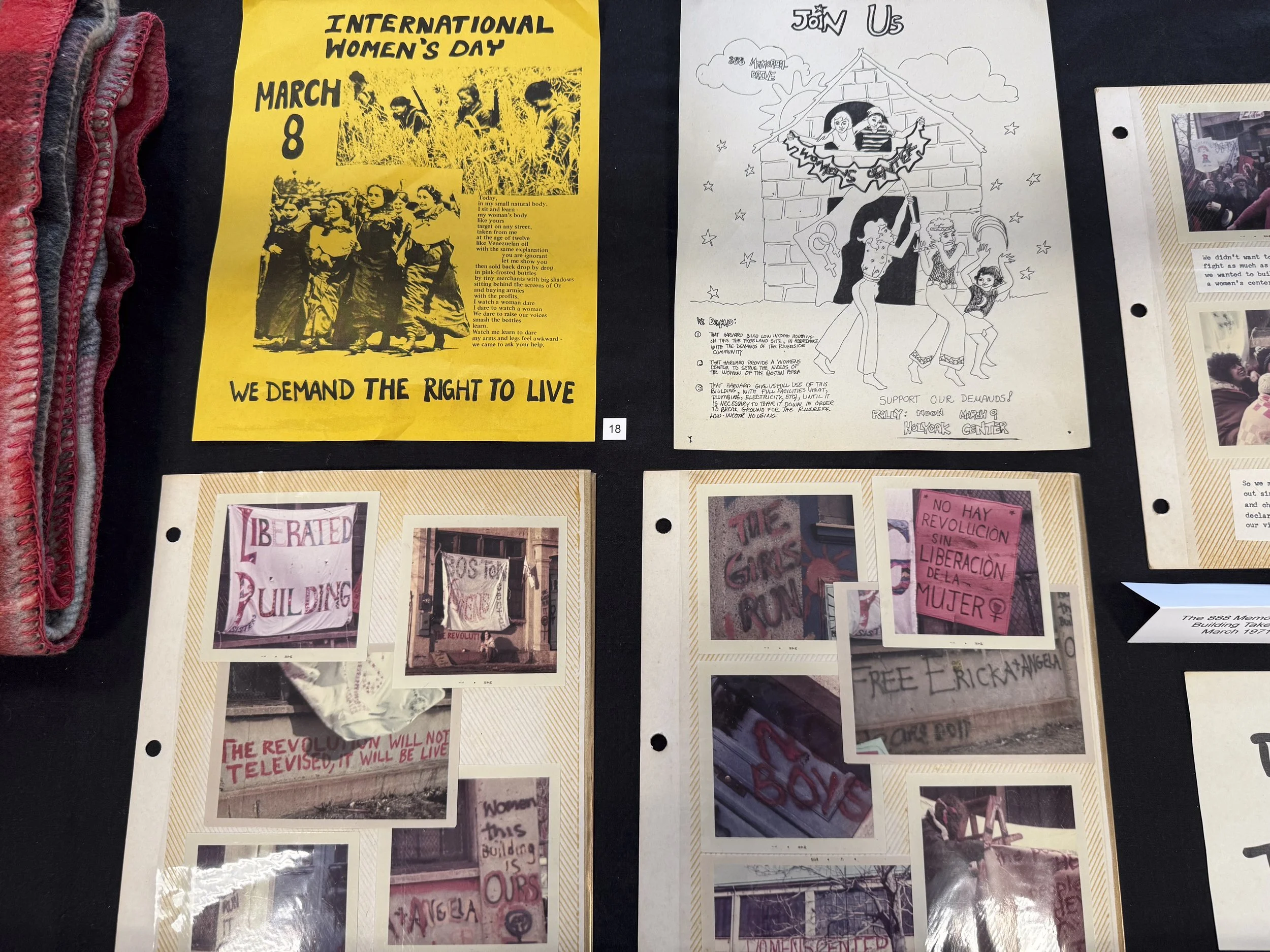
18. The 888 Memorial Drive Takeover
Carol was a participant in the “1971 takeover and occupation of a Harvard University-owned building by hundreds of Boston area women. The ten-day occupation of 888 Memorial Drive by women demanding a Women’s Center and low income housing for the community in which the building stood, embodied within it many of the hopes, triumphs, conflicts and tensions of Second Wave feminism. One of the few such takeovers by women for women, this action was transformative for the participants, and led directly to the establishment of the longest continuously operating Women's Center in the U.S.” (leftonpearl.org)
To Read Carol’s journal entries on the takeover, see pp. 7-12 of her Coming Out Journal (COJ).
For other firsthand accounts, see:
On Our Way: The Women's Center Newsletter, Vol. 1, No. 2, November 8, 1971
Feuer, Marcy. ”The View From Inside a Liberated Building,” Boston Phoenix, March 16, 1971.
Three Boston Women, ”888 Memorial Drive Lives,“The Mole, Vol. 2, No. 5.
Focus: A Journal for Gay Women, Vol. 3 No. 5, April 1971, Daughters of Bilitis
Off Our Backs, 05-06-1971
Everywoman, 04-16-1971
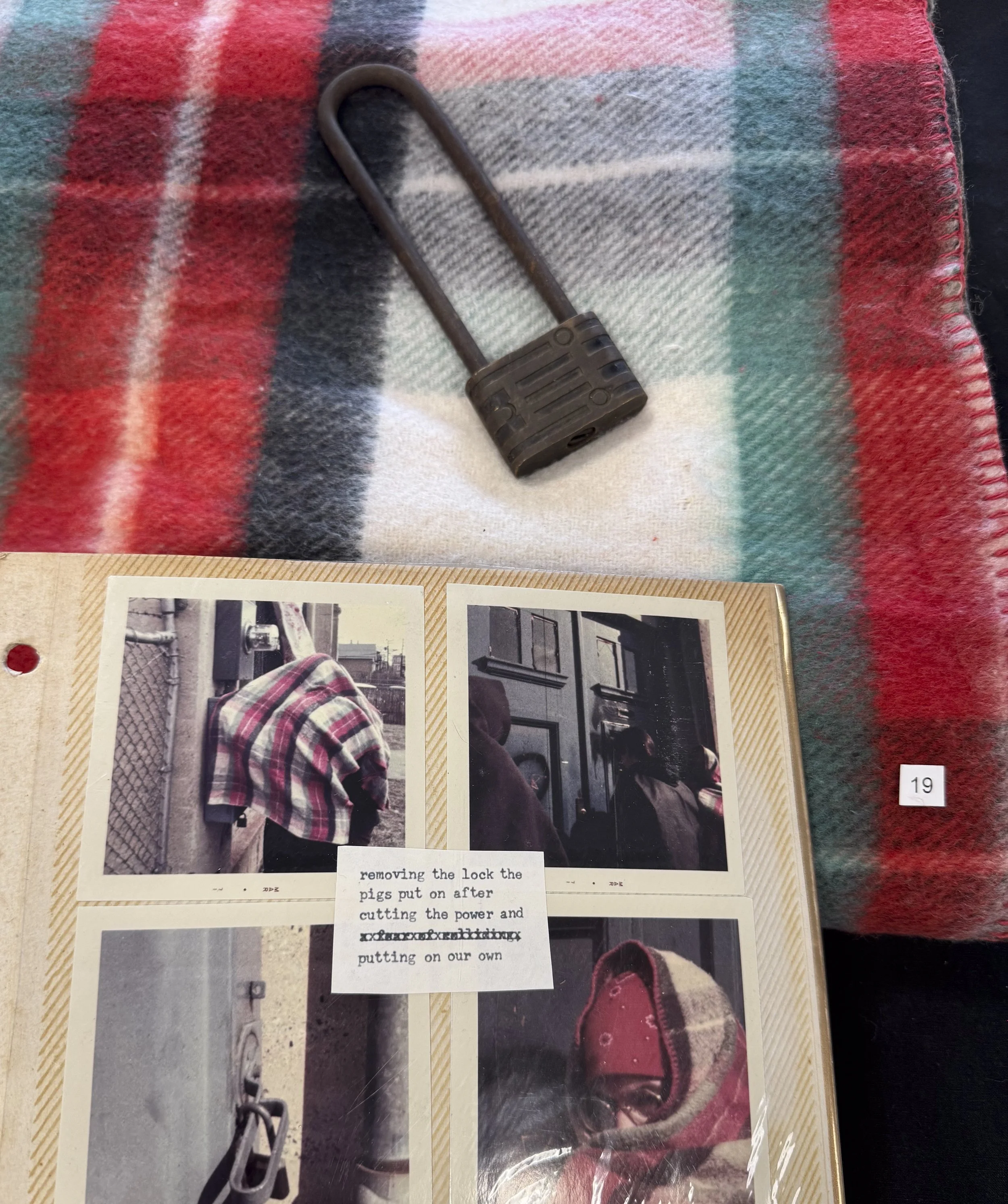
19. Lock and Blanket
“Earlier, workers shut off electricity by turning off the master switch and then padlocking the box outside the brown and dreary two-story building. The women promptly cut through the lock with a hacksaw, turned the power back on. They then put a new padlock on the box.”
Murphy, Jeremiah. “Harvard Lib squatters tell ‘pig press’—both sexes—to split,” Boston Globe, March 9, 1971, ProQuest Historical Newspapers: Boston Globe, pg. 3.
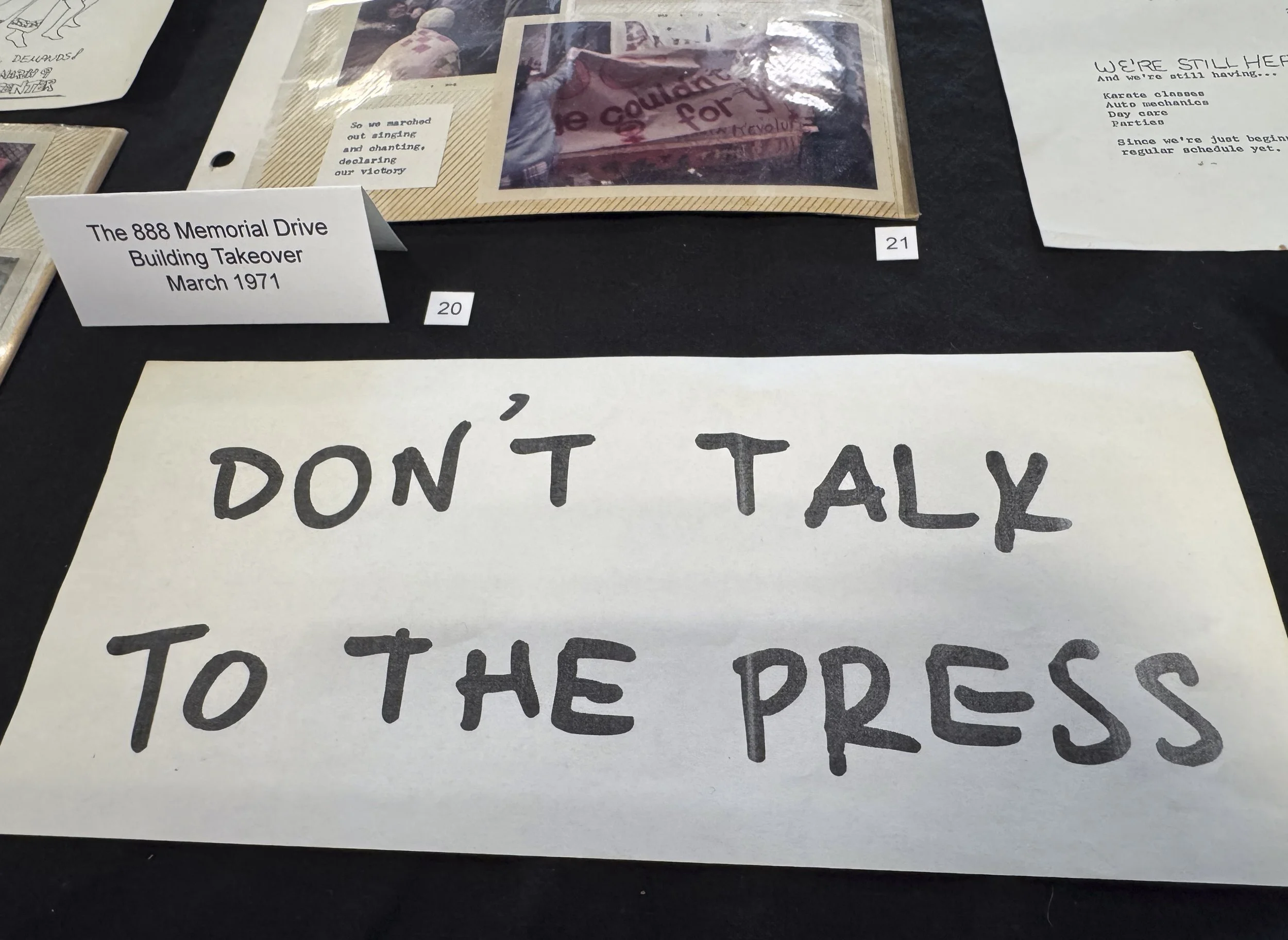
20. Don’t Talk To The Press Sign
“It was of great importance to the women not to be identified. On every wall a sign was posted, reading ‘Don’t Talk to the Press.’”
Smith, Cindy. ”Inside ‘Liberated’ Harvard Building: Pride and Pig-Baiting: Woman Infiltrator’s Report,” Boston Globe, March 8, 1971, ProQuest Historical Newspapers: Boston Globe, pg. 1.
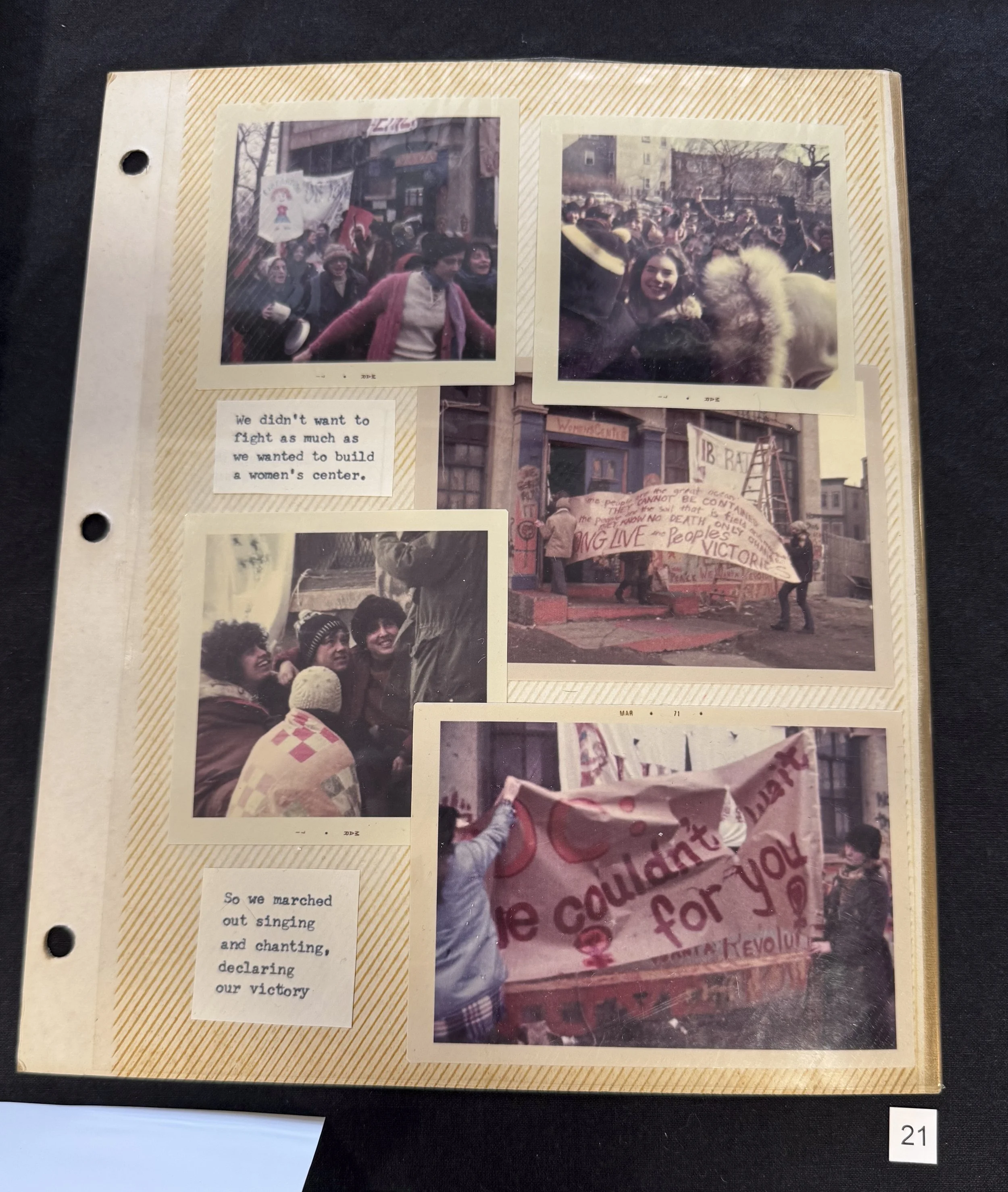
21. Victory
“The debate about leaving the Women's Center was between old politics and the new. Part of me ached to stay till the bitter end, even (or especially) if that meant getting our heads bashed in. We wanted to defend what we had created. But I was scared, and I respect that fear. We might've won the reputation of tough fightin’ back sisters, but paid the price of bloodied heads, bail fees, and the demoralizing realization that they still control the land. We didn't want to fight as much as we wanted to build a women's center. So grabbing the few remaining possessions that hadn't been trucked away, we marched out of the center, singing and chanting, an occasional tear smearing our warpainted faces, declaring our victory: "The people are the ocean, they cannot be contained; the peop!e are the soil of the field and mountain, they know no death , only change.” We had the strength to take what was beautiful and creative and march, arms locked and souls bound together, into our dreams” (Carol, p.12, Coming Out Journal).
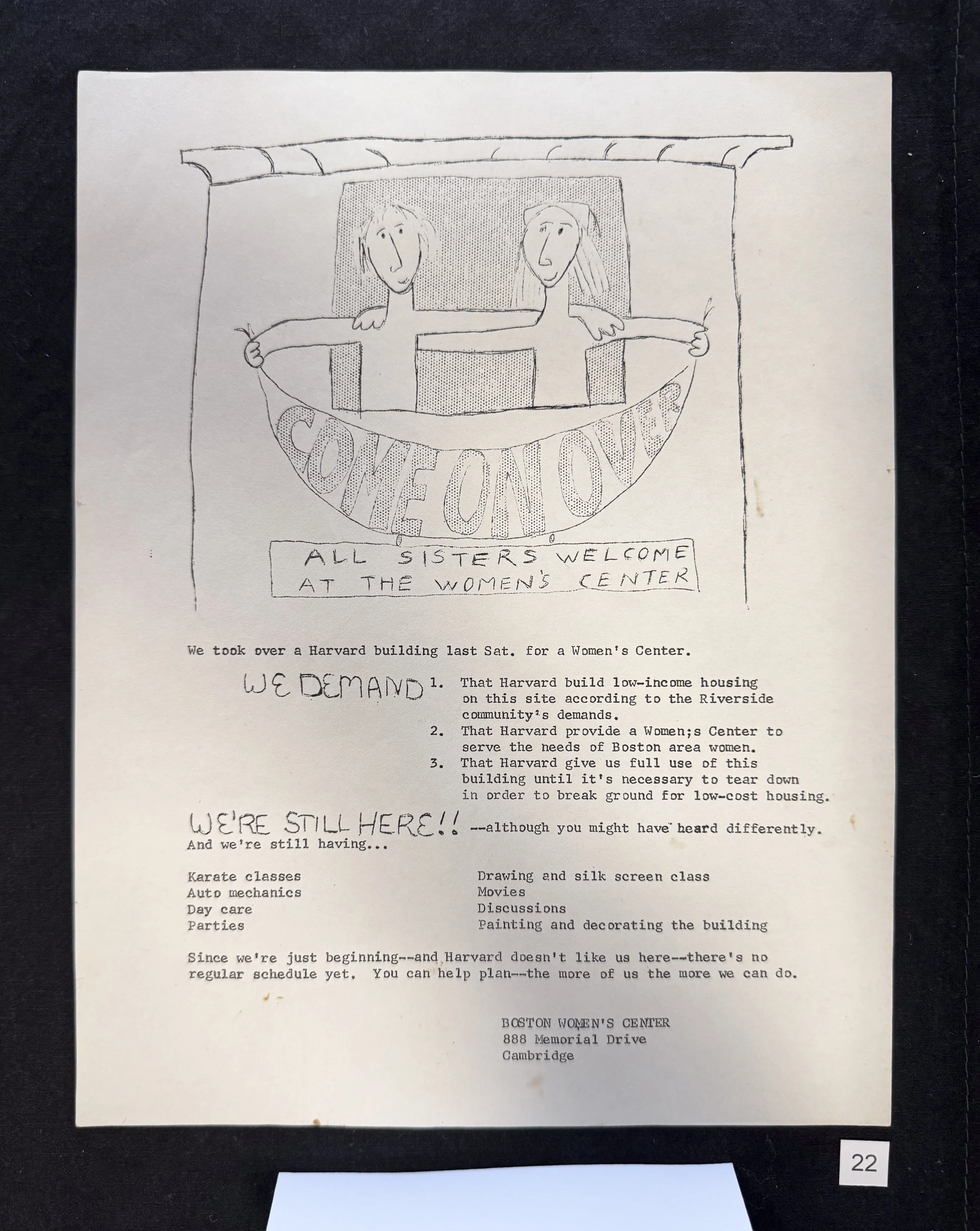
22. Flyer for The Women’s Center during the Takeover
“The women’s center is open, and it’s REAL. 100’s of wonderful women and maybe a potential sisterhood. To both have fun and to build the revolution” (Carol, p.41, COJ).
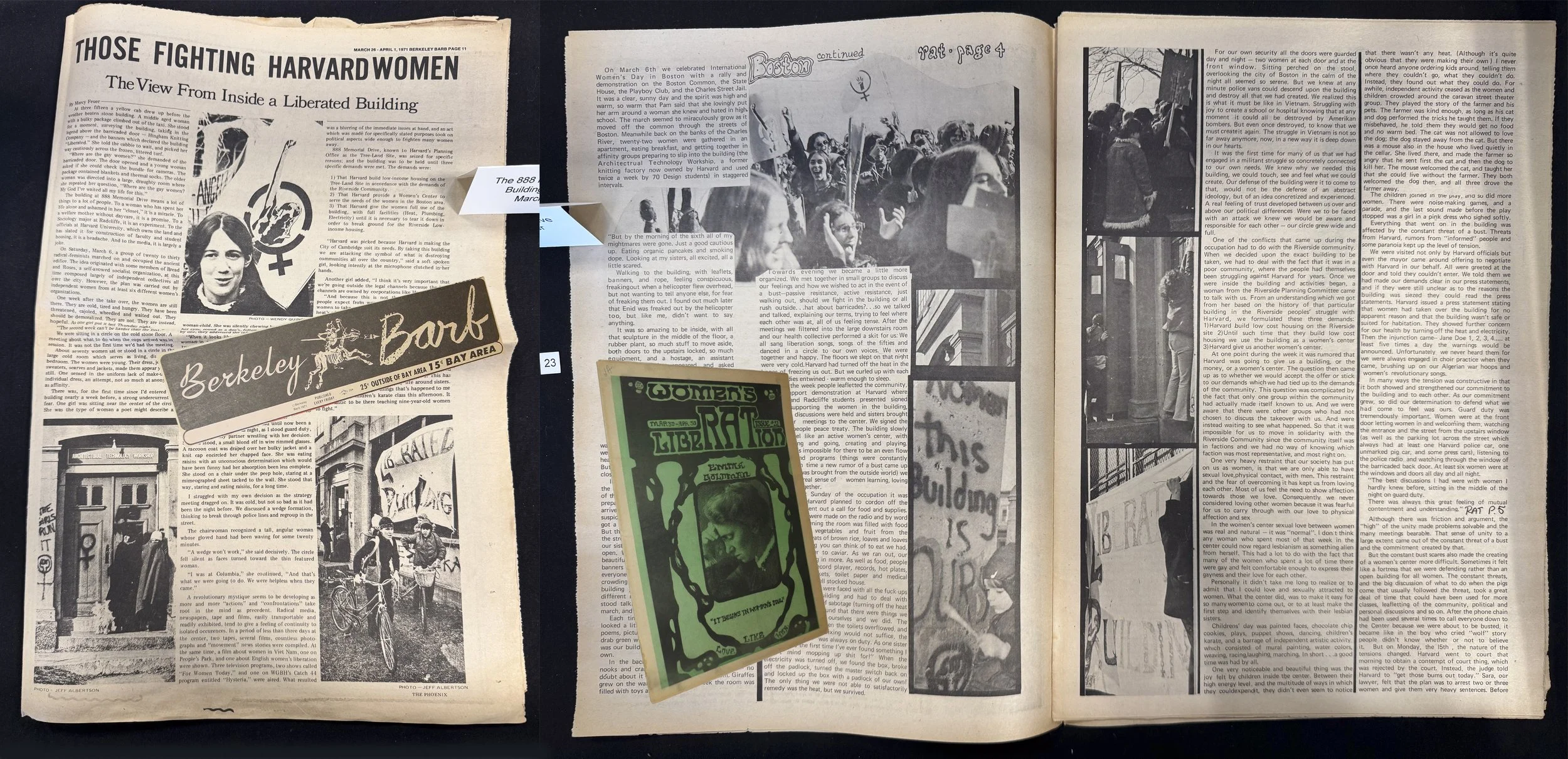
23. Some Underground Newspaper reports on the 888 Memorial Takeover
(left) Berkeley Barb, March 26-April 1, 1971 [pdf]
(right) RAT Subterranean News, vol. 3, no. 21, March 30- April 21, 1971
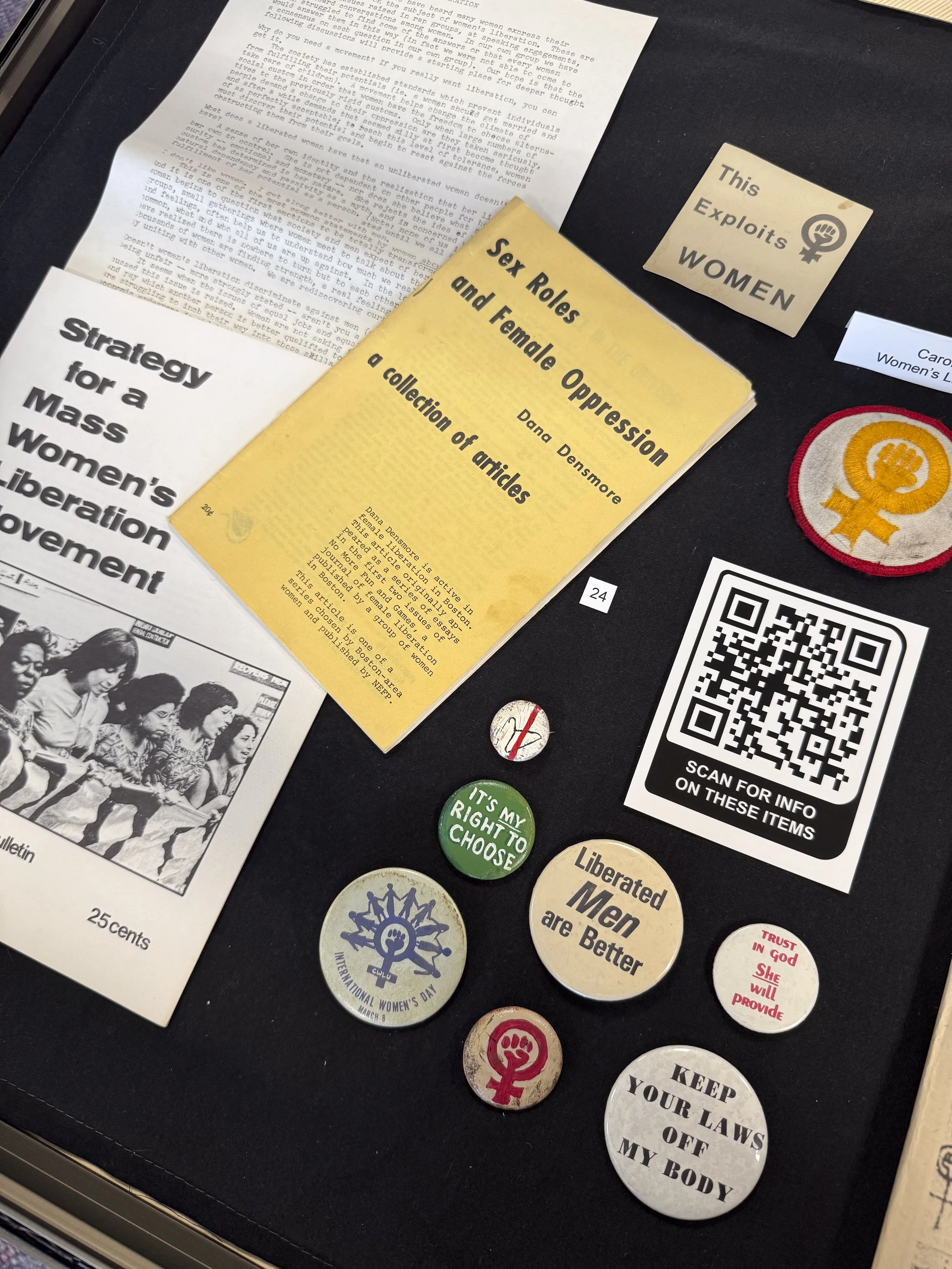
24. Women’s Liberation
Carol’s move to Boston coincided with her increased involvement in women’s liberation. She became involved in Bread and Roses, a socialist women's liberation collective active in Boston in the late 1960s and early 1970s. Bread and Roses were involved in the 888 Memorial takeover and went on to create Women and their Bodies: a Course, which was later developed into Our Bodies, Ourselves. Carol helped write Self-Defense portions of the book (see #31 below).
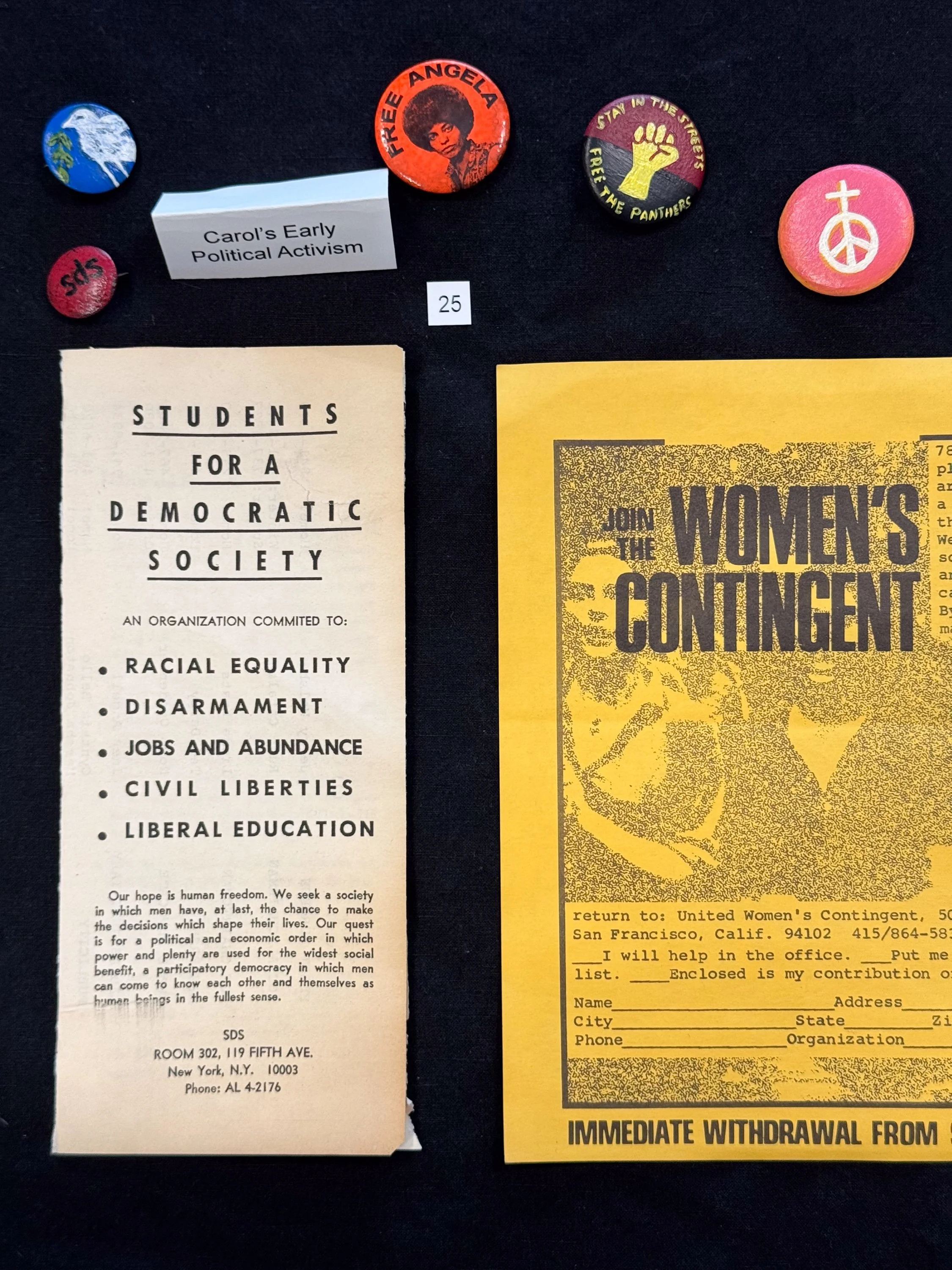
25. Students for a Democratic Society (SDS)
“While a student at the University of Michigan, Ann Arbor, in the early sixties, Carol […] was an active member of the VOICE Political Party, the chapter of Students for a Democratic Society (SDS). Founded in 1960, SDS was a student activist movement that organized students at college campuses for an entire decade. They promoted education and direct action in response to the issues of civil rights, economic injustices, the war in Vietnam and student's rights” (UMB Archives Collection Overview).
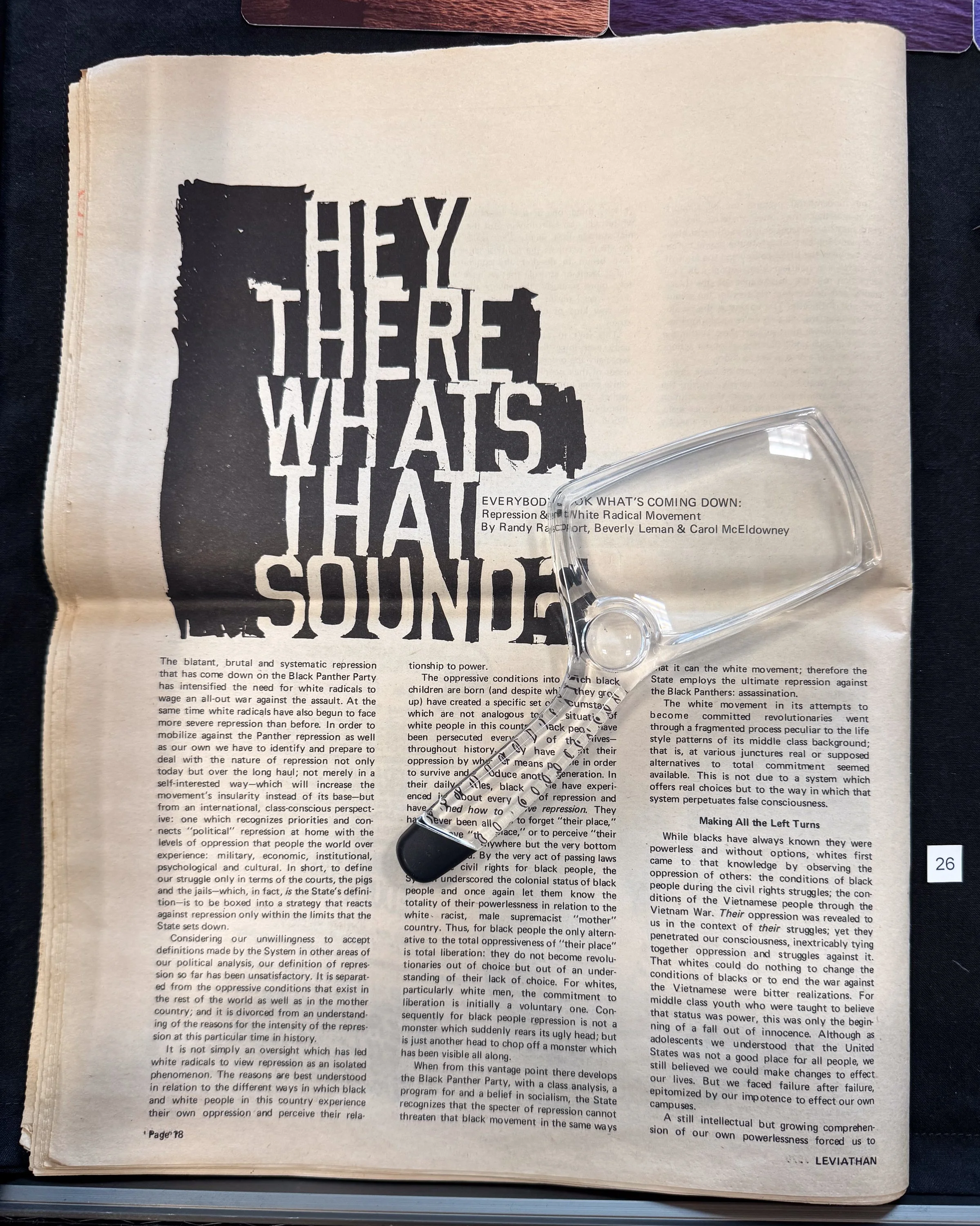
26. Economic Research and Action Project (ERAP); Class and Race Consciousness
After graduating from college, Carol “moved to Cleveland in the fall of 1964 and worked diligently in the "New Left,” as a community organizer for the Economic Research and Action Program (ERAP), working with welfare mothers in Cleveland. ERAP, a project of SDS, […] organized economic conferences and worked on projects to organize poor people in a dozen cities and parts of Appalachia. […] Her increased understanding of poverty, the link between the underclass and those who go to war, catalyzed her growing involvement in the antiwar movement” (UMB Archives Collection Overview). From 1964 until she left in 1969, working closely with the black community of Cleveland and the Black Panthers also evolved Carol’s political consideration of race.
Pictured: Leviathan, vol. 1, no. 8, Feb. 1970. Michigan State University. Reveal Digital, JSTOR, https://jstor.org/stable/community.28039304.
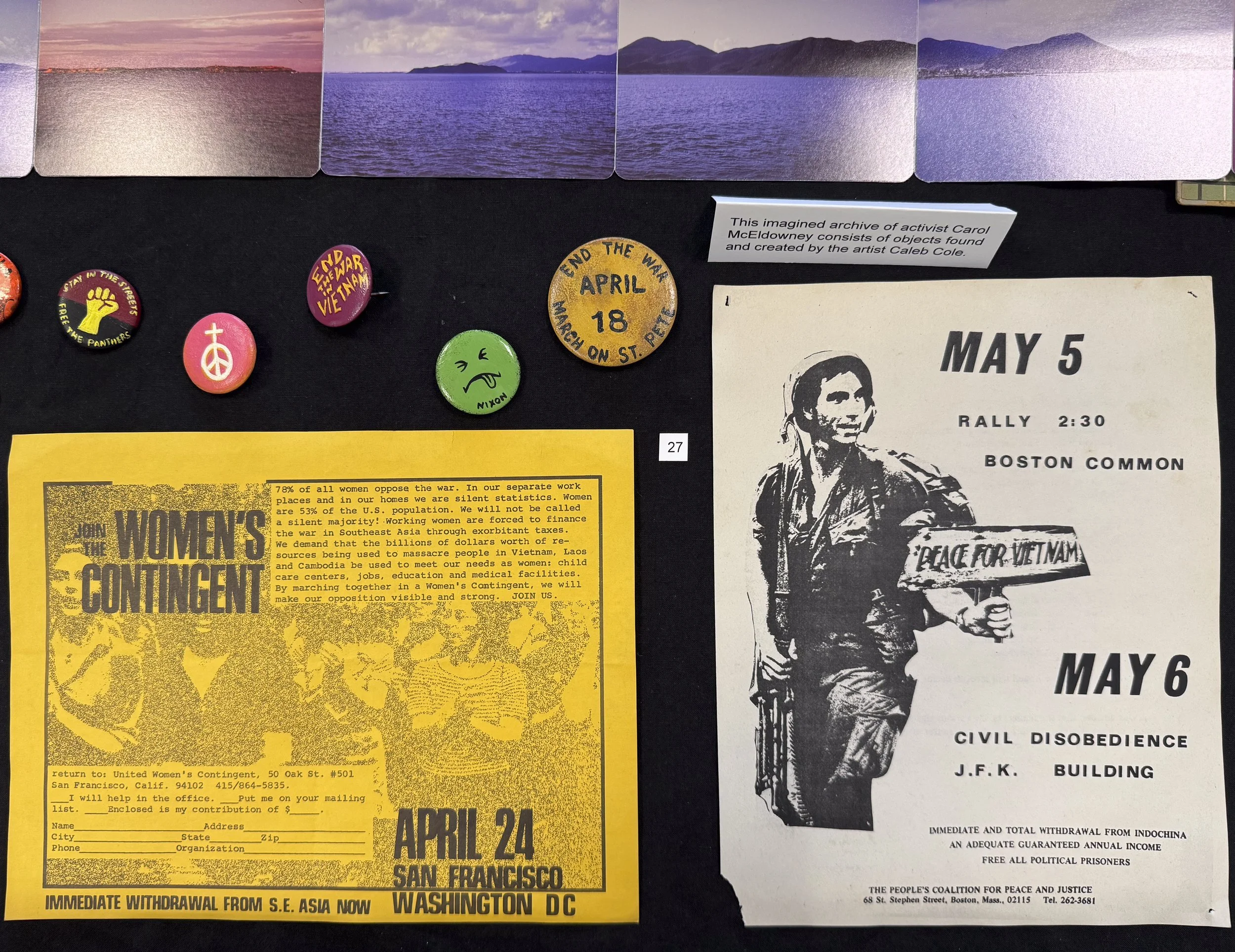
27. Anti-War Activism
While still in Cleveland, Carol participated in many anti-war protests and “collected numerous pamphlets on the war—published by SDS and other peace-oriented organizations—and was obviously interested in learning the history of Vietnam in addition to understanding America’s support for the war itself” (McCormack xxii-xxiii). (See “Vietnam anti-war publications, 1966-1968, Carton: 6, Folder: 15” in the UMB Archives to view Carol’s entire pamphlet collection.)
“In 1970, she was active in a GI coffeehouse in Columbia, South Carolina, where she was arrested for passing out antiwar leaflets in the community and a nearby military base” (UMB Archives Collection Overview).
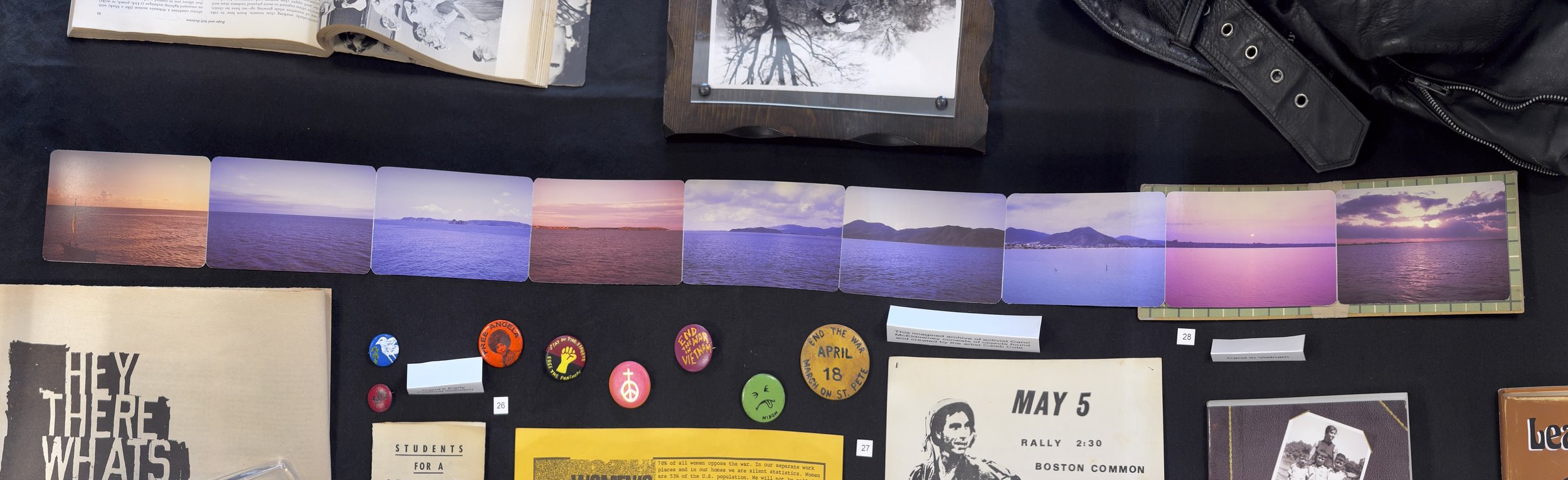
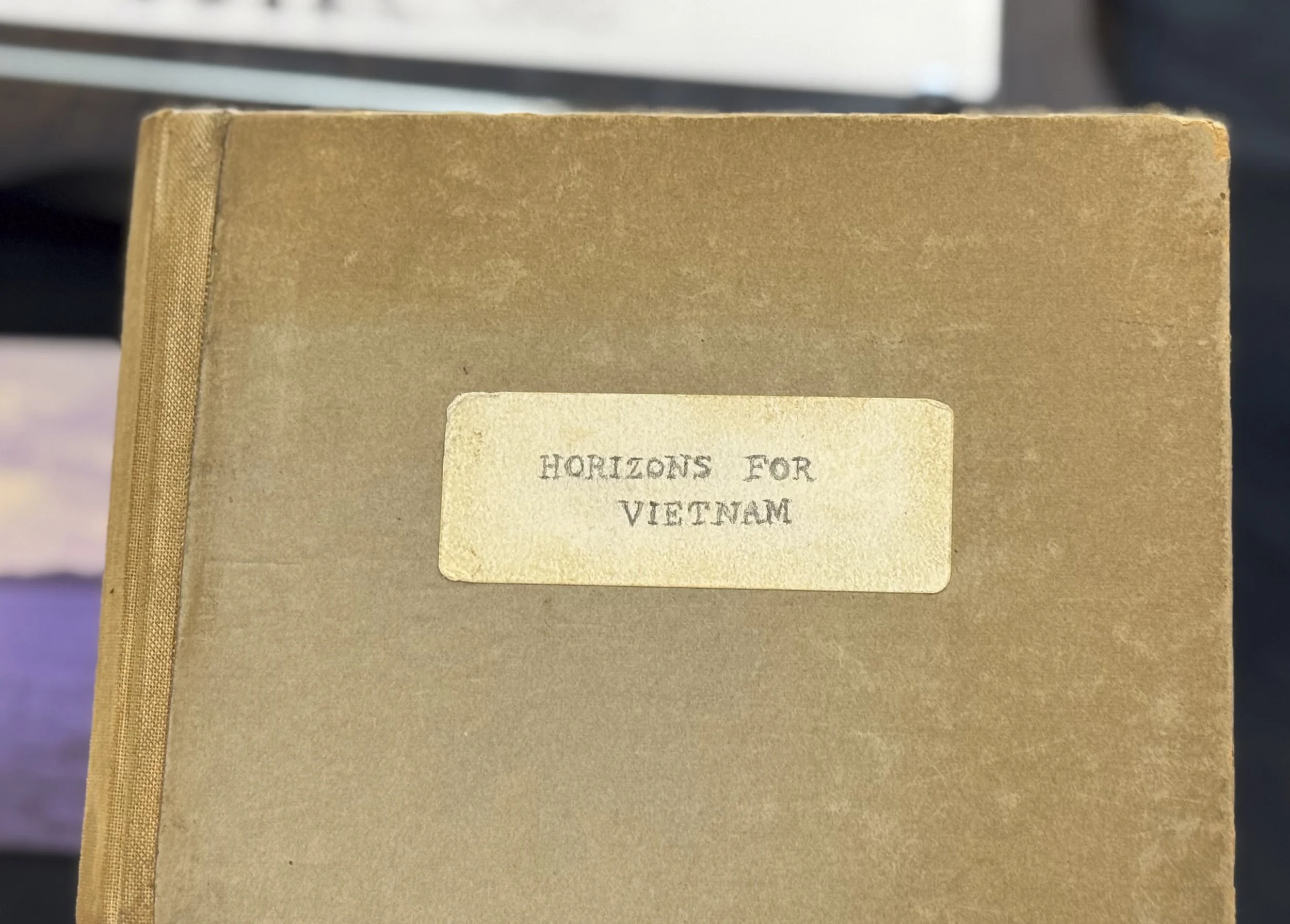
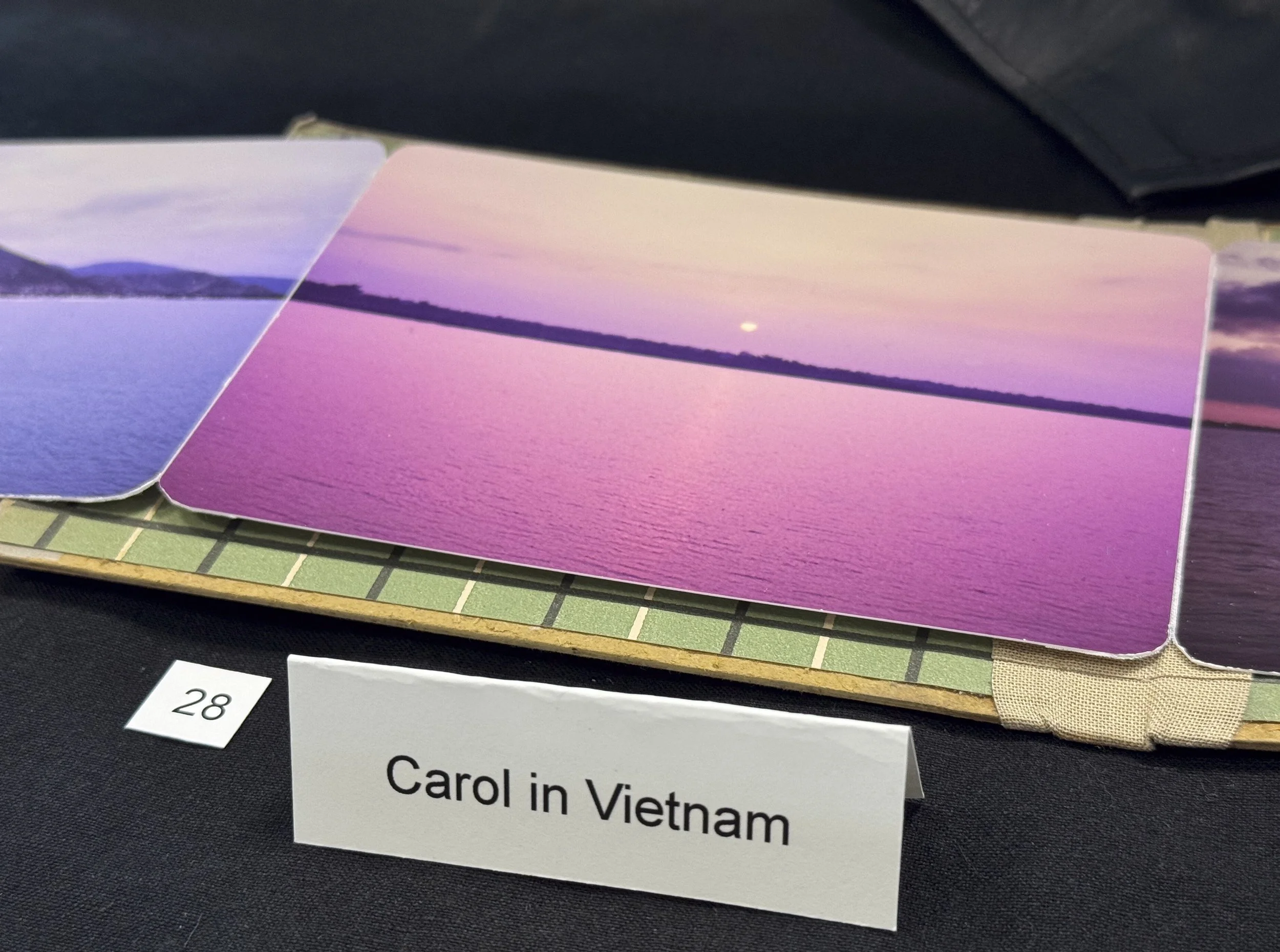
28. Horizons for Vietnam
In 1967, Carol “was one of only two women in a small contingent from the United States to travel to Vietnam. The purpose of this trip was to study Vietnamese society and the consequences of this war upon it, in order to further the goals of those fighting "back home," (in the U.S.), to end the war” (UMB Archives Collection Overview). She recorded her thoughts about the trip in a journal (see #29 below) and made photographs of her journey (see “Photography, 1956-1973, Carton: 6, Folder: 14” for her other photographs). Upon return, Carol created this handmade book linking together the various horizons she photographed in Vietnam while ruminating on possible peaceful futures for the country and for the world.
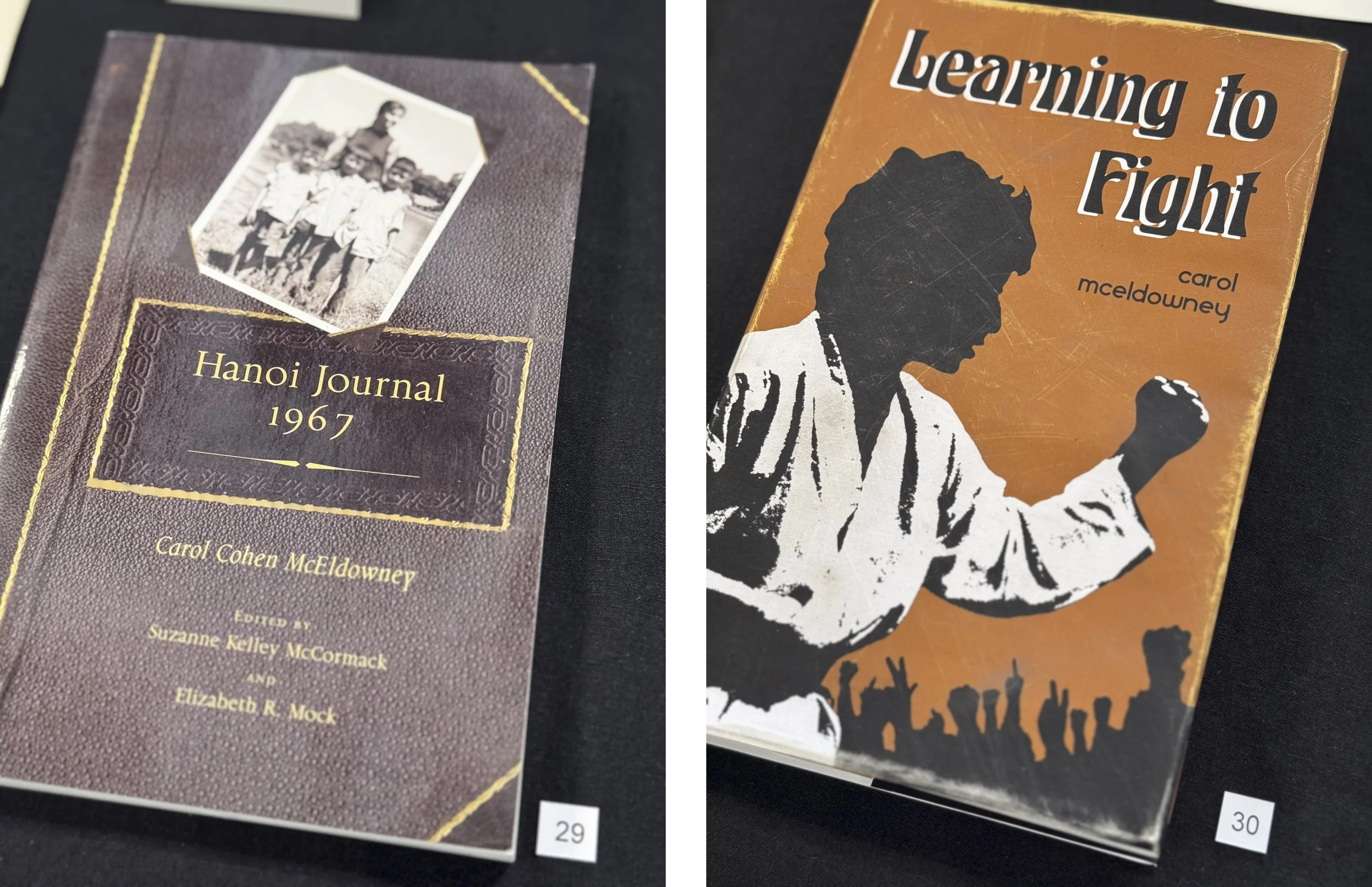
29. Hanoi Journal 1967
Carol’s Vietnam journal was eventually published as a formal book in 2007. Editor Suzanne Kelley McCormack said the journal contained “the observations of a young woman committed to eradicating poverty but only beginning to understand how American foreign policy could be linked to economic problems at home” (McCormack xxiii). Unlike other activist accounts of travels to Vietnam, Hanoi Journal 1967 provides “an intimate view of an activist’s thoughts and observations as they occurred” (McCormack xiii) as well as one from a woman’s perspective, since so many were written by men. Read Hanoi Journal 1967 on JSTOR here: https://www.jstor.org/stable/j.ctt5vk38c
30. Learning to Fight
Carol worked for years on iterations of what would eventually become Learning to Fight, a memoir of her time as an activist in the new left and its connection to her activism in the time that followed. The title of the memoir is from p.165 of her Coming Out Journal and below are two quotes as she worked on the book:
“Listen, some day I'm going to write a movement history, my history, I hope. […] I really have a lot to say, and I think it's interesting stuff. I think some of the great rush to get this all together in my head, and some on paper, comes from approaching 30. It's the first biggie for me. Some of my friends never expected to make it to 21, I never understood why. […] Now, where my head is at is figuring I must have done some things right to stick it out till 30. So I'm into digging back into my past these days” (p.162 COJ).
“i want to write about the new left, record that history, from a feminist perspective. When I first wrote masses of pages friends criticized it as· being too impersonal. Last summer (1971) I tried to personalize the account: added tales of my love life and about being gay. […] Maybe it' s a total ego trip-- I've certainly felt critical of male movement heavies who are into writing their memoirs. Is my idea any different? Dunno. But it’s feeling challenging to write-- forces me to clear out the cobwebs in my head” (p.154 COJ).
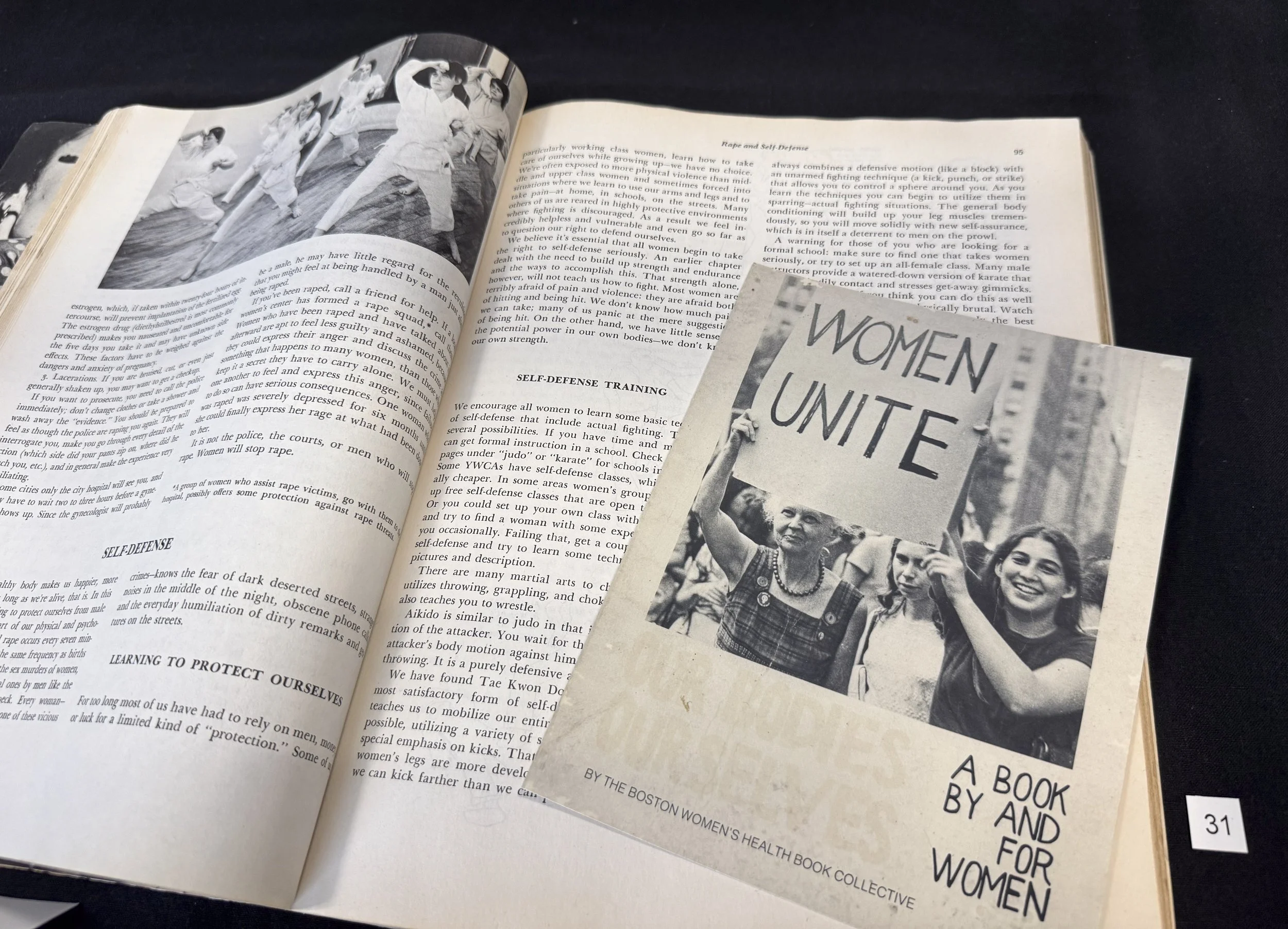
31. Self-Defense and Our Bodies, Ourselves
Carol was an original contributor to Our Bodies, Ourselves, coediting the chapter on self-defense. She called karate her “sometimes […] first true love” (p. 95 MCJ) and on p. 141 of her Coming Out Journal, she wrote about the connections between karate and her sense of safety in the world: “I love [karate] and most of the time it makes my body feel wondrously healthy and my mind alert. At times I get discouraged and think I'll never get any better, but I'm persistent and don't give up easily. One truly exciting part of it is that I am learning how to fight, something I never did as a kid. I'm feeling stronger and tougher and less afraid of being hurt. And it makes a huge difference, lemme tell you, walking down the streets alone, feeling like a tough dyke.”
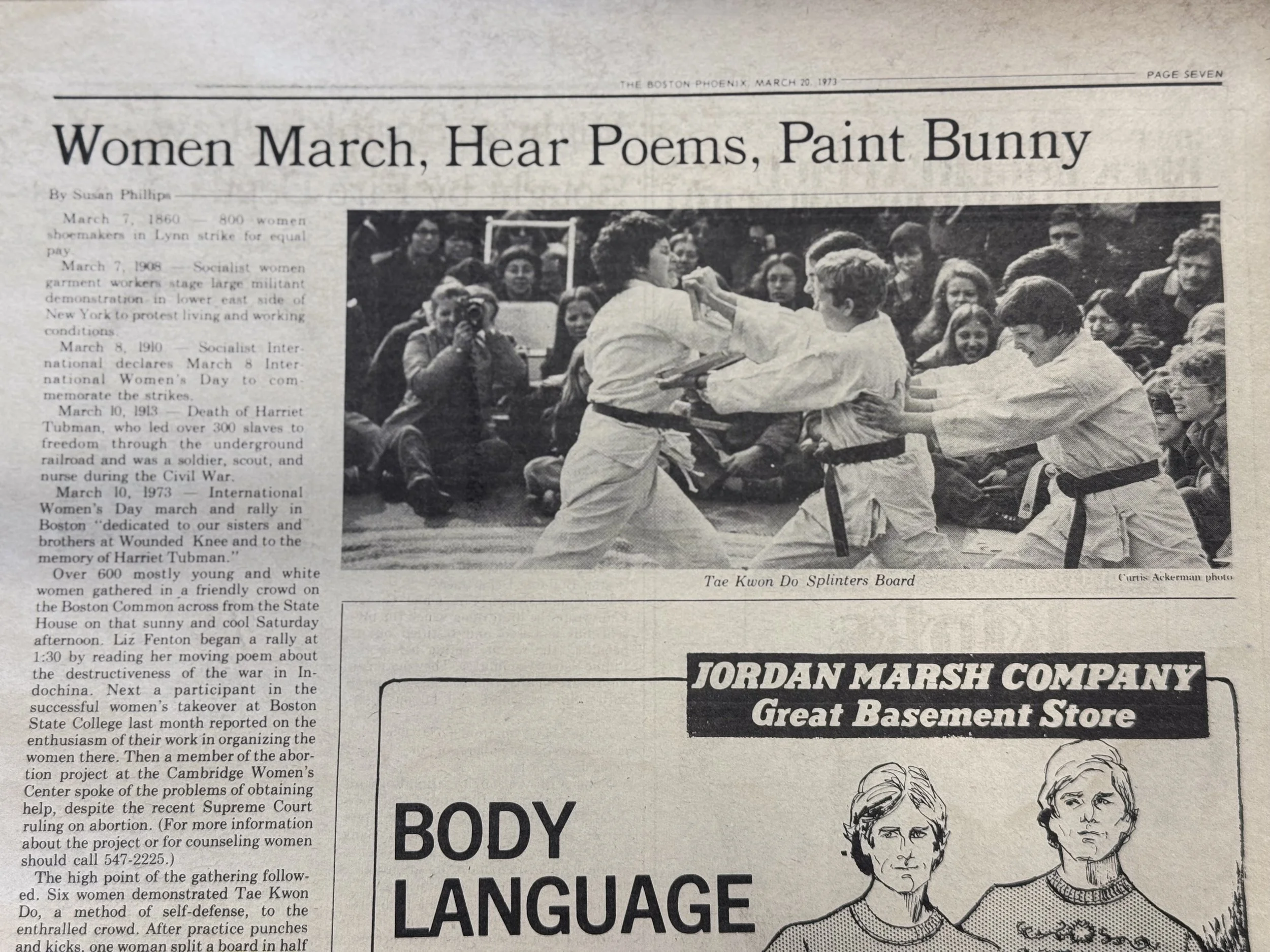
32. International Women’s Day 1973
Carol describes her participation in a Tae Kwon Do demonstration for International Women’s Day 1973: “Saturday was an incredible up: at the demo we did a TKD demonstration, complete with sparring & board breaking (me & cindy sparring was on the TV news). The board breaking totally thrilled the crowd— such an appreciative mass of women - so far out and so many dykes” (p.145 MCJ).
Susan Phillips of The Boston Phoenix explains that “[t]he high point of the gathering followed. Six women demonstrated Tae Kwon Do, a method of self-defense, to the enthralled crowd. After practice punches and kicks, one woman split a board in half with her elbow; another split a board with her foot. A third woman attempted with her fist but only dented the board and bruised her knuckles. Women in the crowd cheered a double side kick — each probably’ imagining the pain in the groin to that would-be rapist” Boston Phoenix, March 20, 1973, p. 7. Read the entire article here.
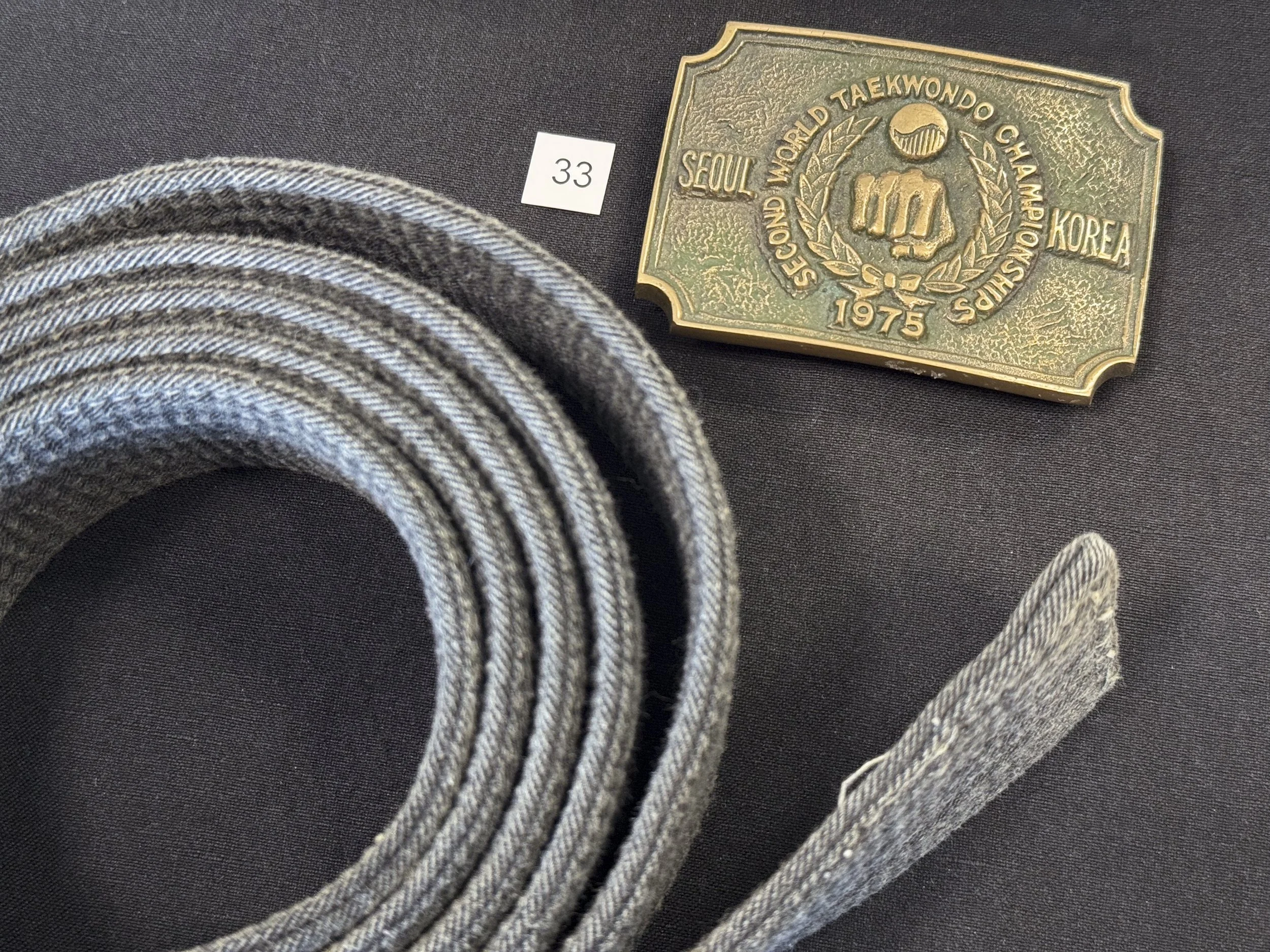
33. Continuing with Tae Kwon Do
Carol was both teaching martial arts to other women and working her way through Tae Kwon Do belts during the course of her journals. She explains that “even though it conflicts with my politics, I'm into the belt/ranking trip because the straight world operates along those lines of status. I have more credibility if I can flash a blue belt at some place that's thinking of hiring me [than I could with a green belt]” (p. 128 COJ). She really wanted to achieve black belt status: “I attended a Tae Kwon Do demonstration the other day— impressive beyond description— and I'm feeling inspired about working really hard. Could I get a black belt in less than 2 years[?]” (p. 90 MCJ). Pictured is a commemorative belt buckle from the Second World Tae Kwon Do Championships in 1975 and the black belt that Carol finally earned, faded and worn from many many more years of teaching and fighting.
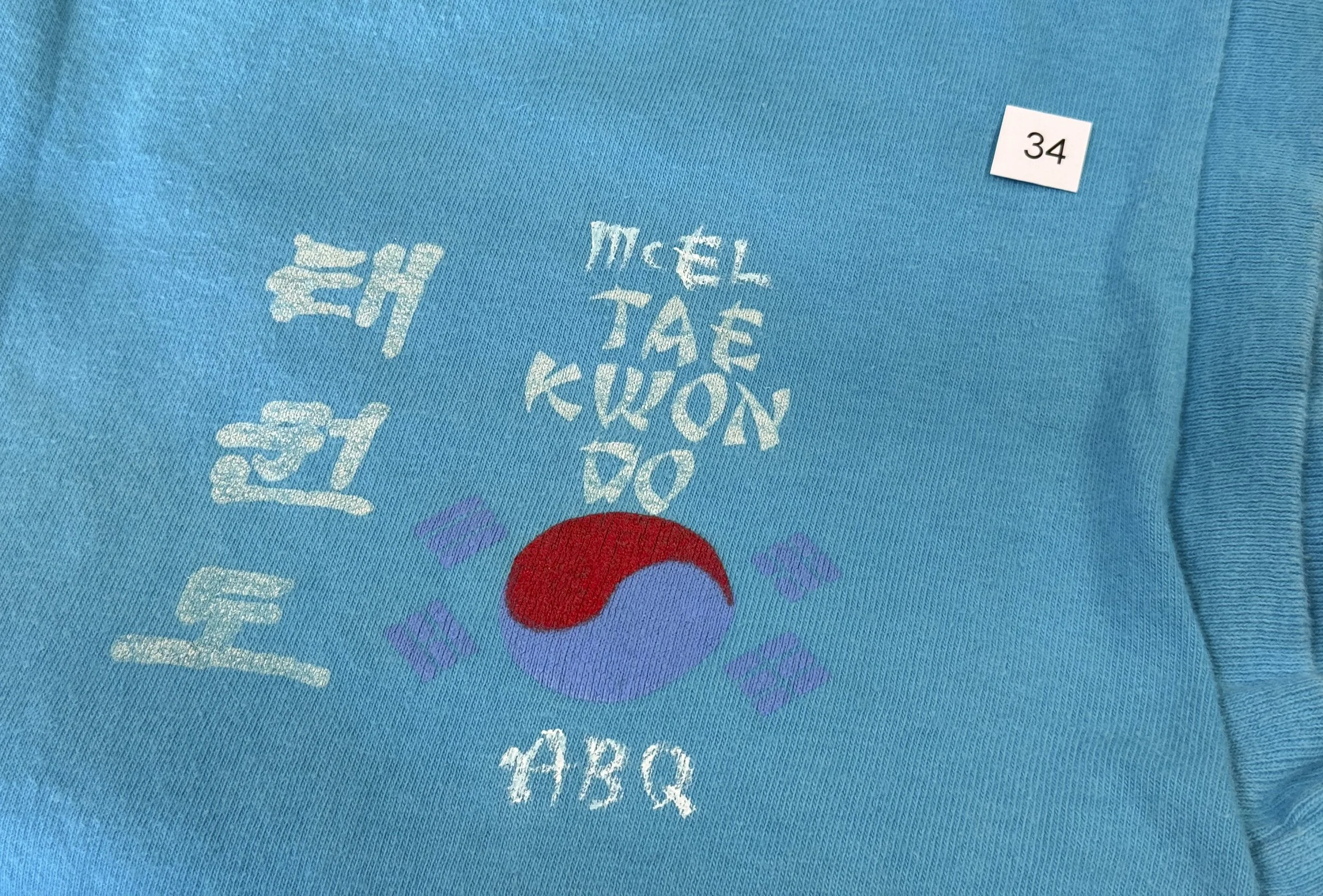
34. Teaching and Her Own Dojo
In her journals, Carol frequently mentioned the possibility of moving to Albuquerque, New Mexico, both to teach as well as for “love and sunshine. Albq. has plenty of the latter and I guess we can always find the former,” she said (p. 189 COJ). Eventually she did make the move and settled in the area called the south valley with other queer women that she’d previously met. She began to teach at an existing dojo before establishing her own, though it lasted only for a relatively brief time. Carol eventually returned back to the Boston area to continue teaching there. Though she loved the desert, certain fears she’d had about moving proved to be true: she struggled to earn enough money as well as to truly feel like she belonged, in part because “it takes getting to a place where there aren't so many of my kind to realize how accustomed I am to being around lots of jews” (p. 189 COJ).
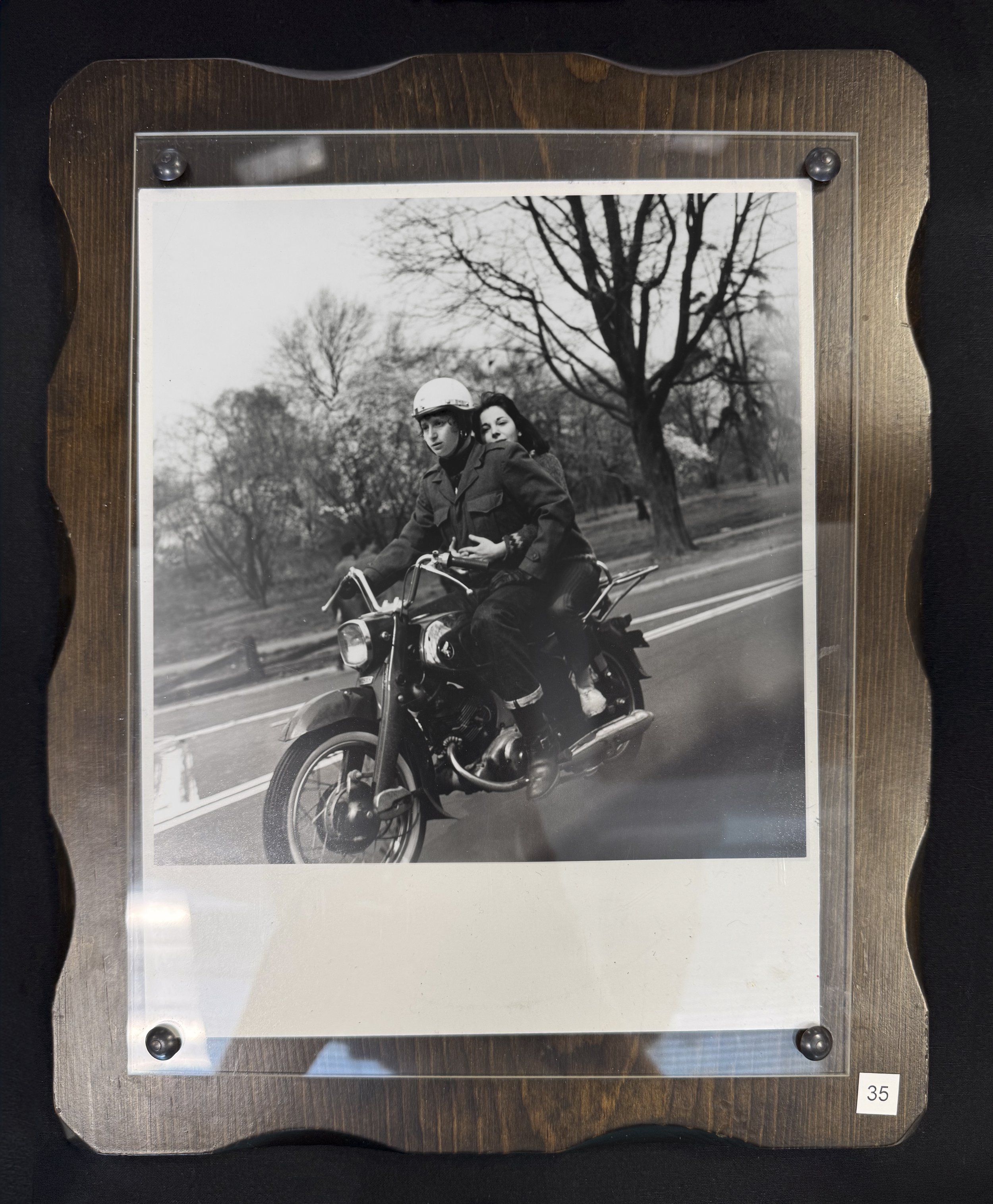
35. Carol and Her Motorcycles
Carol got her first motorcycle in the spring of 1973: “Midgie has given her old Honda 50 to me. Got my license tags, learners permit, everything except the bike which is sitting at the shop waiting for a small part to be shipped from California” (p. 177 COJ) and it quickly became a lifelong passion for her: “Drove my bike all around today - to the Y, to TKD, What a rush. I want one with more power!” (p.165 MCJ).
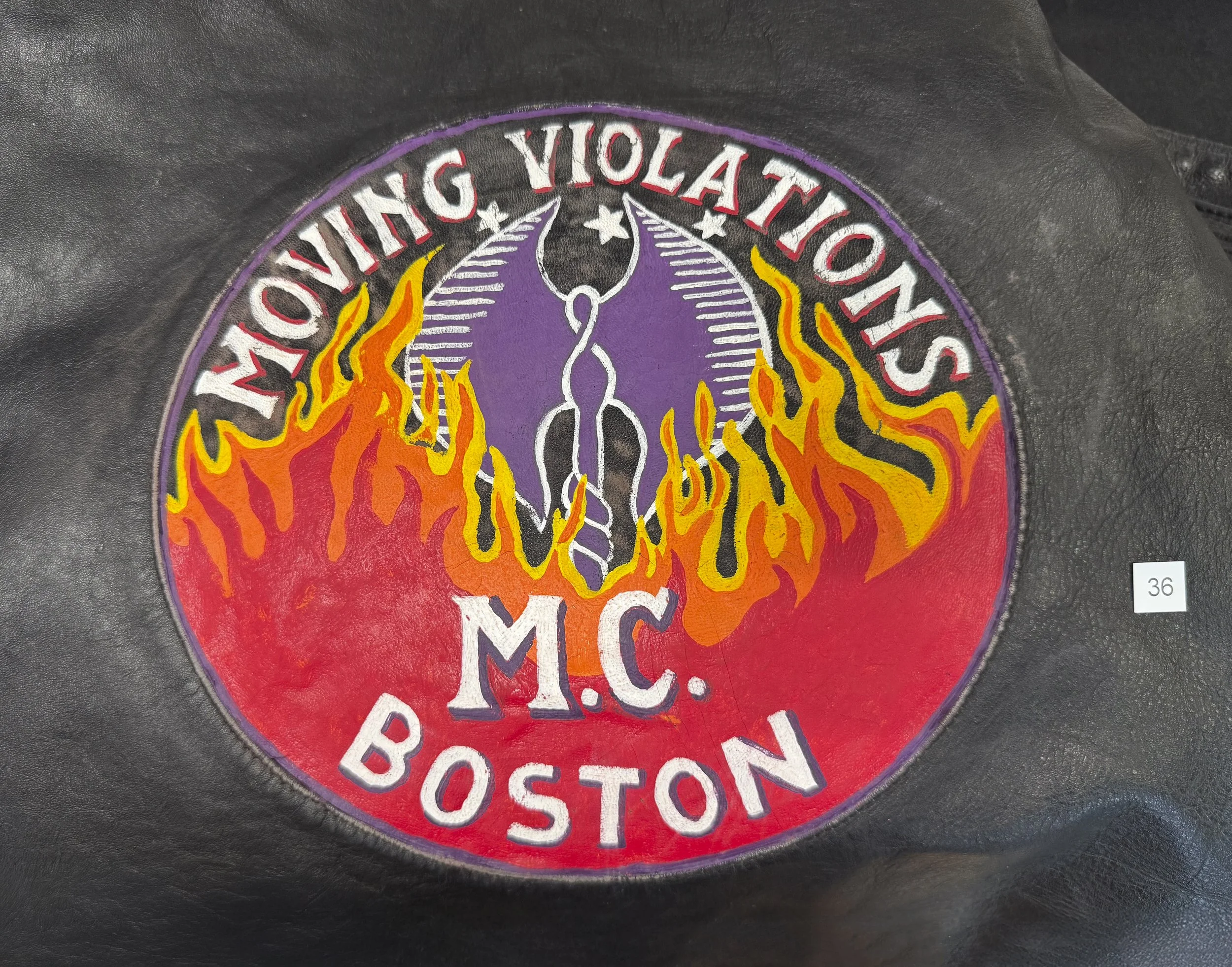
36. Riding with a Gang
“I got my motorcycle and have been zipping all over town on it. Can't wait till I get my license (just have a permit now) so I can take passengers. It’s a total rush riding it, but it’s also lonely” (p.181 COJ) she noted, acknowledging that “it's unleashed repressed fantasies about a women's motorcycle gang. Wheeee. I feel so tough and free riding around” (p. 179 COJ).
Carol was able to recognize her dream of joining a biker gang when she became an early member of The Moving Violations, a Boston area all-women’s motorcycle club established in 1985. Carol’s treasured leather jacket was stolen in early 1972: “My beautiful irreplaceable leather jacket was ripped off— I’m finally accepting it as gone” (pp. 44-45 MCJ); it wasn’t until she had a new jacket personalized for the club that she felt whole again.
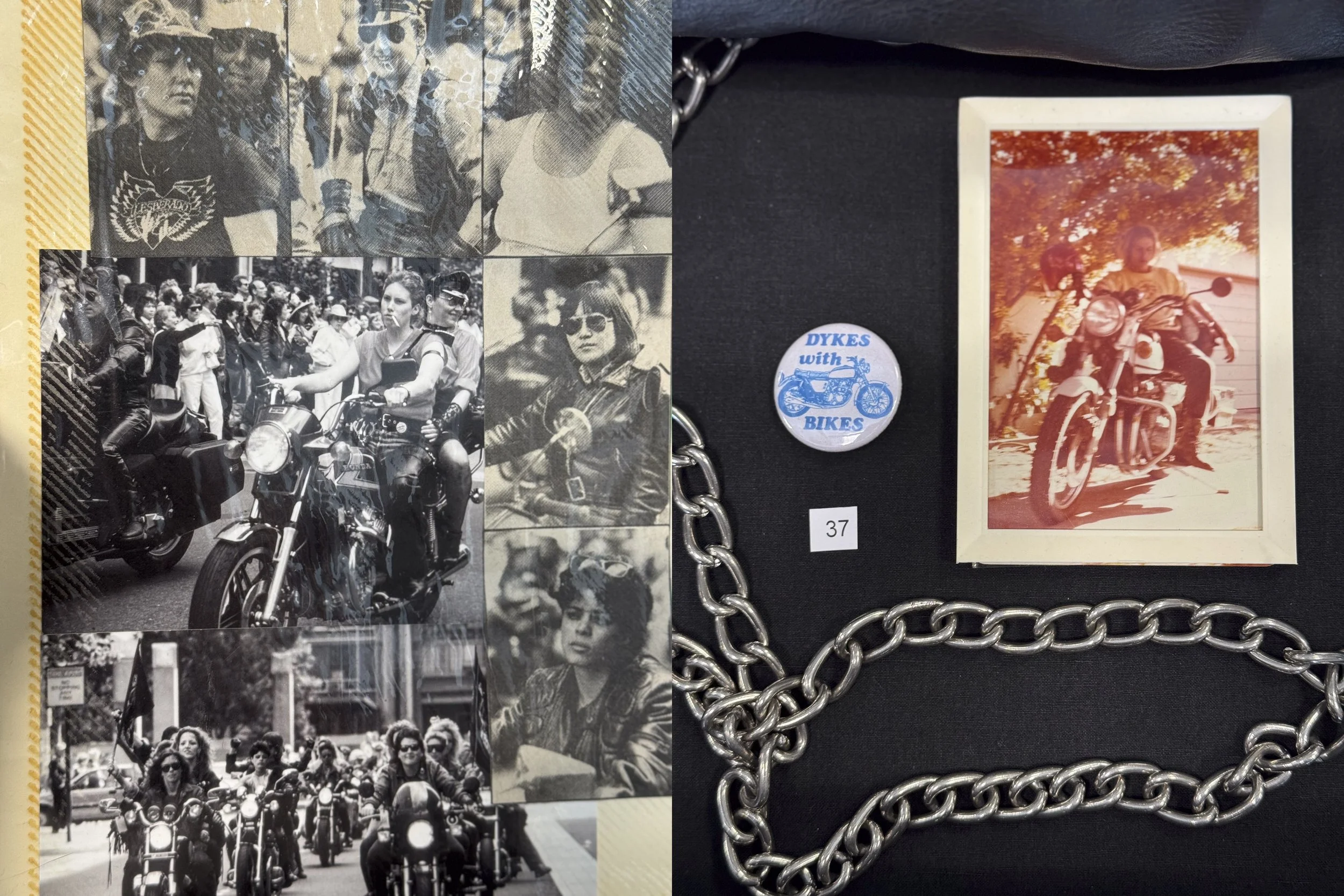
37. Dykes on Bikes
Carol was also involved with Dykes on Bikes since the late 1970s. “Dykes on Bikes (DOB) is a chartered lesbian motorcycle contingent […] known for their participation in gay pride events such as pride parades, and significant LGBTQ+ events like the international Gay Games” (wikipedia). With The Moving Violations and without, Carol participated in numerous pride parades, riding at the front of the parade on her bike.
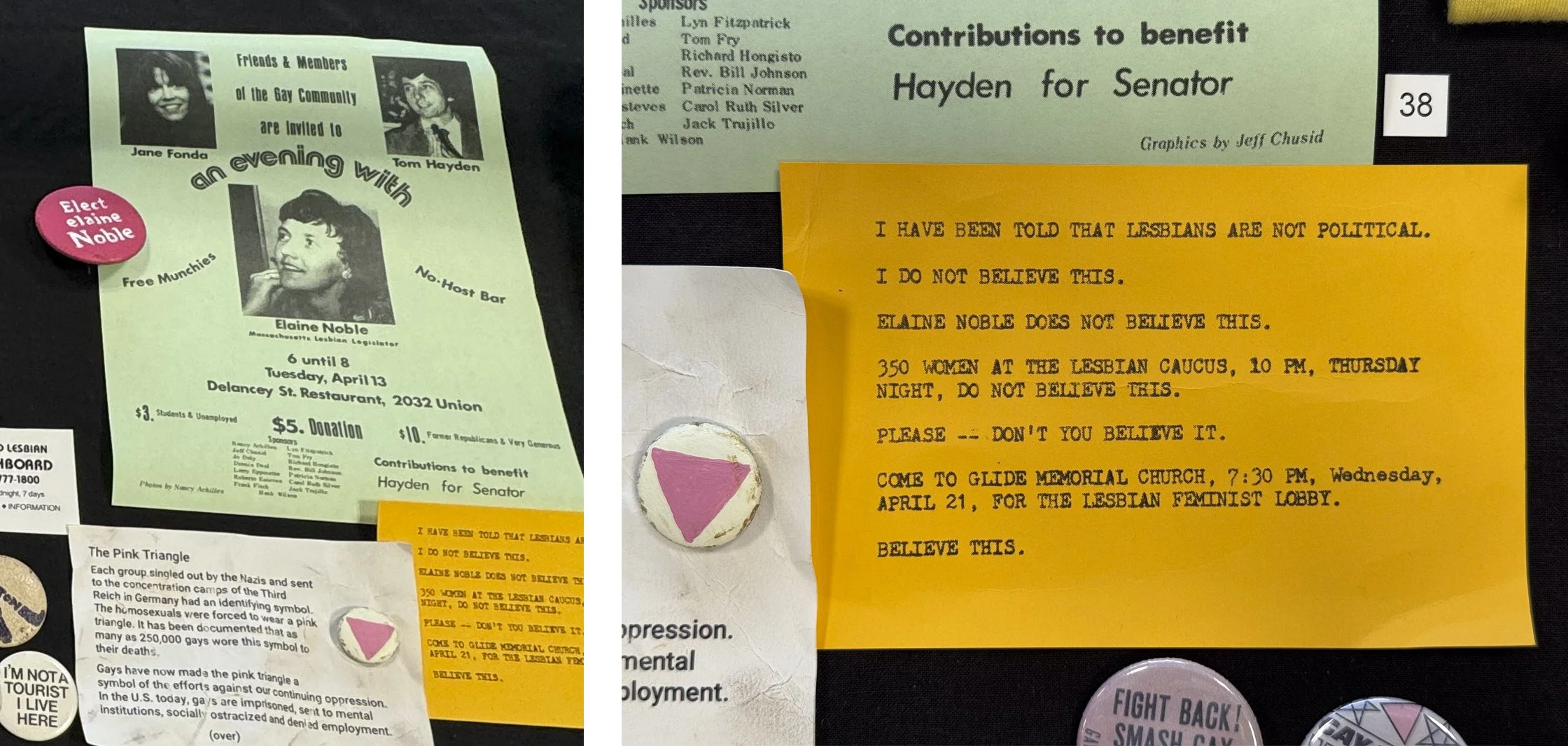
38. Elaine Noble’s Campaign
“Elaine Noble is an American politician and LGBT activist who served in the Massachusetts House of Representatives for two terms starting in January 1975. She was the first openly lesbian or gay candidate elected to a state legislature. She served two terms as representative for the Fenway-Kenmore and Back Bay neighborhoods of Boston” (wikipedia). Carol worked on both Noble’s house campaigns, as well as her failed United States Senate run in 1978, supporting Noble’s work on tenant’s rights and desegregation of Boston public schools.
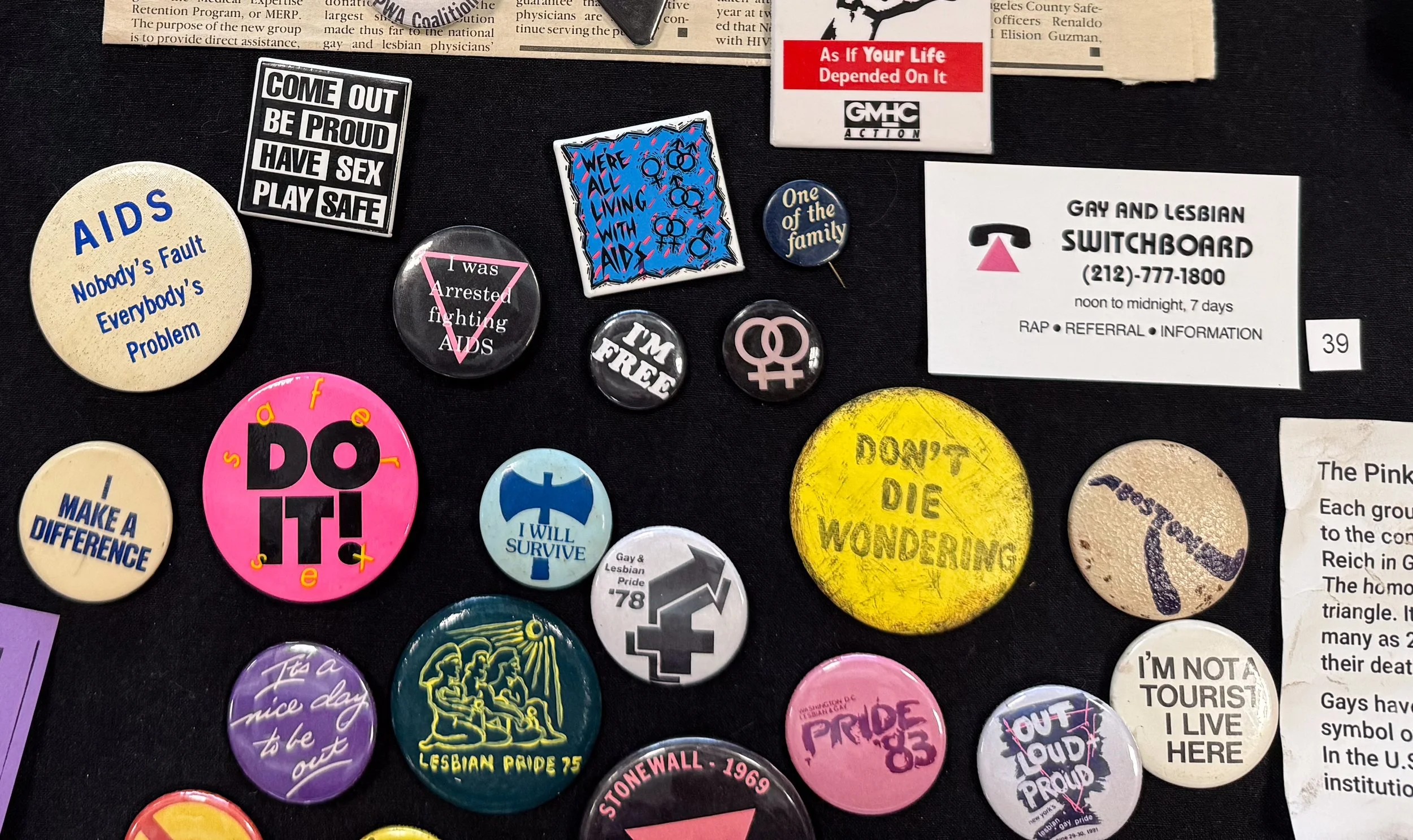
39. Carol’s Activism from the late 70s and beyond
Carol’s pinback button collection reflects the many events and issues that were important to her. Besides her buttons (which are on loan from the Lesbian Herstory Archives), her extensive collection of flyers, cards, and other ephemera trace various volunteer efforts (for example, briefly volunteering with the Gay and Lesbian Switchboard of New York).
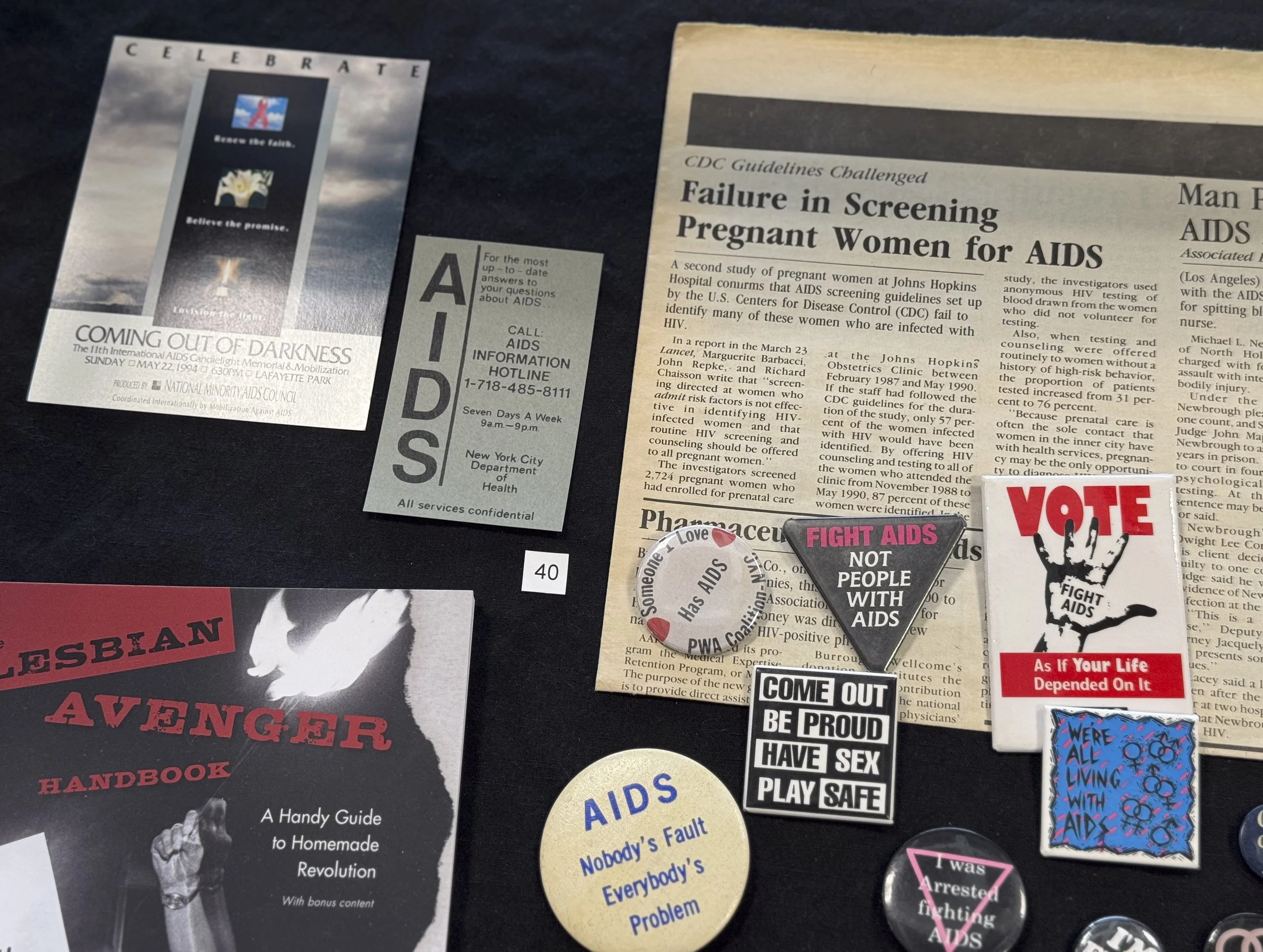
40. AIDS Activism
For Carol, the latter half of the 1980s and early 1990s was spent on a significant amount of AIDS activism, both with ACT UP Boston and ACT UP NY, as well as other idependent groups. A particular focus for her was fighting for Women’s access to life-extending and life-saving medication, for testing of drugs on women, and for women to be allowed the classification of having AIDS (which was initially restricted to men, denying women with HIV and AIDS access to medical resources). For more information, see the ACT UP Oral History link below.
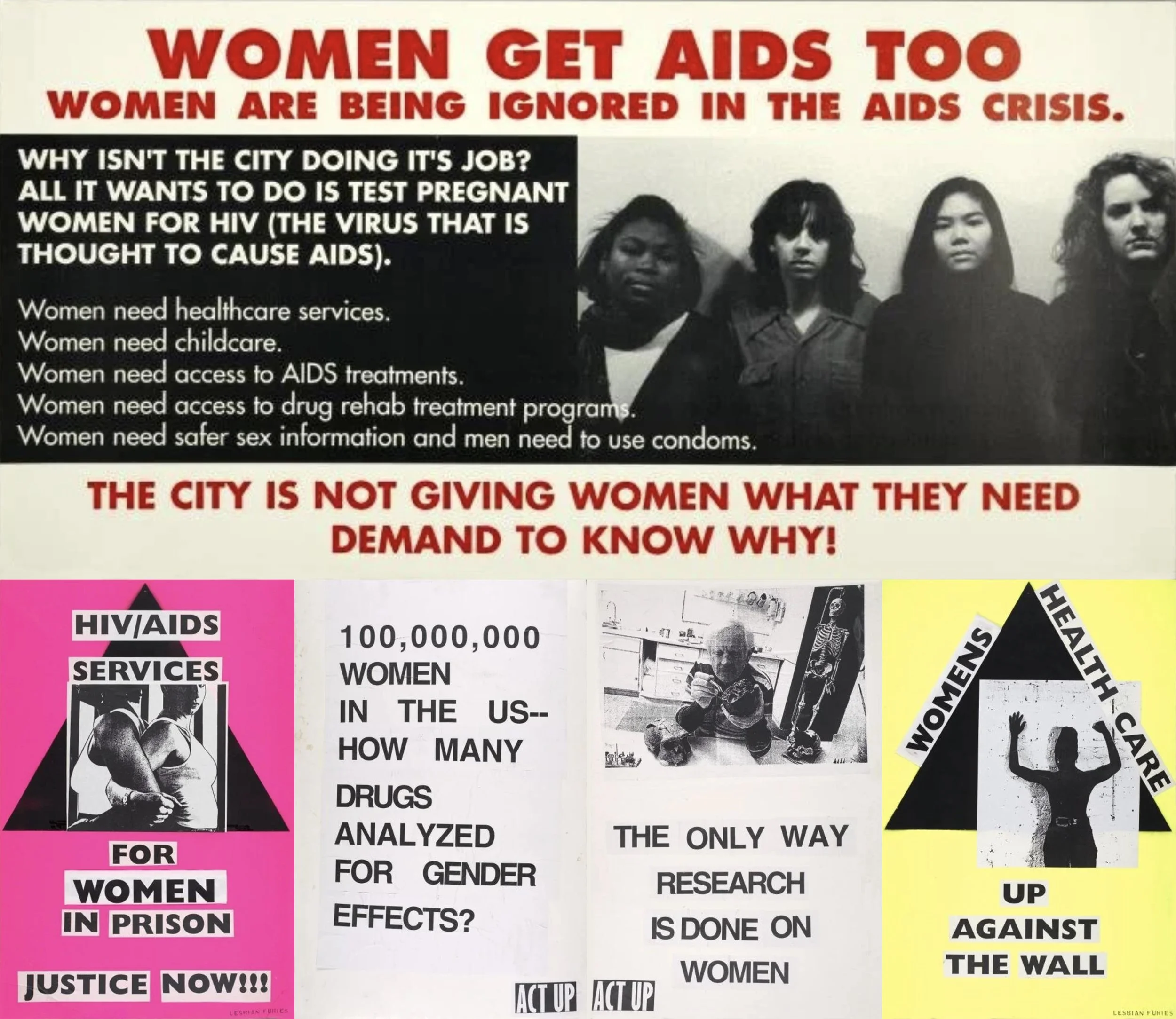
Posters from ACT UP Oral History Project
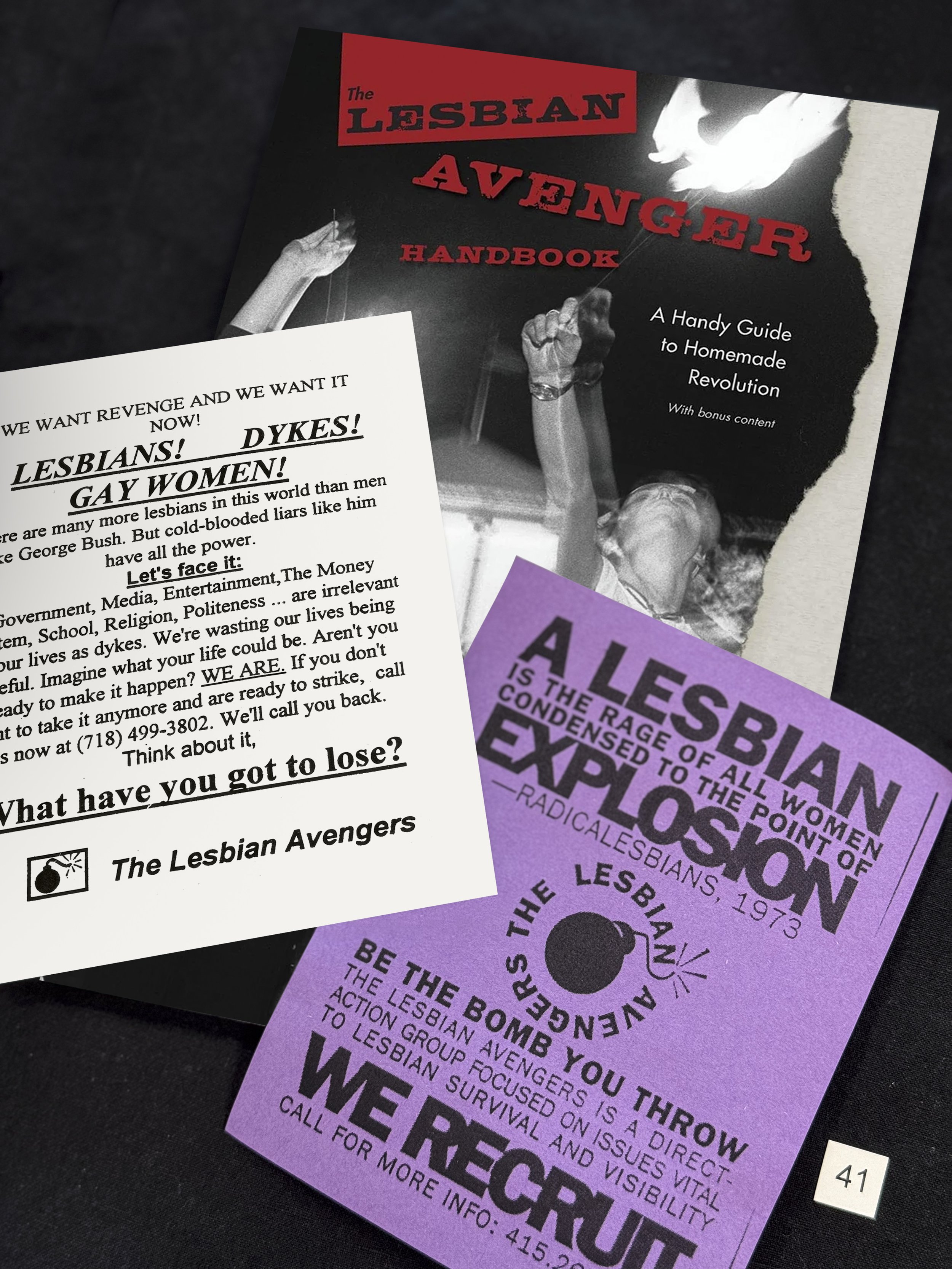
41. The Lesbian Avengers
Carol occasionally worked with the Lesbian Avengers, a direct-action group “formed to address lesbian issues and visibility through humorous and untraditional activism” (wikipedia). She primarily worked on the creation of the annual Dyke March, riding her motorcycle in as many annual marches as she could. More information about the Lesbian Avengers here.

42. Coors Boycott
“The Coors boycott represented an historic partnership between Teamsters and the LGBT movement. It began in 1977 in part as a response to the company’s 178-question employment application form […] One question demanded: ‘Are you a homosexual?’ If you answered ‘yes,’ that terminated your application. Another demanded ‘Are you pro-union?’ If you answered ‘yes,’ that terminated you, too.” The boycott was a success and so it “woke other union groups up to the power of the gay community and its organizing talents […] Other campaigns, with gays allied with unions, followed” (teamster.org).
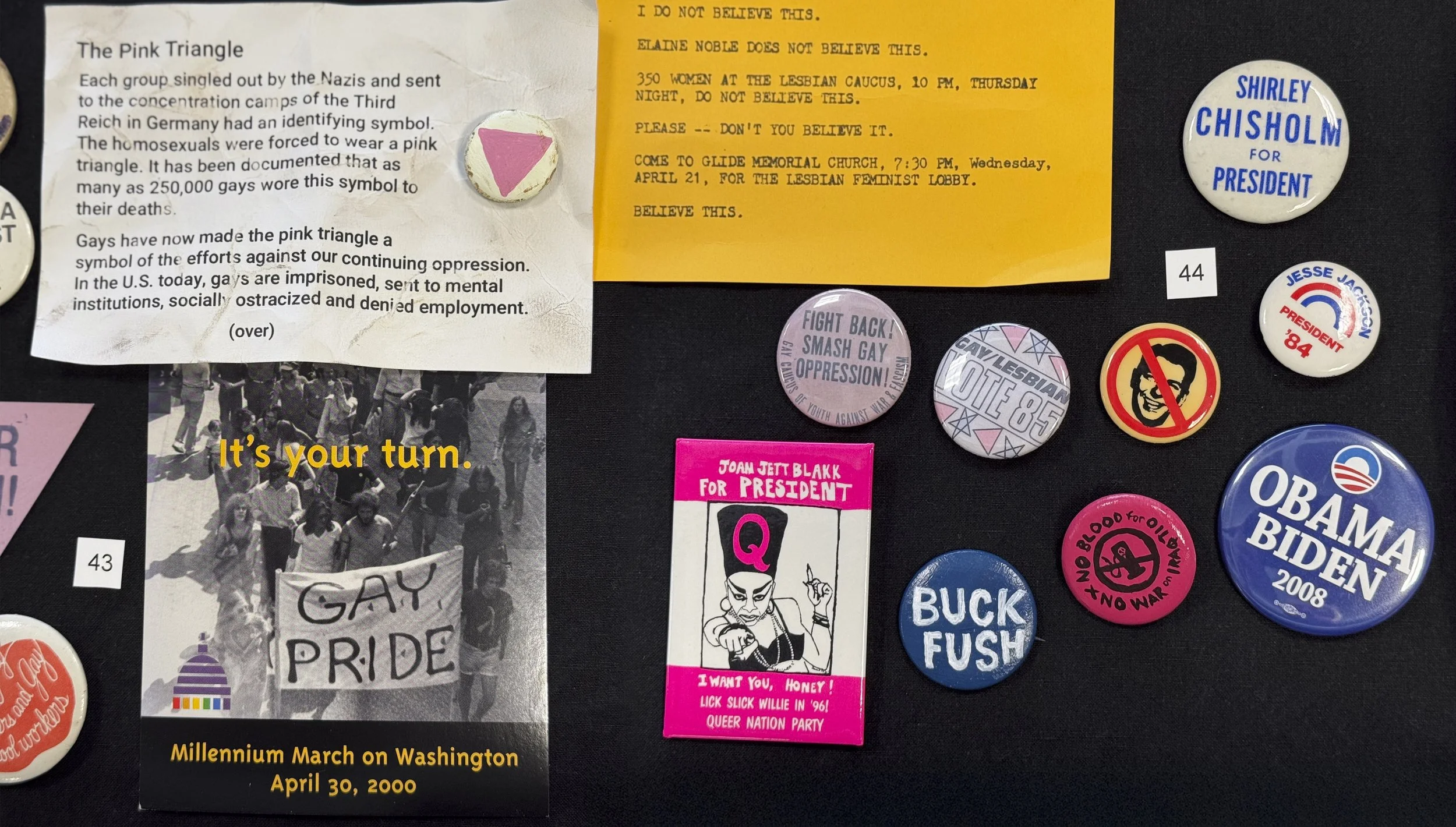
43. 2000 Millennium March on Washington for Equality
Carol attended the Millenium March with others from a Boston-based delegation, despite the fact that it was organized not by individual activists but by the Human Rights Campaign, without input from local groups. Pressure from activists (Carol included) led to the appointment of trans people and people of color to leadership positions.
See more information about the Millenium March and other notable LGBTQ Marches on Washington here.
44. National Presidential/Political Campaigns
Carol was involved in efforts to mobilize queer voters as well as within specific presidential campaigns, such as Shirley Chisolm in 1972, Jesse Jackson in 1984, Obama in 2008, as well as against Reagan in ‘80 and ‘84, Bush Sr. in ‘88 and ‘92, and Bush Jr. in ‘00 and ‘04.
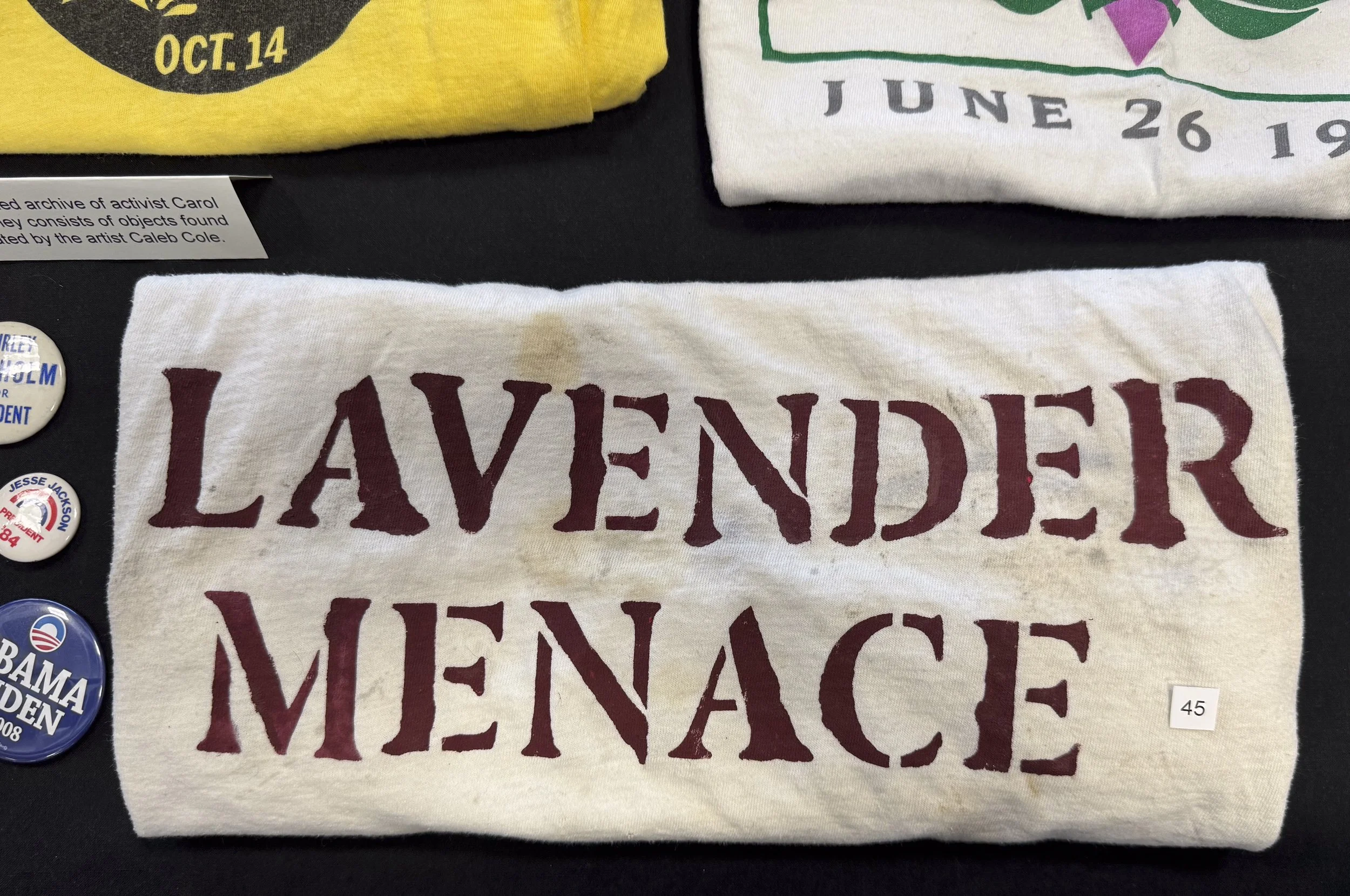
45. Lavender Menace
“Lavender Menace” was an action led by Radicalesbians, with women from the Gay Liberation Front and several feminist organizations, at the National Organization for Women’s (NOW) Second Congress to Unite Women in May 1970 to protest the rejection of lesbians in the second-wave women’s liberation movement. This action largely led to NOW’s resolution to support lesbians in 1971 and increased visibility for and awareness of lesbian issues nationwide.” Lavender Menace Action at Second Congress to Unite Women - NYC LGBTQ Historic Sites Project
Though Carol wasn’t at the 1970 Lavender Menace zap, this t-shirt was given to her by one of her lovers some time in the 1970s, which she later donated to the Lesbian Herstory Archives. See the LHA collection of lesbian t-shirts here.
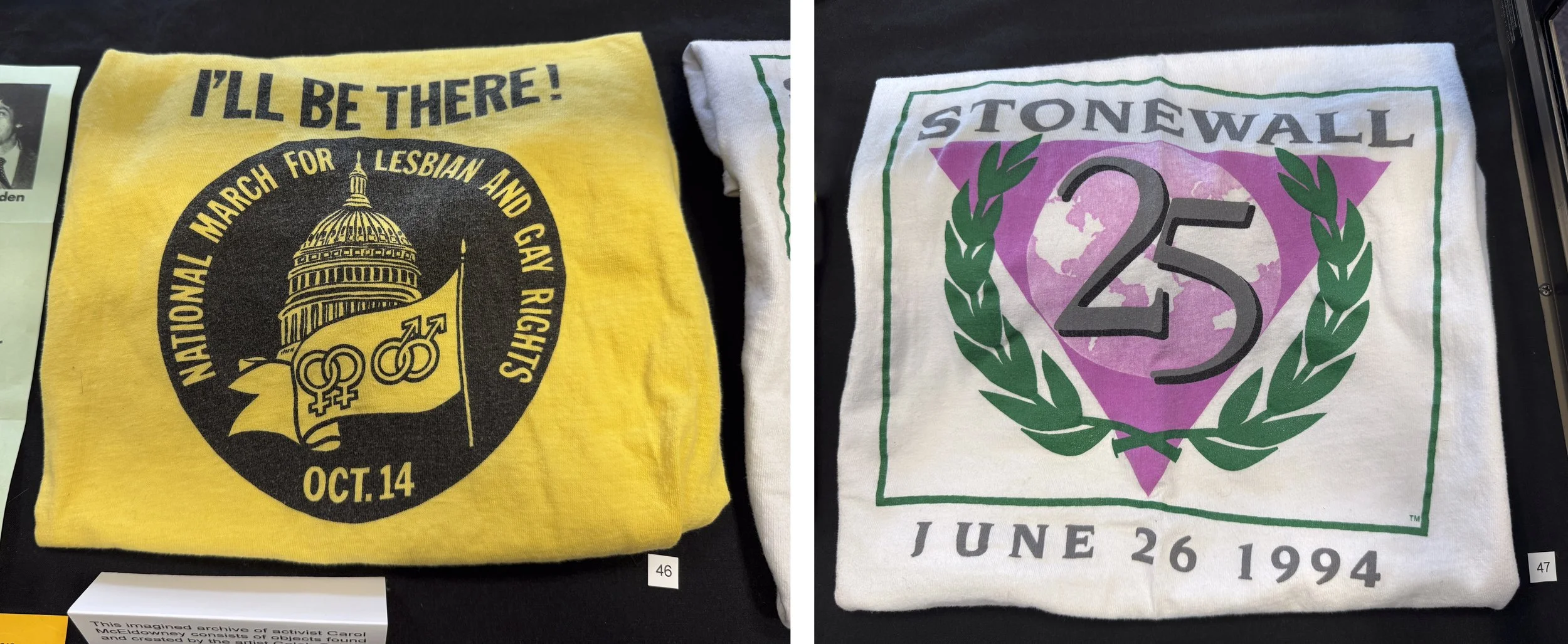
46. The National March on Washington for Lesbian and Gay Rights on October 14, 1979
This was a landmark,100,000+ person demonstration—often cited as the first of its kind—demanding federal civil rights protection, repeal of discriminatory laws, and equality following the assassination of Harvey Milk. It featured diverse participation, including lesbians of color leading the march.
National March on Washington for Lesbian and Gay Rights - Wikipedia
1979 Rally for the National March on Washington for Lesbian and Gay Rights - National Park Service
Stonewall Columbus
47. Stonewall 25, 1994
Stonewall 25 commemorated the 25th anniversary of the rebellion by organizing one of the largest pride marches for human rights in history. Attendance was estimated at nearly a million people marching to the United Nations in support of gay and lesbian rights.
Stonewall 25 Pamphlet at the Smithsonian
Stonewall 25, 1994 by Avram Finkelstein - ACTUP NY
Stonewall Rebellion Veterans Association
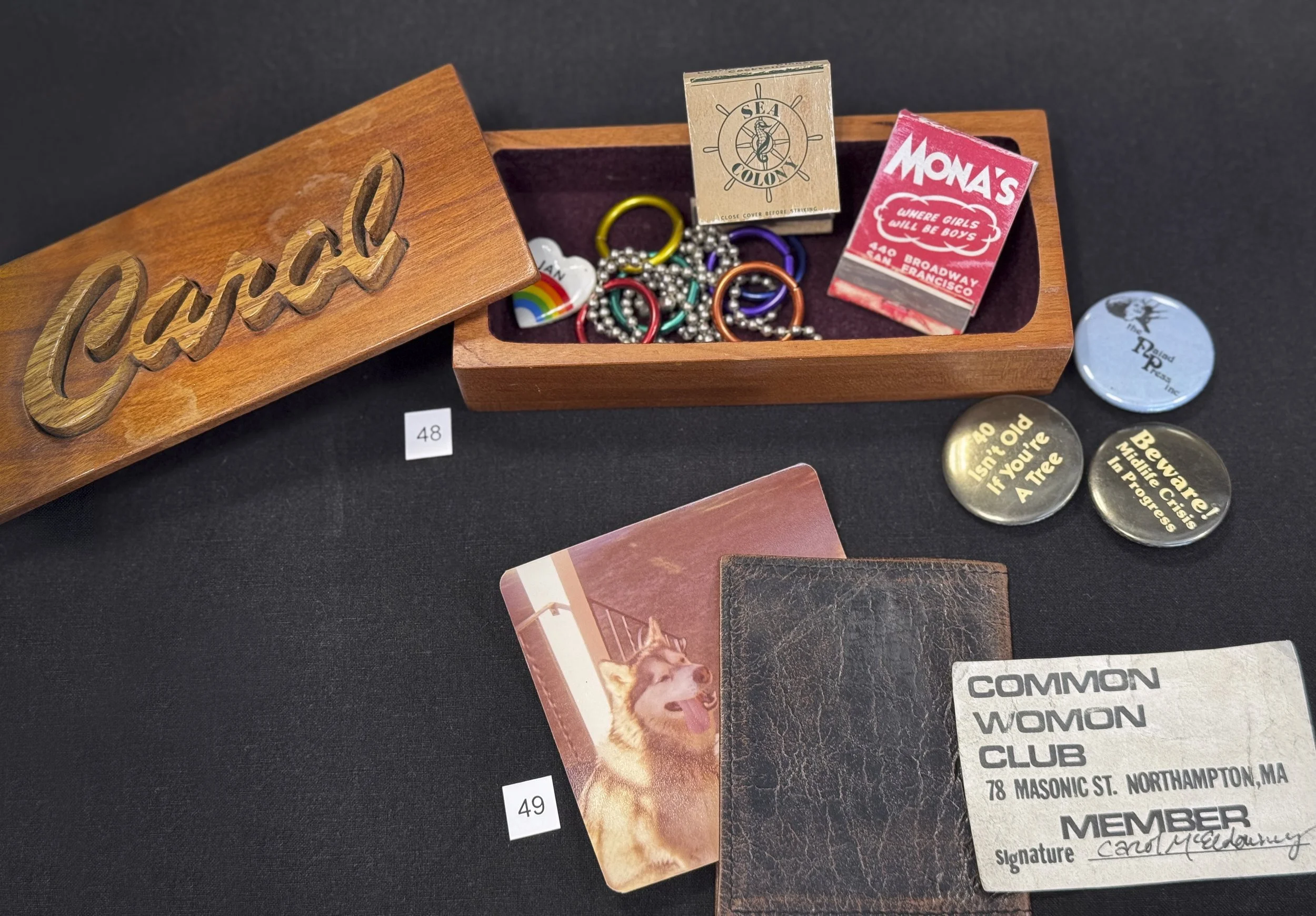
48. Carol’s Personal Items
This small personalized wooden box, made by a friend, has held an assortment of personal items, such as matchbooks from lesbian bars (some with women’s numbers inside), freedom rings from the 1990s, and a pin from an ex-lover, Jan.
49. Ocho
Carol makes frequent mention of her beloved pup Ocho in the pages of her journals. She says, “My dog Ocho (a thoroughly lovable Mutt) lives with me, too; she's always an up, though I occasionally feel guilty about keeping her in the city” (p.125-126 COJ). In a letter to her lover Vivienne, she also mentions the “little picture of you and Ocho i carry around” (p.190 COJ), seen above, with only Ocho showing.
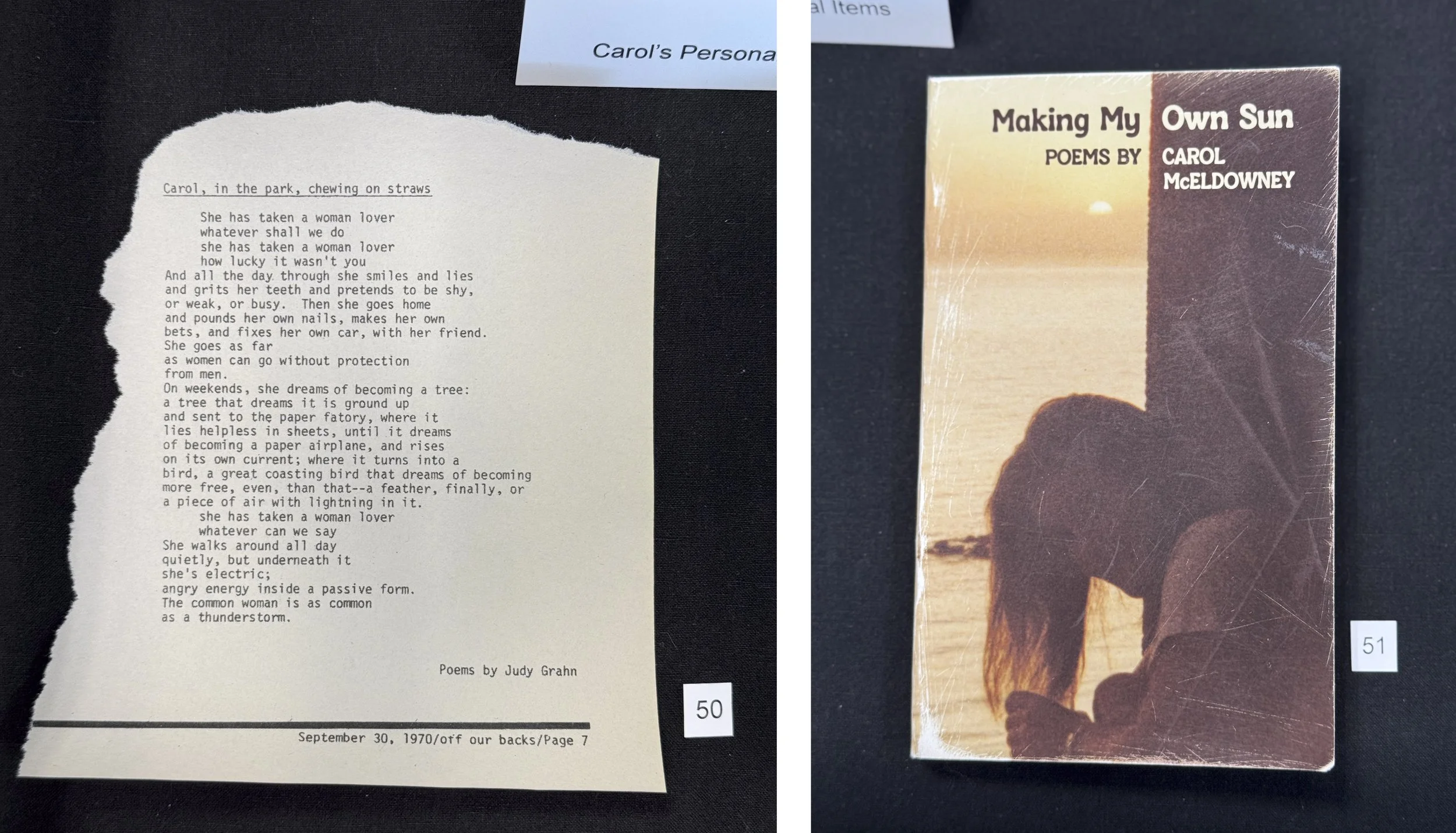
50. Judy Grahn’s “Carol, in the park, chewing on straws”
The Common Woman Poems (1970) by Judy Grahn, a lesbian feminist poet and author, celebrate everyday working class women in ways that “accentuate the strengths of their persons without being false about the facts of their lives” (Grahn). Grahn maintains that all but one of the common women were composites of multiple people (p. 20, Grahn, love belongs to those who do the feeling) but the lesbian character portrayed in “Carol, in the park, chewing on straws” and the subsequent “Carol and her crescent wrench” always felt like portraits of specific moments in Carol McEldowney’s life: before fully coming out and after embracing herself as a dyke.
51. Carol’s Poetry
Carol wrote her own poetry, some of which has been published in lesbian feminist newspapers as well as journals like Common Lives/Lesbian Lives. She also published a book of poetry in 1976, Making My Own Sun, drawing from and expanding on those in the Coming Out Journal and the Multicolored Journal. The title comes from the 1971 poem in her Coming Out Journal (p.52):
Today
the sun
never broke through the clouds.
But
with paints
and music
I made
my own sun.

52. Carol the Mechanic
Carol briefly worked as an auto mechanic in 1971. On December 1, 1971, she wrote that she “may have a job tomorrow, working with angelo in his body shop, doing body work and mechanics. i hope i get it. i think a job, even or especially part-time would be real good for my head right now” (p.81, COJ) then on December 19, she says that “today i lost my job (because some men live for money alone)” (p.87 COJ). Despite this brief attempt at official employment as a mechanic, Carol continued to do mechanic work on her own and with various women’s coop garages, on cars as well as motorcycles.
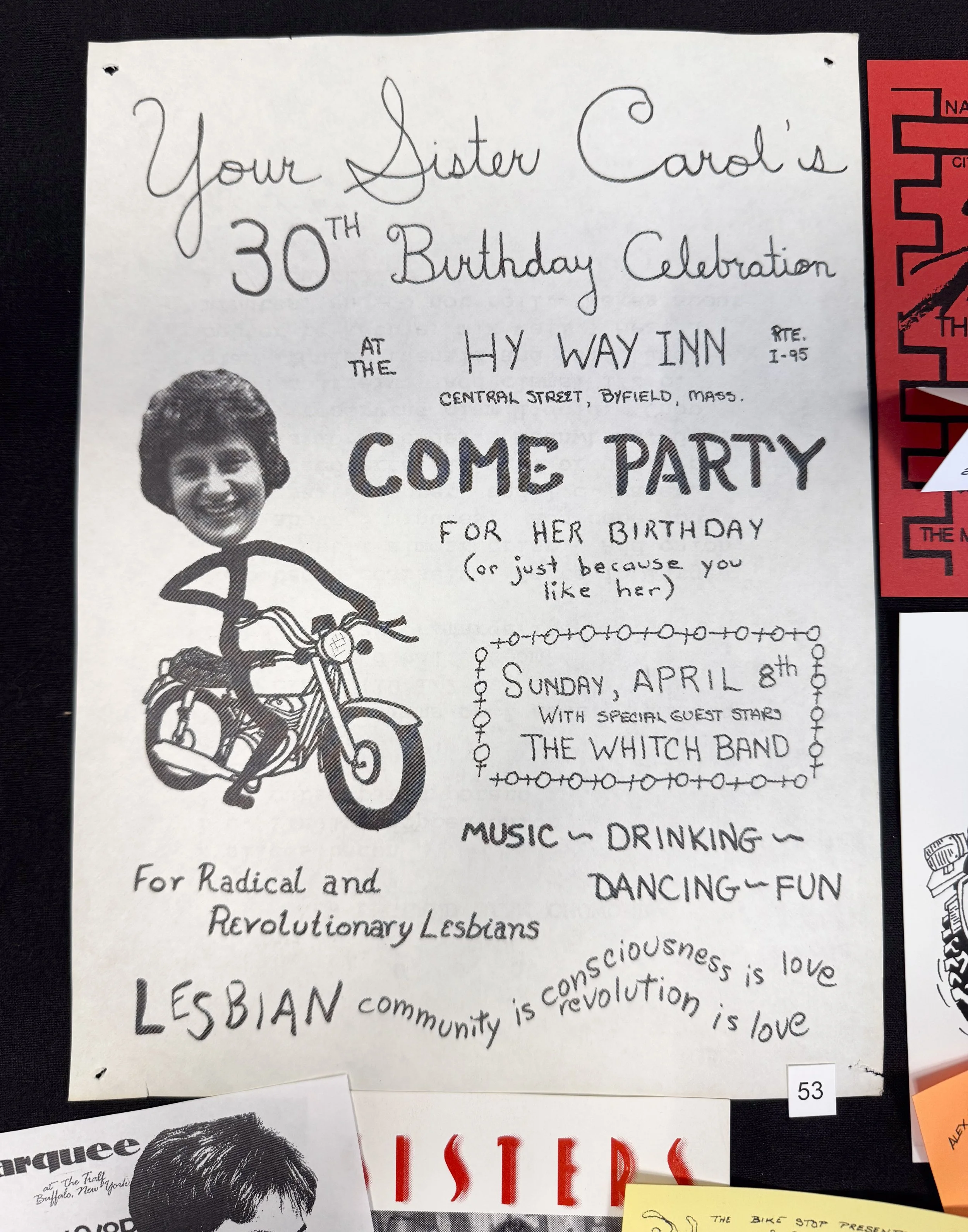
53. Carol’s 30th Birthday Bash
This is a flyer for Carol’s 30th Birthday party, before the date was changed to earlier in the week and the flyer reprinted. Turning 30 was something that Carol wrote frequently about.
Before her birthday: “My birthday's coming -- weird feeling . Excited about being 30 -- confused about what I want: a party? but who to invite? the bar? a more random celebration? Don't know who my family is -- want that commitment -- unnerves me as women I get close to talk of splitting […] The massive insecurity I feel around all that dramatized by impending birthday” (p.146 MCJ).
About her birthday: “Byfield was wonderful -- stoned out on Qualude. Ayn brought a cake & Whitch played happy b’day and linka didn't give me my promised slow dance. Oh, well. I had such a good free time -- esp. not driving either way. […] So I'm now 30 & looking younger everyone tells me, feeling good & strong & healthy (some of the time )” (p.154 MCJ).
After her birthday: “Hitting 30 was a biggy for me. Stop trying so hard to change things about myself — work with them instead to maximize creativity and righteousness to minimize grief i cause others” (p.181 COJ).
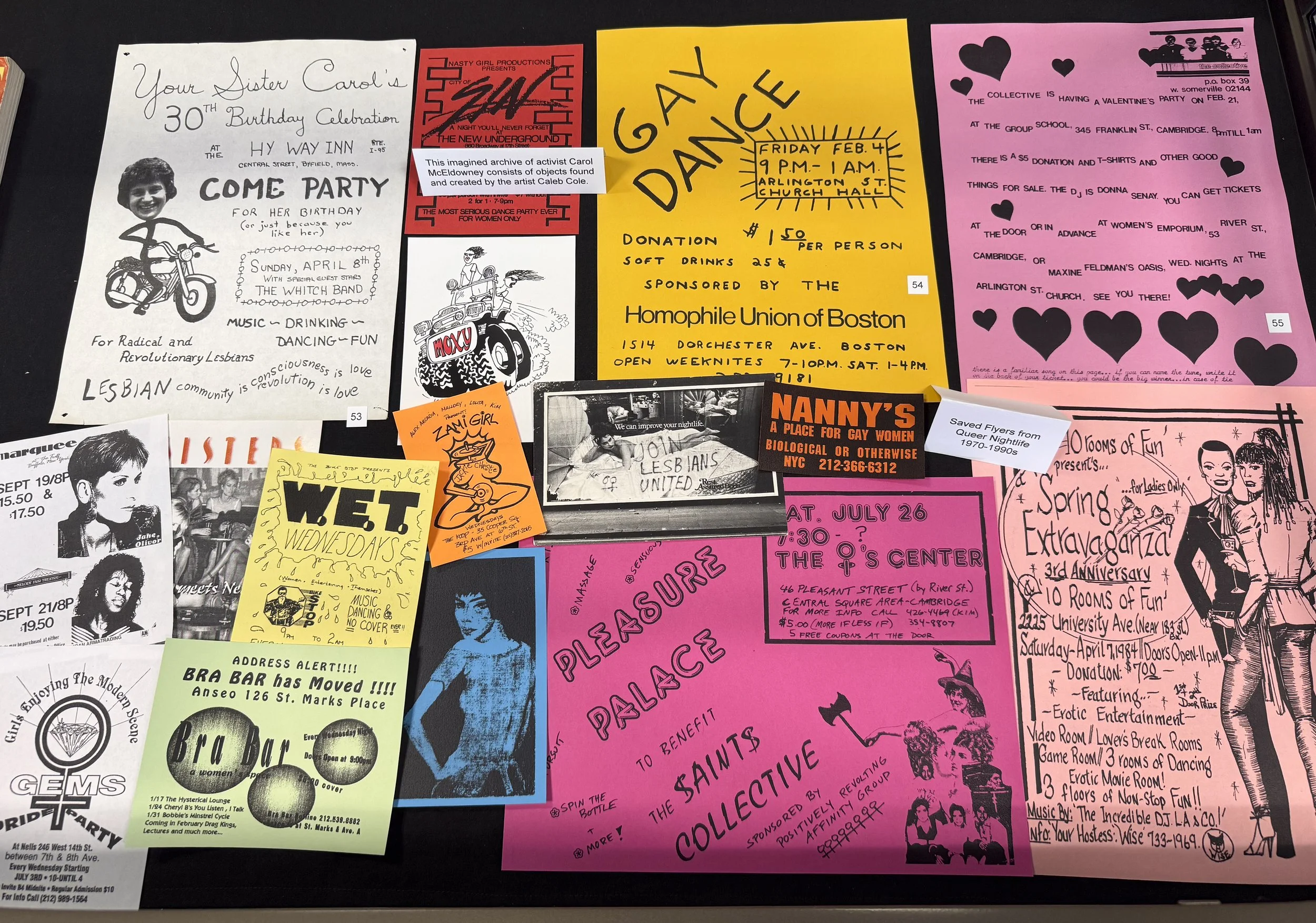
54. Bar, Club, and Party Flyers
Carol has been collecting bar, club, and party flyers since 1969. This represents only a very small selection; the rest are currently in the Lesbian Herstory Archives Bar files (for primarily NYC locations) or at Queer History Boston (for MA locales), where she was an early contributor.
55. Going to Bars and The Saints (Collective)
Carol wrote of her bar-going in the early 70s: “I find myself at the bar 3 or 4 nights a week, having a couple of beers, to numb the pain, to get high. Numbing the pain is a major preoccupation of many women I know. Some of my friends are into downs. I swore I'd never get into pills, but curiosity got the better of me, and I popped one for the first time the other week. It was wonderful, real mellow. I still guilt-trip myself, remember Carol, there's the Revolution, but that rhetoric has long been laid to rest for me. I don't expect to live to see it any more; took me a long time to learn that one. It's not so much cynicism I’m feeling. More, it’s some bitterness towards the left and a generalized anger towards men, and mostly, it's that humility I talked about and a recently acquired patience” (p.130 COJ).
Carol frequented a variety of bars: Jacques’ while it was still primarily a lesbian bar (see Jacques’ on Lost Women’s Space), the 1270 which had a women’s night on Wednesdays, and the Saints*, among others, though she sometimes hinted at drama at all locales in her journals. She was involved in a physical fight with a man at the 1270 that resulted in stitches (p.167-168 COJ), had a fistfight with a lover at another bar (p.75 MCJ), and stressed about how those in community felt about her. Though her time at gay bars was often full of drama, especially as someone who didn’t believe in monogamy, she also believed that “from that sea of beautiful women a sisterhood can emerge” (p.11 MCJ).
*Unlike most other queer bars that were not owned by those in the queer community, the Saints (1972-1980) was run by a collective of women and only open in the evenings (Lost Womyn’s Space). For more information on The Saints, see the Saints Collective file at Queer History Boston.
Click on each book or record to open information about it in a new window.
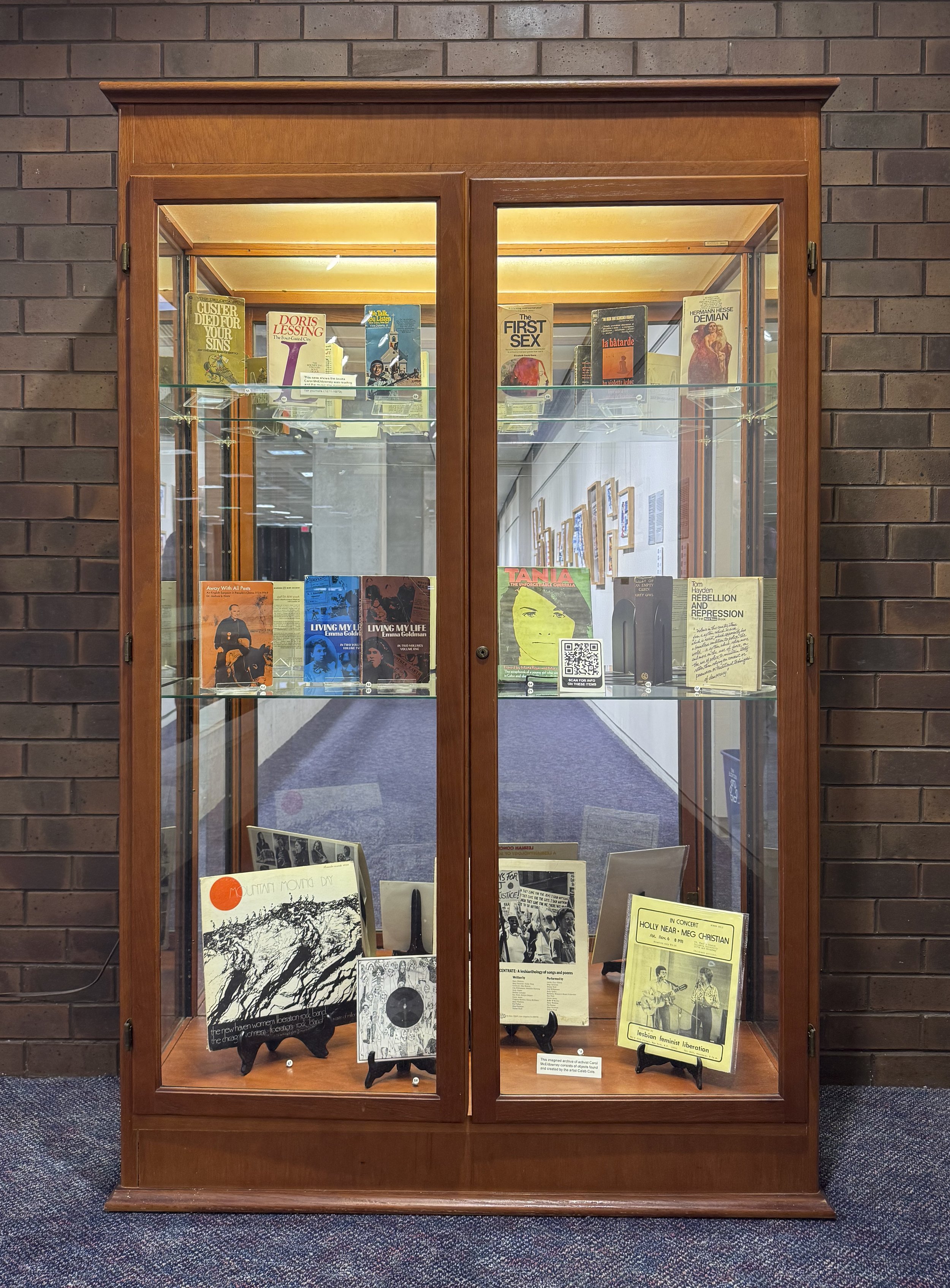
Carol's Books and Music mentioned in her journals
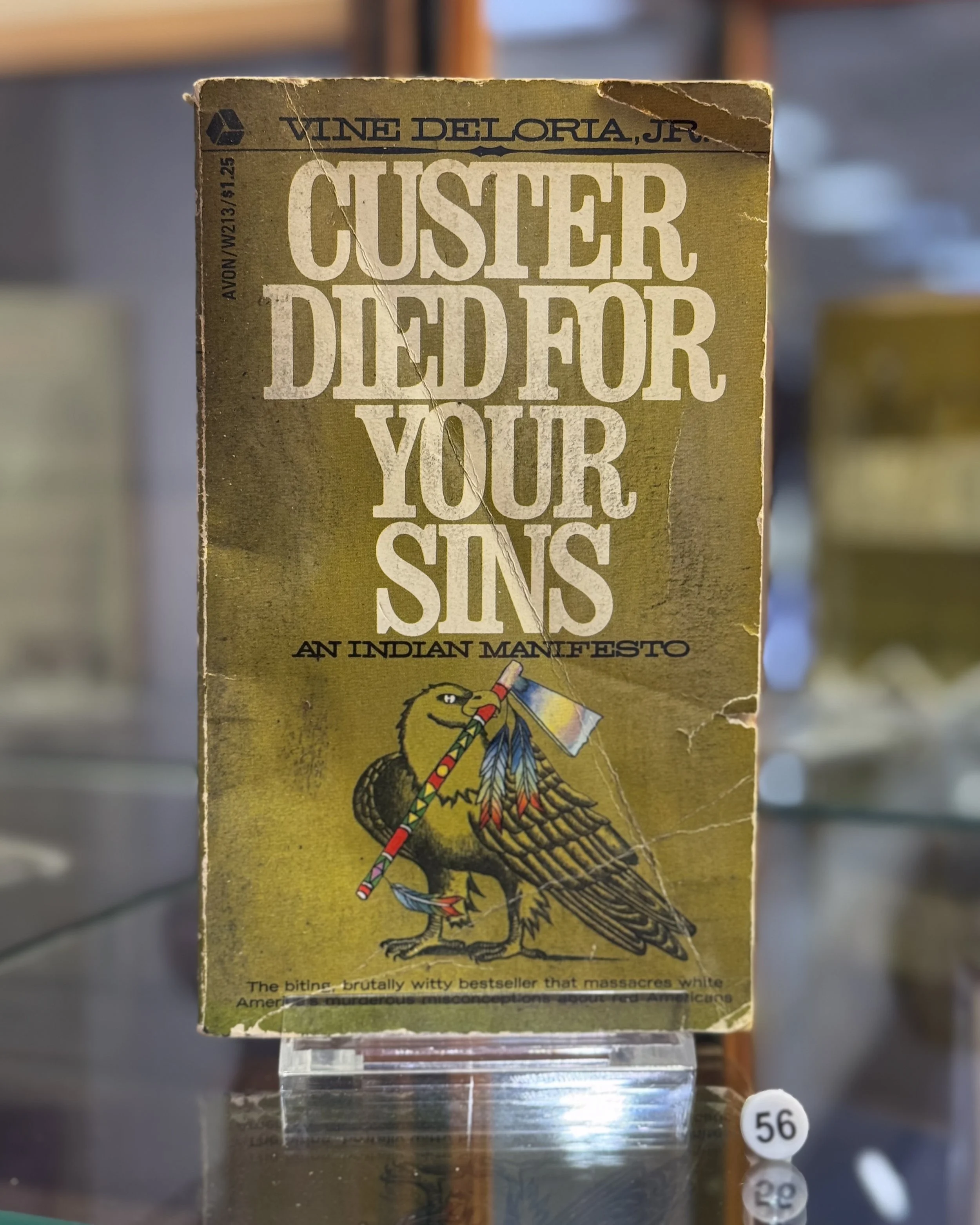
56. Custer Died For Your Sins: An Indian Manifesto by Vine Deloria Jr., New York: Macmillan, 1969. (p. 113 COJ)
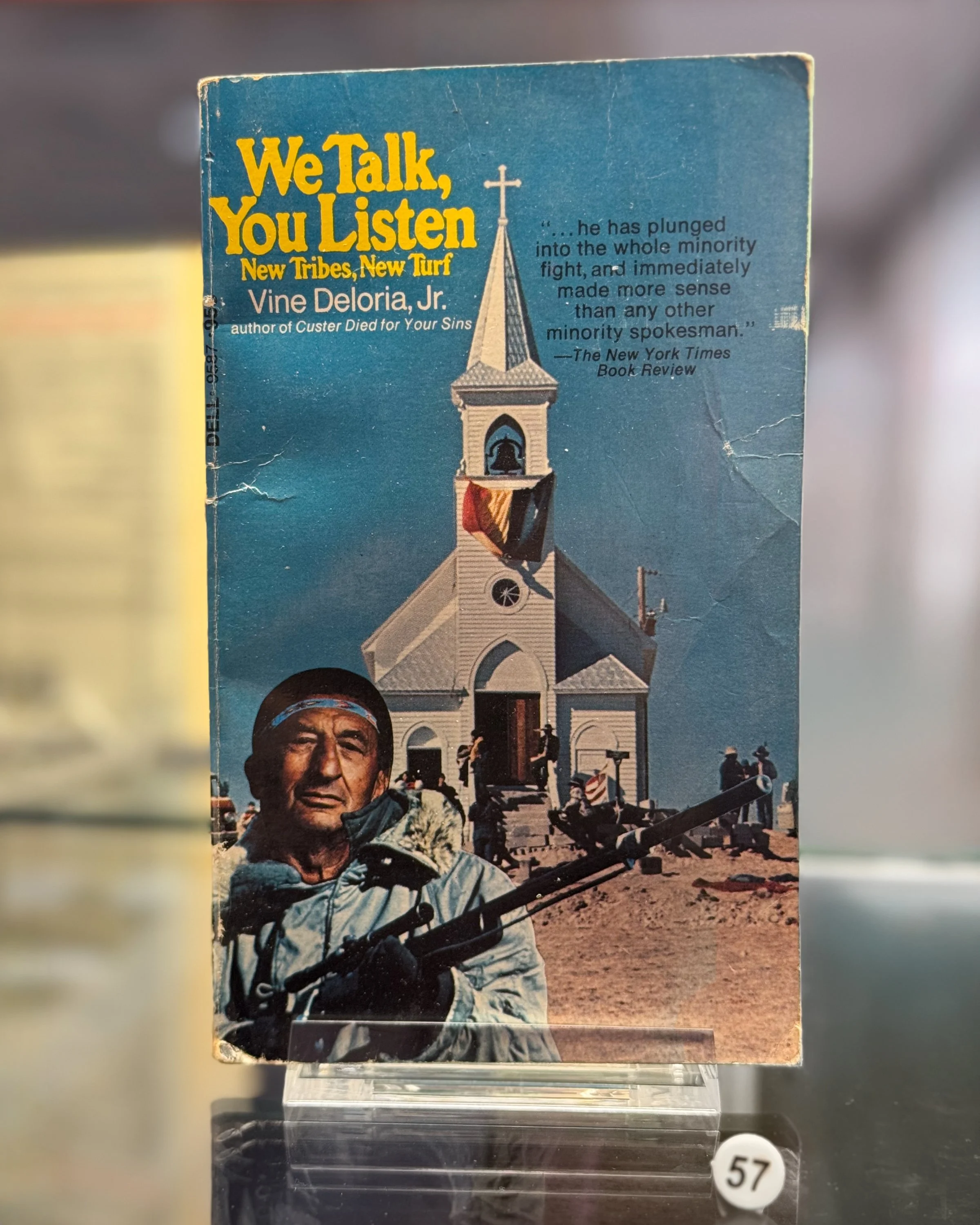
57. We Talk, You Listen; New Tribes, New Turf, New York by Vine Deloria Jr.: Macmillan, 1970. (p. 113 COJ)
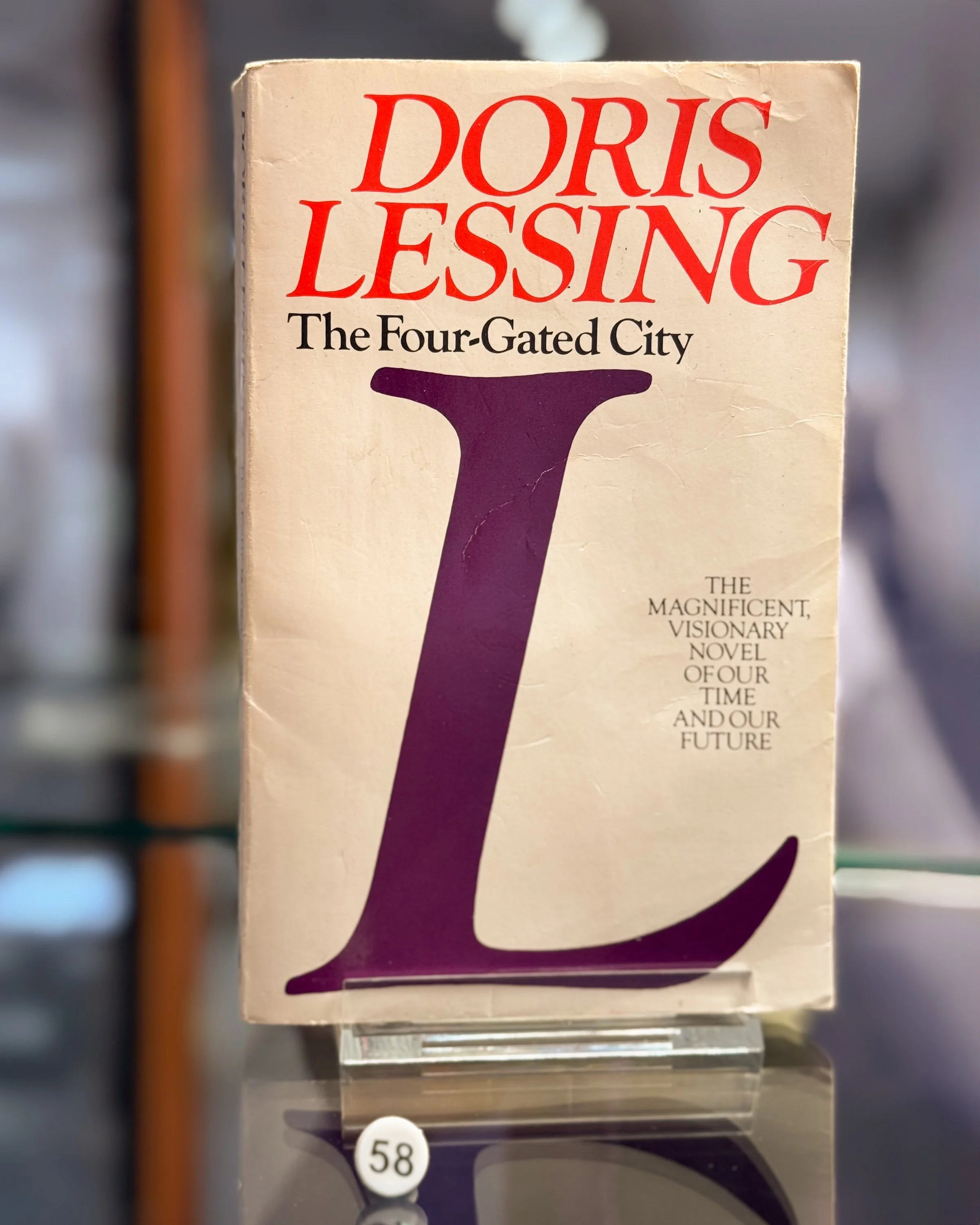
58. The Four-Gated City by Doris Lessing, 1969, UK: MacGibbon & Kee, 1969. (p.154 and 162 of COJ; p.120 MCJ)
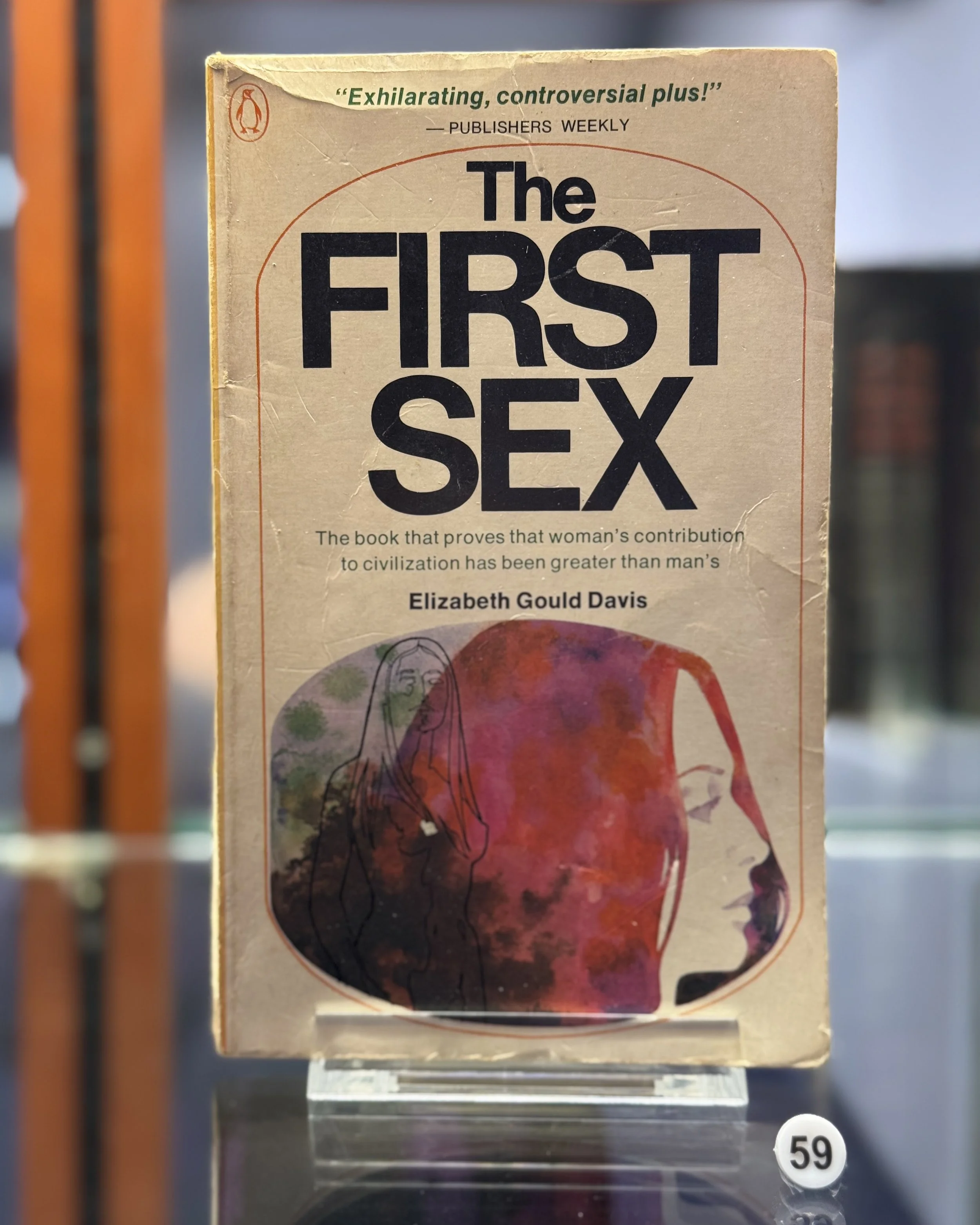
59. The First Sex by Elizabeth Gould Davis, New York: G.P. Putnam's Sons, 1971. (p. 175 COJ)
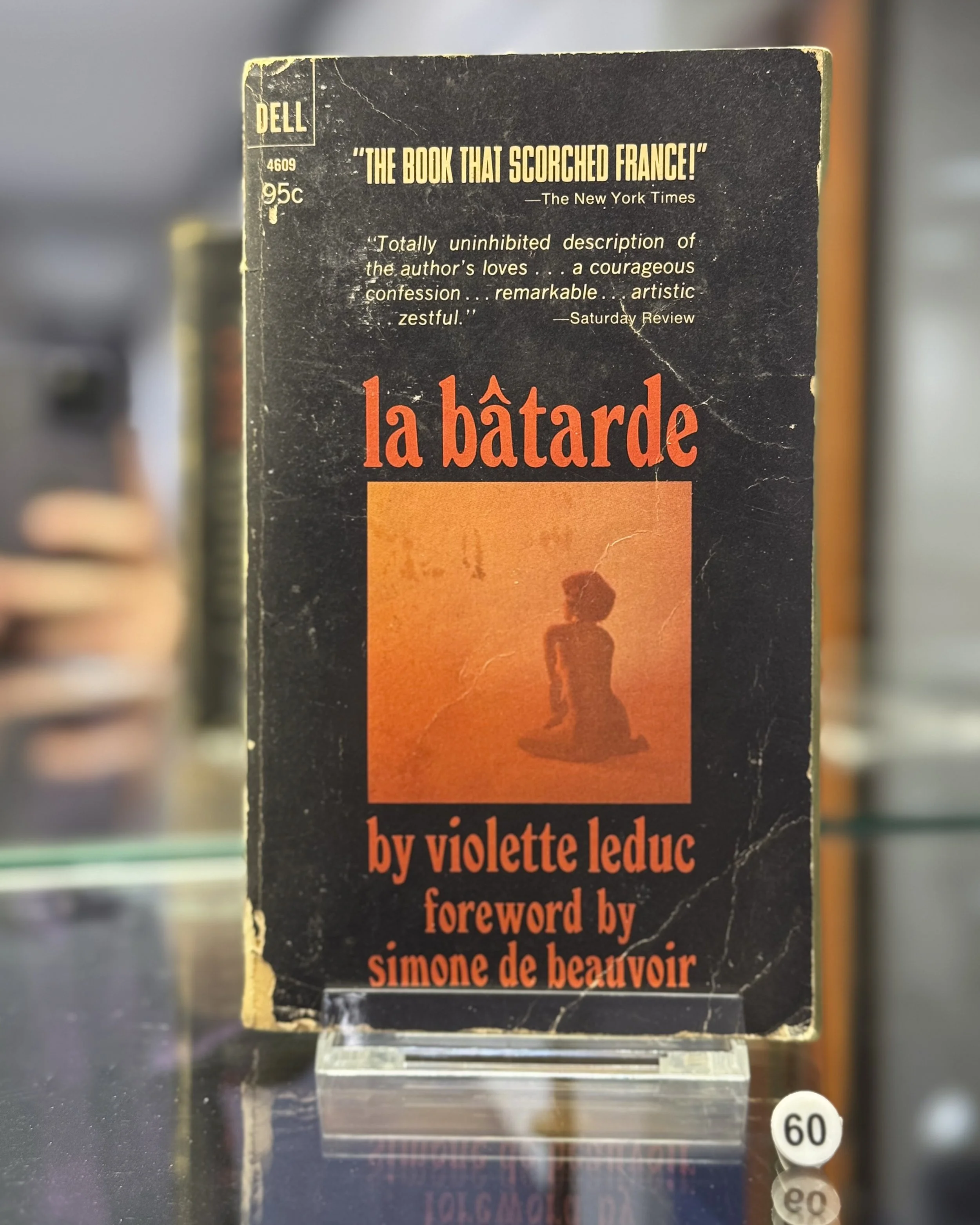
60. La Bâtarde by Violette LeDuc, Dalkey Archive Press, 1964. (p. 150 COJ)
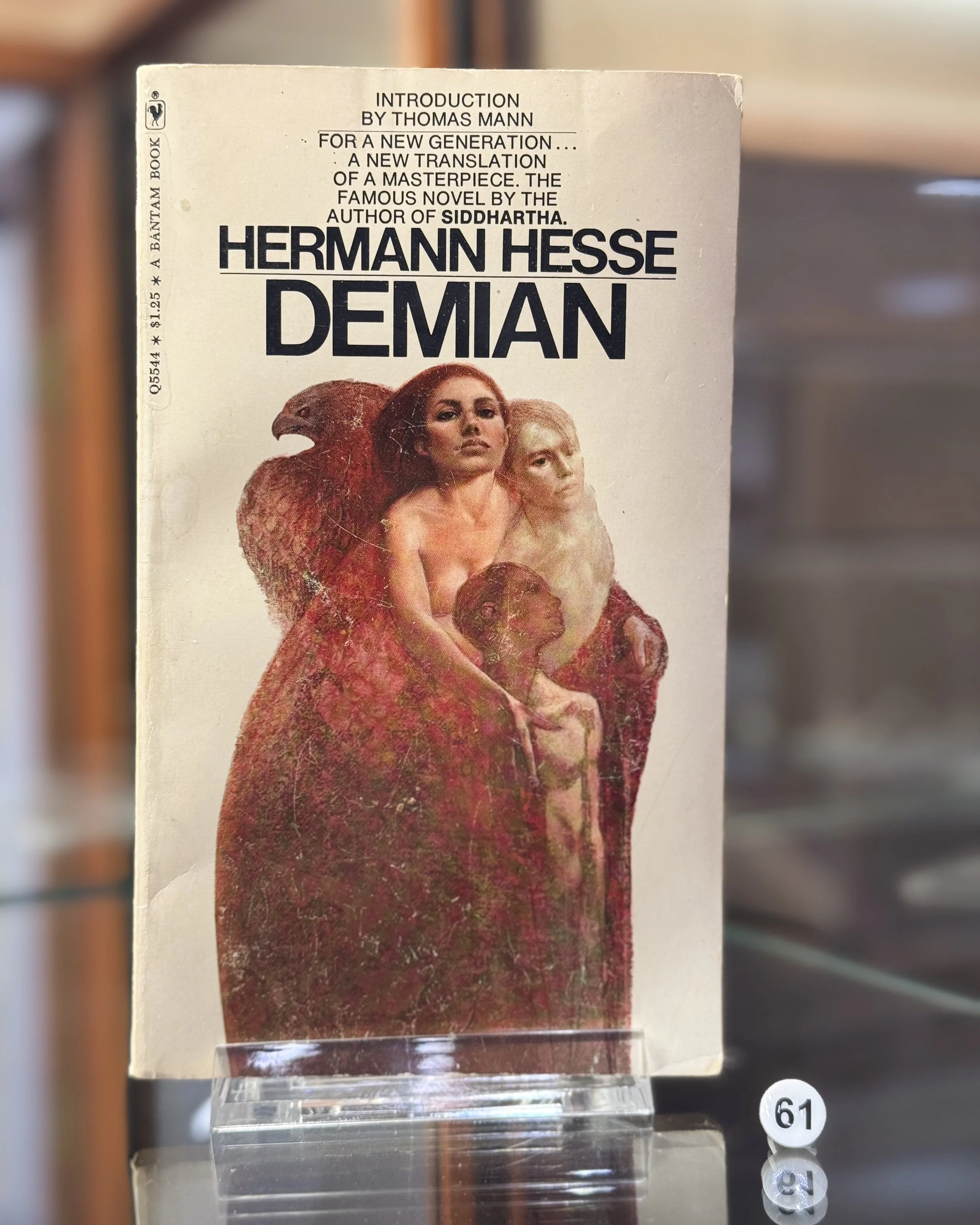
61. Demian: The Story of Emil Sinclair’s Youth by Hermann Hesse, first English translation in 1923. (p.27 MCJ)
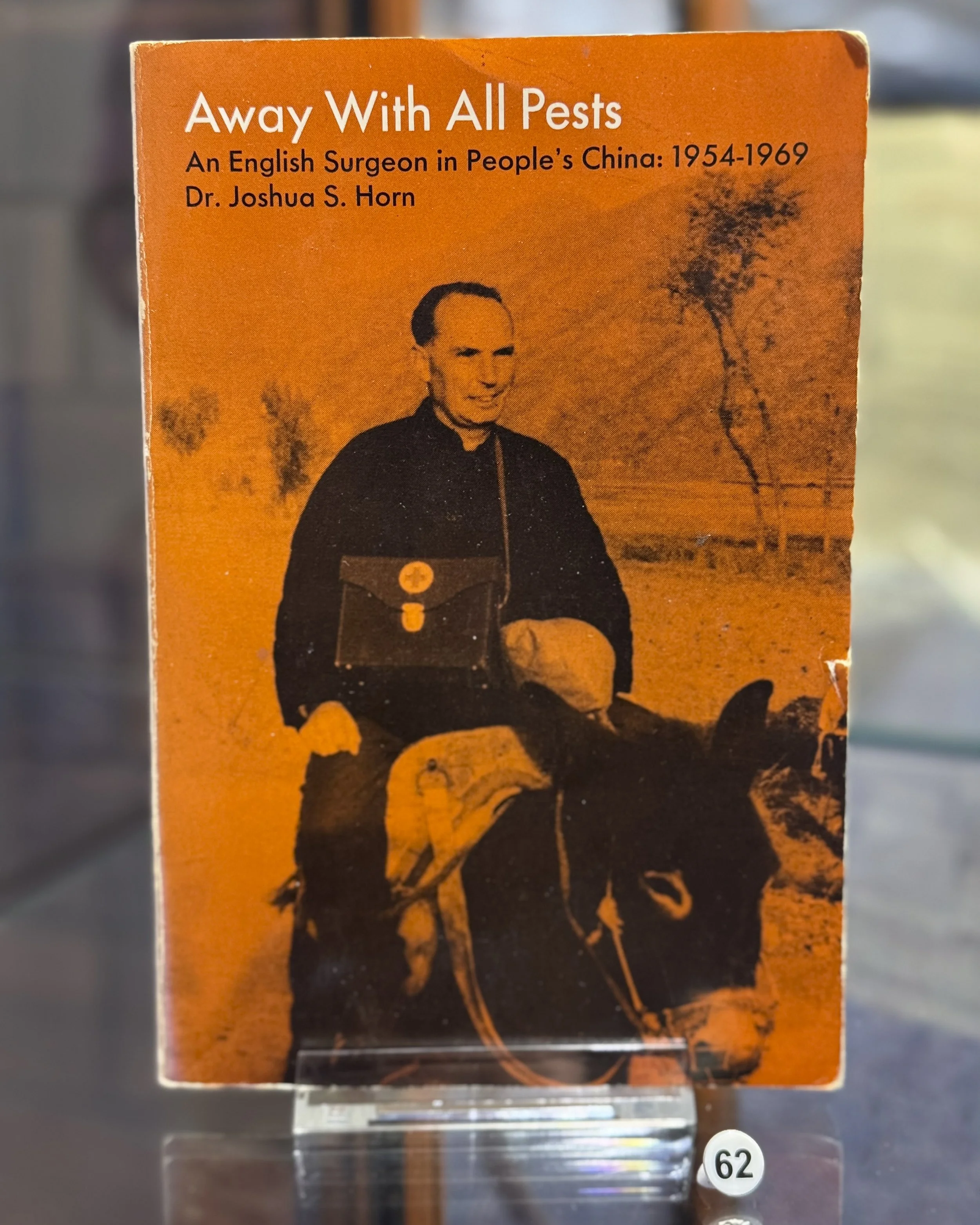
62. Away with All Pests: An English Surgeon in People's China, 1954-1969, Monthly Review Press, 1971. (p. 91 COJ)
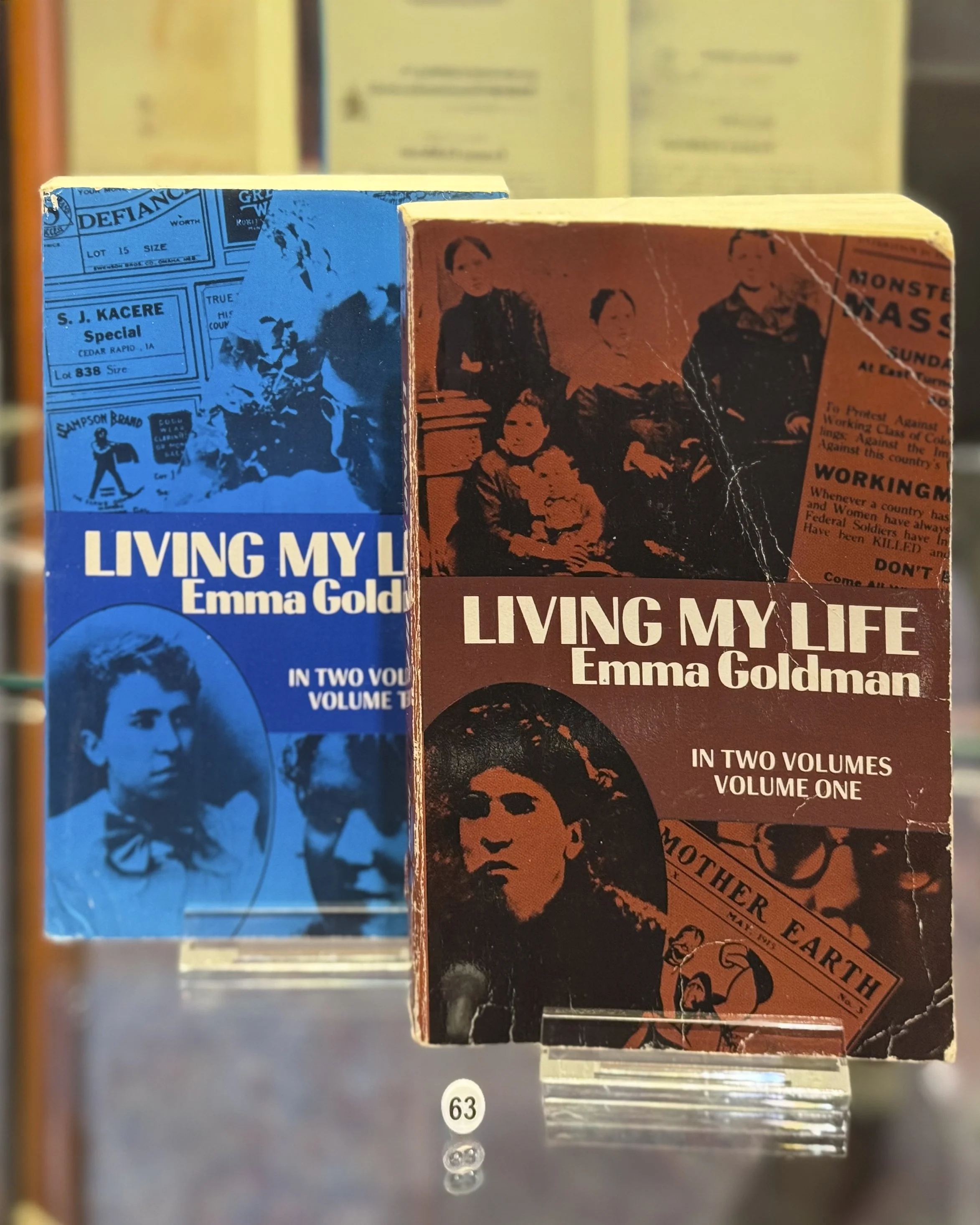
63. Living My Life by Emma Goldman, 1931 (volume 1) and 1934 (volume 2). (p.42 COJ)
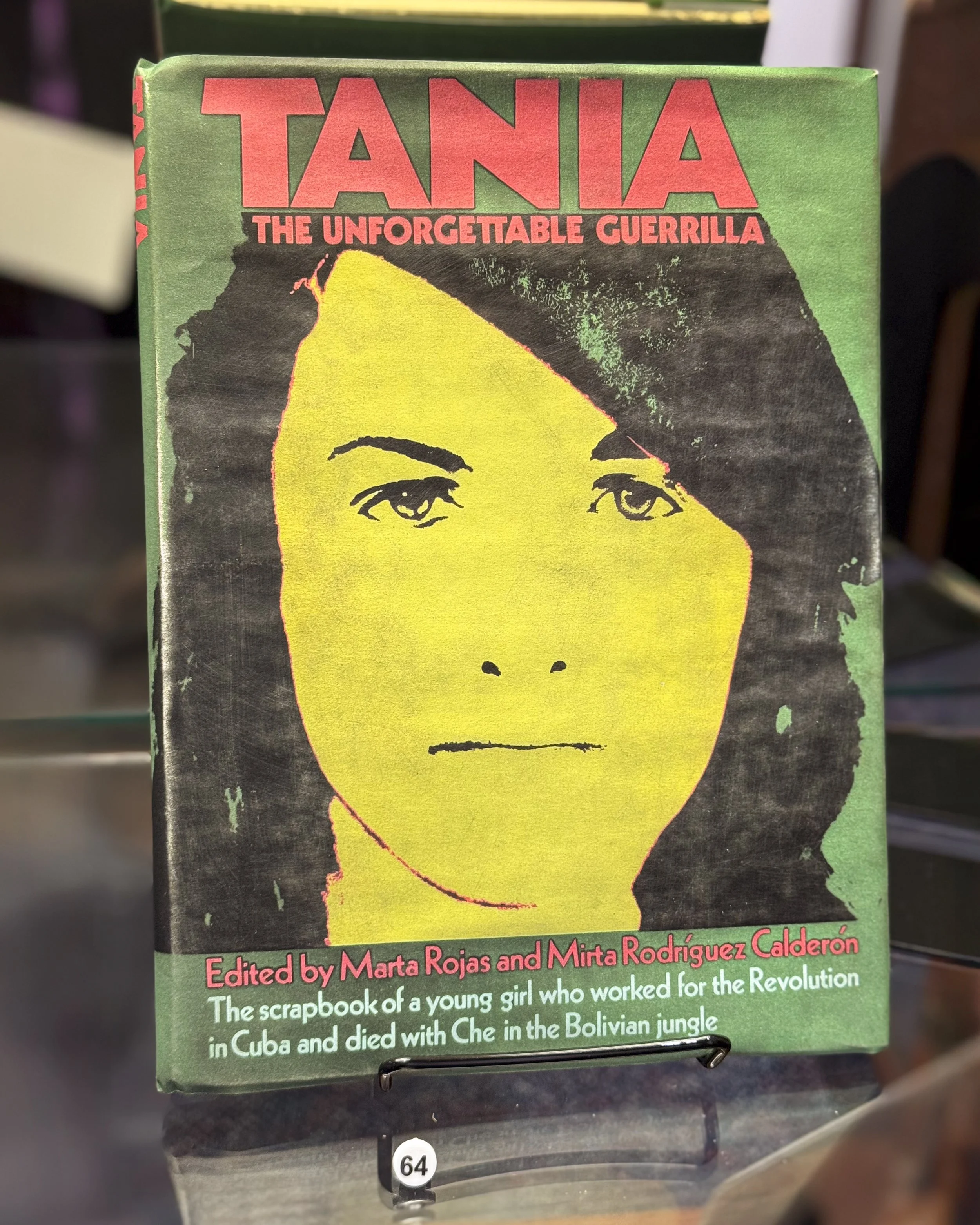
64. Tania, the Unforgettable Guerrilla by Mirta Rodríguez Calderón, Vintage Books, 1971. (p. 91 COJ)

65. Tales of an Empty Cabin by Grey Owl, Lovat Dickson & Thompson Limited, 1936. (p. 113 COJ)
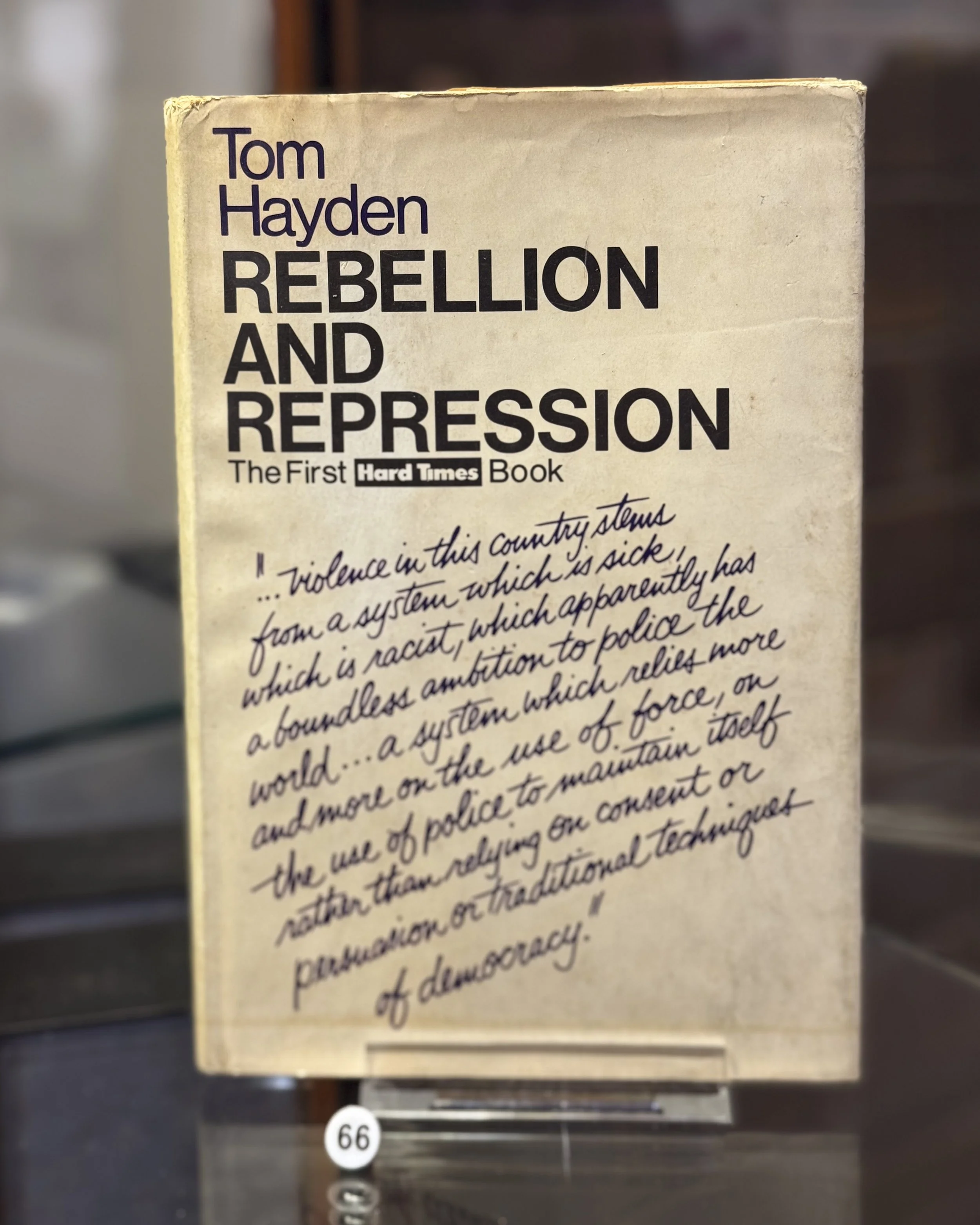
66. Rebellion and Repression by Tom Hayden, World Publishing Co, 1969. Though Carol traveled with Hayden to Vietnam with in 1967, she found him to be an "intolerable boor." She continued, "Hayden has certainly been influential in my life, but that doesn't stop me from hating him" (p. 161 COJ).
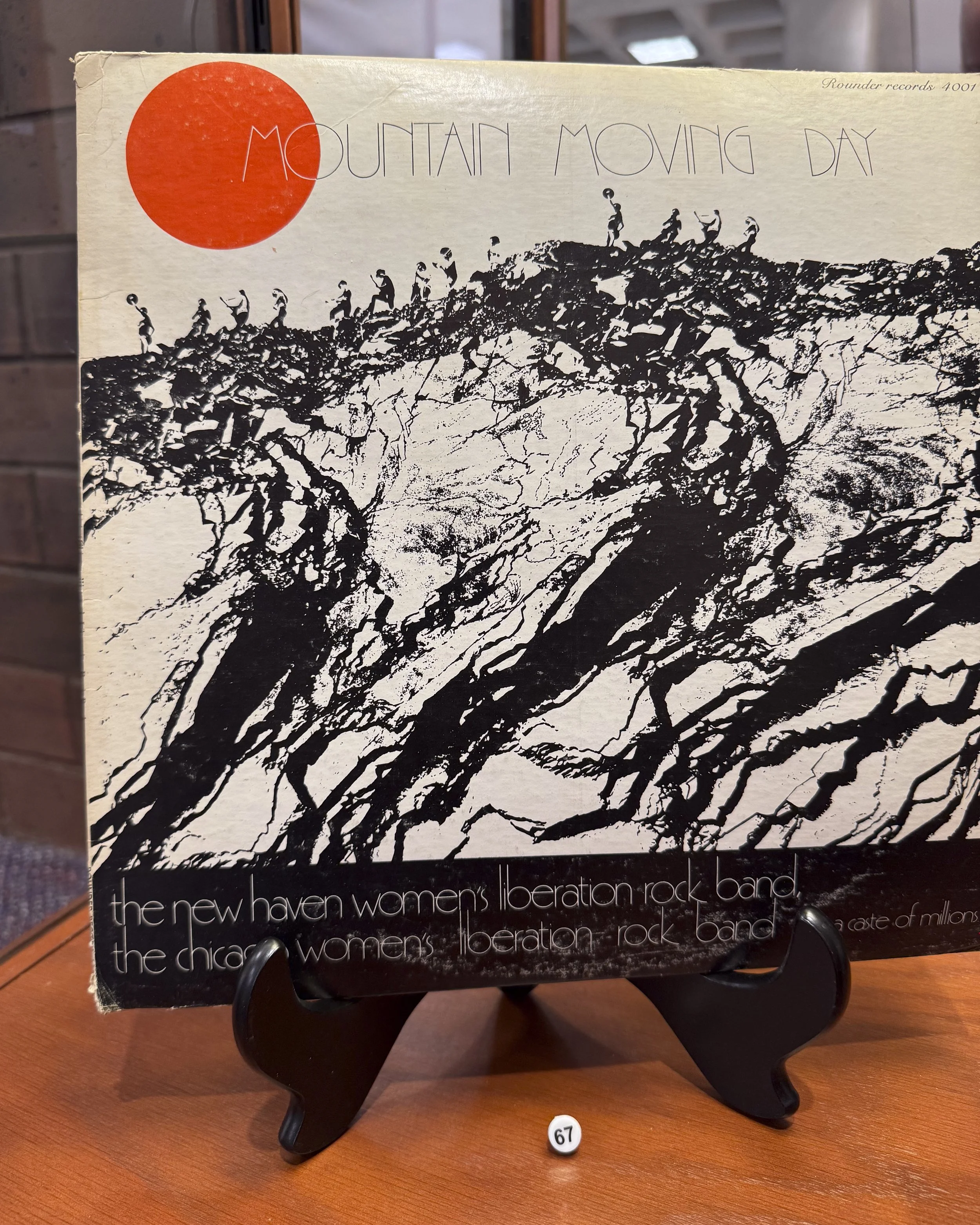
67. Chicago and New Haven Women's Liberation Rock Bands (p.57 COJ)
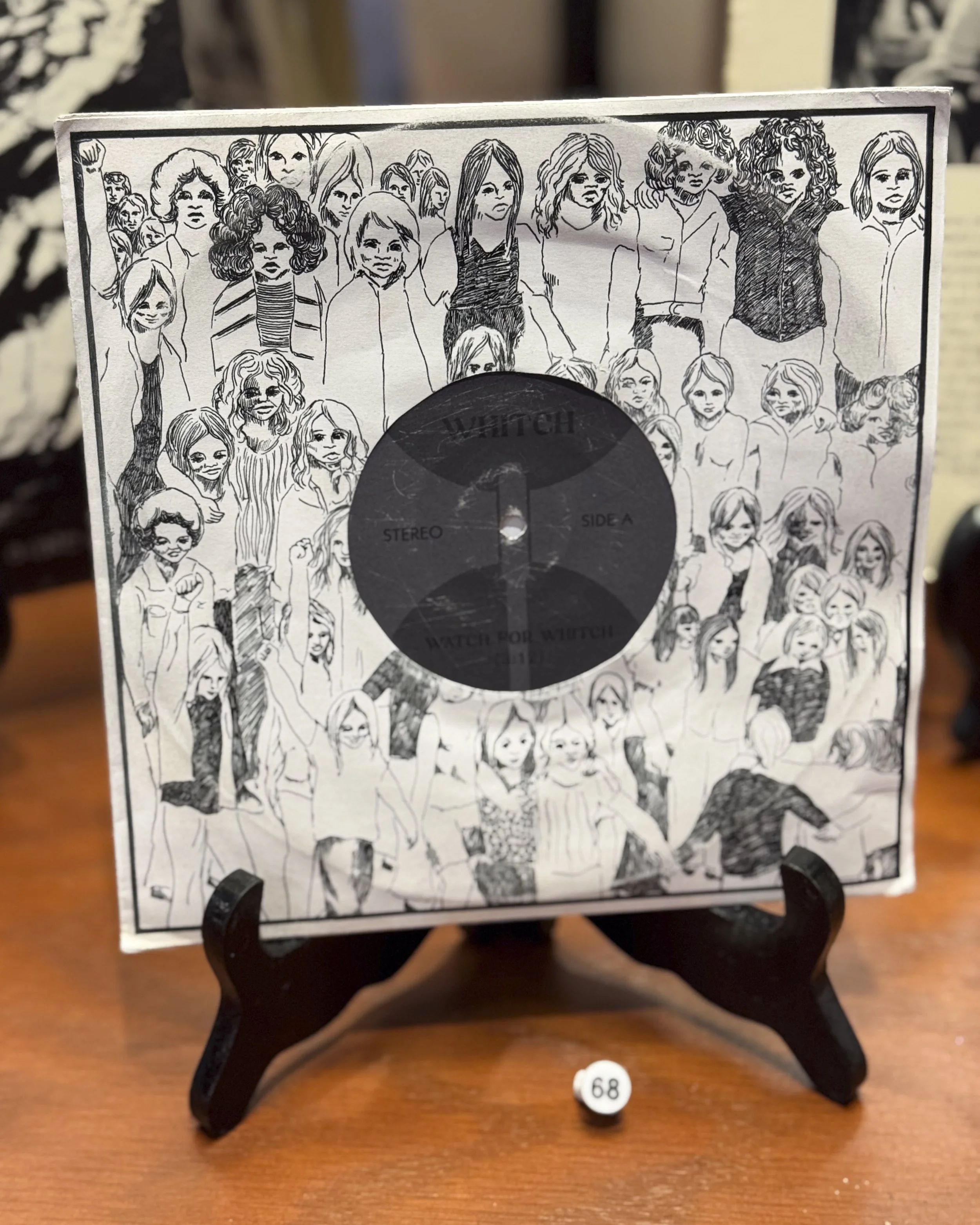
68. WHITCH, Boston-area band in the early 1970s (p.145 MCJ, p. 170 COJ)

69. Other lesbian music referenced in correspondence/Carol's papers